
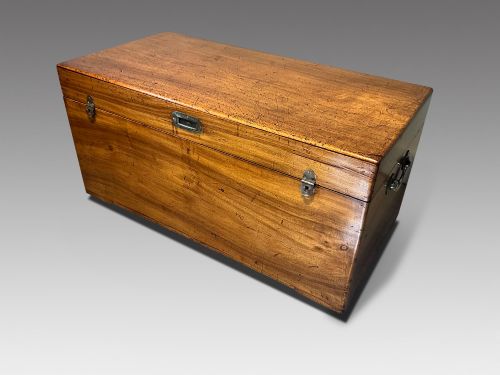

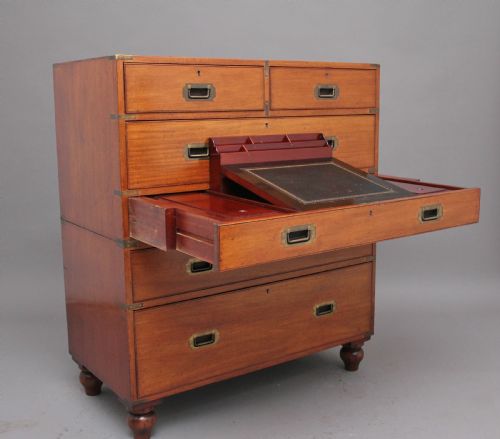


Brass Fitted Campaign Chest
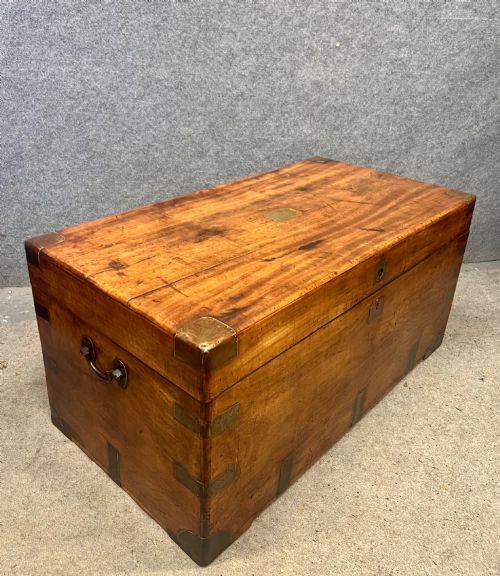
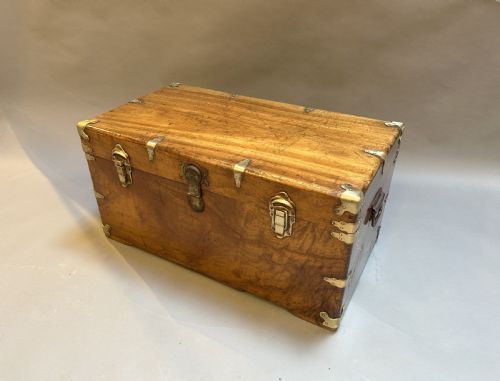
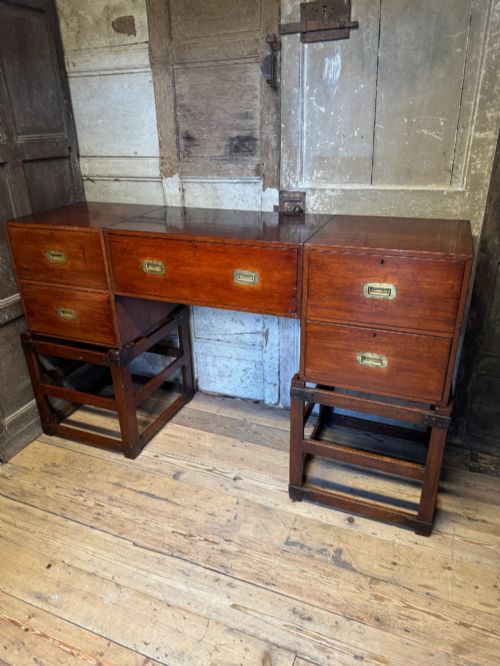
A brass fitted campaign chest is a portable case built for travel, offering heavy hardwood construction and recessed metal hardware that protects the edges on the move.
Brass Fitted Campaign Chest
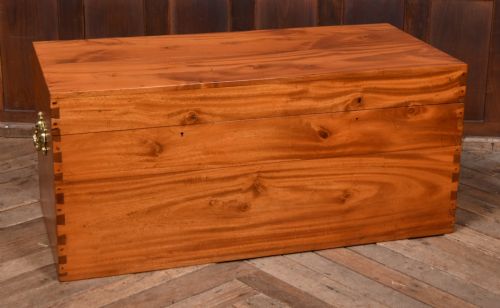
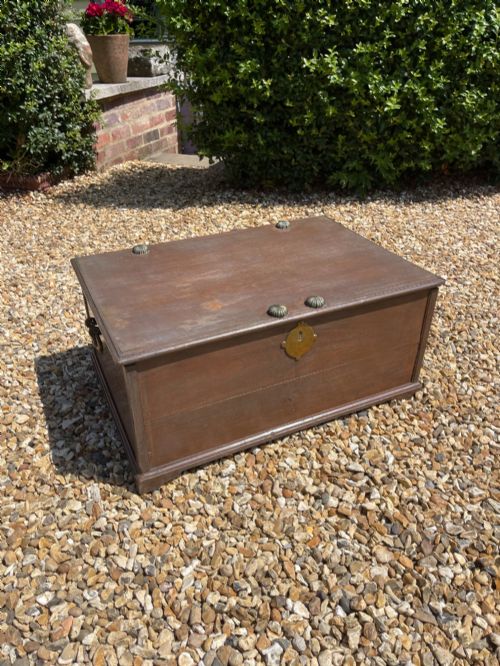
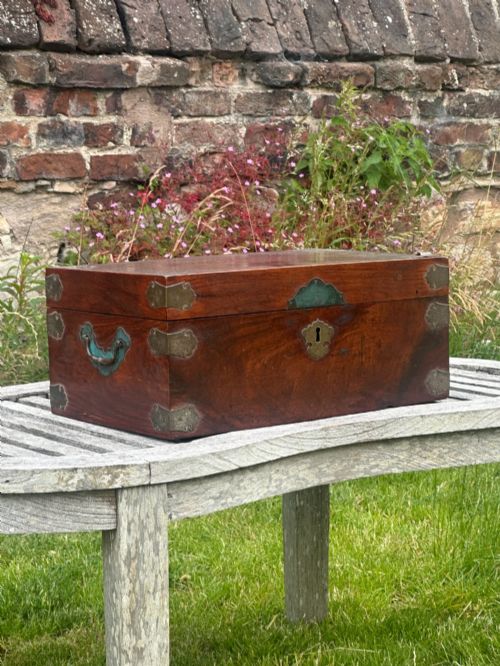
A brass fitted campaign chest brings together heavy timbers and metal mounts designed for officers on the move during the eighteenth and nineteenth centuries. Buyers searching for a brass fitted campaign chest will find trunk forms, blanket boxes, secretaire units, and drawer chests built to split into sections or withstand long journeys. Most examples appearing on this page date from the Victorian era and the nineteenth century, often showing colonial origins or military associations.
The timber choices reflect the travel requirements of their original owners, relying on dense woods like mahogany, teak, and camphor wood to resist warping in humid climates. Many pieces retain recessed brass corners, straps, and flush-fitting handles that allowed transport without snagging on ropes or pack saddles. Makers constructed these items to endure rough handling while maintaining internal fitted compartments for papers, uniforms, or valuables.
Materials and construction methods
Cabinet makers built these pieces using dense hardwoods such as mahogany, teak, padouk, and camphor wood, frequently strengthened with iron brackets and heavy brass plates. The corners and edges received wrap-around brass fittings secured by numerous small screws, protecting the framework against the impacts of transit.
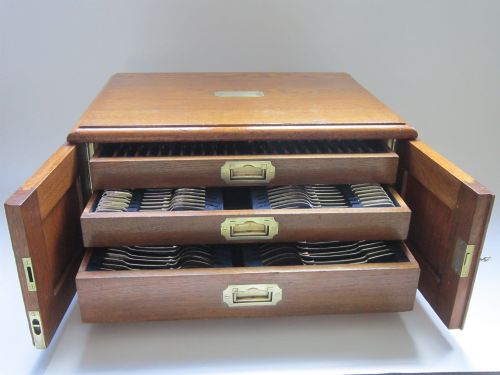
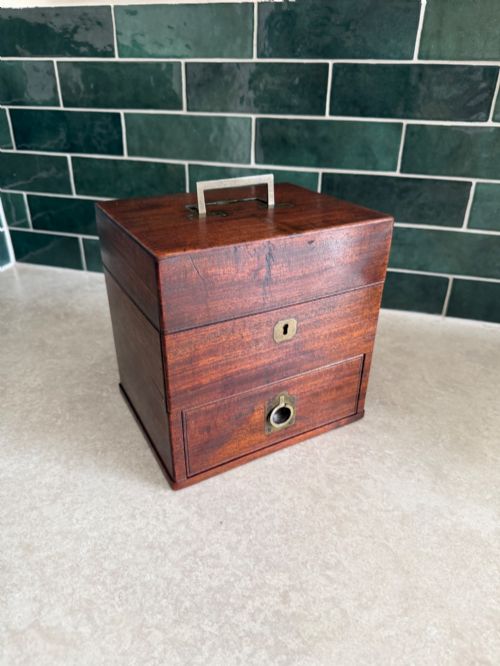
Drawers and interior compartments often utilised secondary timbers and incorporated secret drawers, drop-front writing surfaces, or specialised pigeonholes for documents. Flush-fitting brass drop handles and inset escutcheons ensured that the exterior remained smooth and free of projections that could catch during loading.
Some nineteenth-century camphor trunks retain the faint, lingering scent of aromatic wood after two centuries of travel.
Assessing quality and craftsmanship
The standard of a piece rests upon the weight of the timber, the precision of the joinery, and the completeness of the original brass hardware. Finer examples display solid wood construction rather than veneers, with tight dovetail joints on the drawers and robust internal partitions that remain intact.
Quality also shows in the integration of the brass fittings, which should sit flush into recessed channels in the wood rather than being surface-mounted. Pieces retaining their original fitted interiors, secret compartments, or working locks command greater attention from collectors than those altered or stripped of internal fittings.
The Brass Fitted Campaign Chest Glossary
- Campaign chest
- A portable set of drawers or a trunk constructed in sections for military officers on active service abroad. These items feature recessed handles and brass corners to facilitate packing and transport.
- Secretaire chest
- A chest of drawers featuring a fitted top drawer that drops open to reveal a writing surface and small pigeonholes. This combines desk functions with general storage in a single travel-friendly unit.
- Camphor wood
- A fragrant Asian timber utilised for campaign trunks and blanket boxes to deter insects and protect stored textiles. The wood possesses a distinct aroma and a richly figured grain.
- Escutcheon
- A protective metal plate surrounding a keyhole that strengthens the surrounding wood and guides the key. On these pieces, they are typically made of brass and countersunk into the surface.
- Dovetail
- A traditional interlocking joint used at the corners of drawers to ensure structural strength. Hand-cut versions help indicate the period and skill of the cabinet maker.
Brass Fitted Campaign Chest: Frequently Asked Questions
What is a brass fitted campaign chest?
A brass fitted campaign chest is a portable piece of furniture built in sections or as a trunk for officers on the move. It incorporates recessed metal hardware to protect vulnerable edges during transit.
These items date predominantly from the eighteenth and nineteenth centuries, utilising dense timbers like mahogany, teak, and camphor wood to endure difficult climates and rough handling.
How were campaign chests transported?
These chests were designed to pack onto animals, wagons, or ships, often separating into two distinct stackable sections for easier loading. The flush brass handles and corner brackets prevented the pieces from catching on ropes or canvas covers.
Officers used them to carry uniforms, documents, and personal valuables safely across long distances during military campaigns and colonial postings.
How do I identify a Victorian campaign chest?
Victorian examples generally date from the nineteenth century and feature heavy hardwoods like mahogany or teak, combined with countersunk brass corners and flush drawer pulls. Many split horizontally into two separate modules for travel.
Examining the construction reveals hand-cut dovetailing on the drawers and secondary timbers that align with nineteenth-century cabinet-making practices.