


Antique Green Storage Drawers
These antique green storage drawers bring practical surface utility and aged painted colour to domestic interiors.
Antique Green Storage Drawers
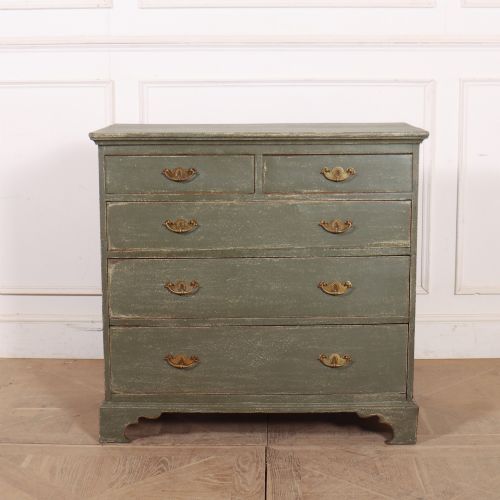
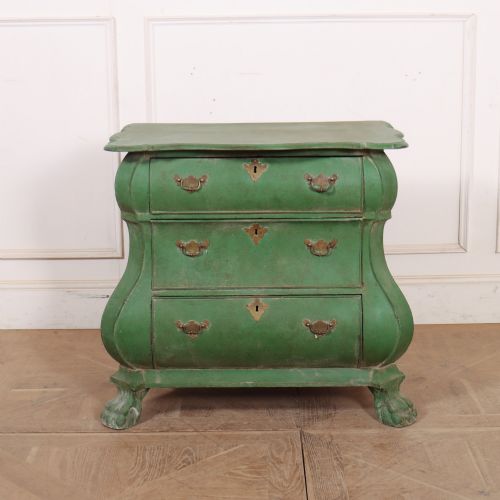
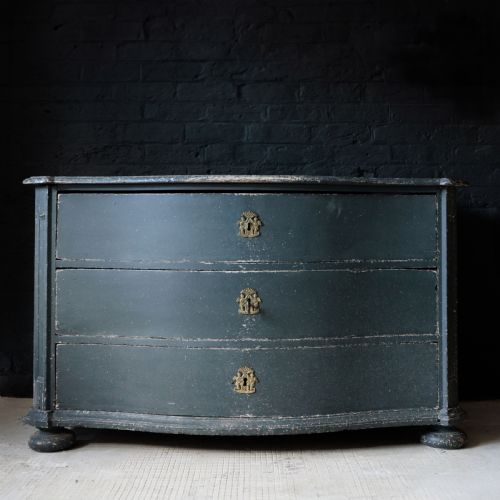
Antique green storage drawers encompass multi-drawer banks, commodes, and chests originating from periods between the eighteenth and twentieth centuries. These pieces appear in styles ranging from Georgian and Victorian to French Provincial and Dutch Baroque, constructed primarily for domestic or commercial storage.
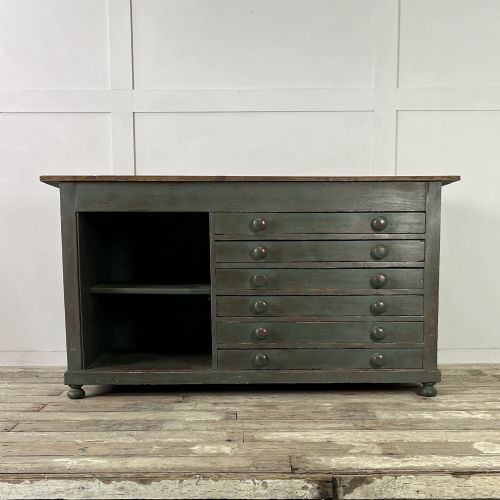
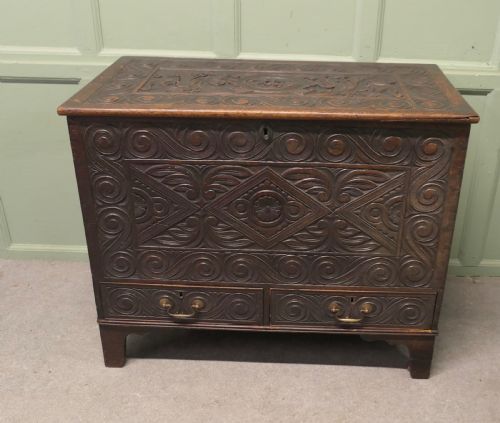
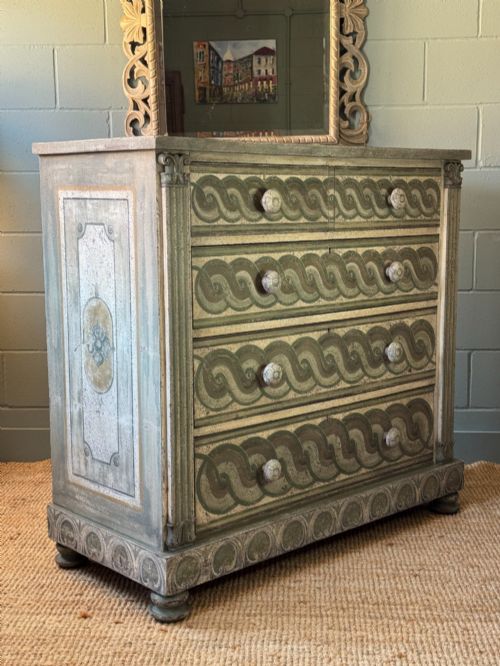
The version most commonly met on this page is the painted pine chest of drawers or shop fitting rendered in shades of green. Examples span from small cottage-sized mule chests to large banks of twenty-four drawers and collectors cabinets featuring brass hardware.
Quality factors in storage furniture
The distinction between standard utility items and finer examples rests in the integrity of the original painted surface and the proportion of the carcass. Pieces retaining untouched scumble paint or decorative carving demonstrate higher decorative survival.
Hardware originality and the smoothness of drawer operation distinguish superior items. Cabinets with complete period brass pulls and sound timber integrity command greater interest than heavily altered equivalents.
Listings feature pine and solid oak storage pieces finished in paint, metal, and brass across the eighteenth and nineteenth centuries.
The Antique Green Storage Drawers Glossary
- Scumble paint
- A decorative glazing technique where a translucent top layer of paint is manipulated over a lighter base colour to create mottled or textured visual depth. This finish appears frequently on nineteenth-century pine storage pieces.
- Commode
- A decorative low chest of drawers originating in French cabinetmaking and later adopted across European furniture styles. These pieces often feature serpentine or bombe fronts.
- Mule chest
- A traditional storage chest featuring one or more drawers built into the lower base beneath a hinged lid compartment. They combine the storage capacity of a trunk with the access of drawer units.
- Bank of drawers
- A multi-drawer storage unit originally designed for commercial, workshop, or institutional use rather than domestic bedrooms. They provide numerous smaller compartments for organised sorting.
Antique Green Storage Drawers: Frequently Asked Questions
How do I clean painted drawers?
Dust surfaces regularly with a dry microfibre cloth to prevent the accumulation of grit on the painted finish. Avoid harsh chemical cleaners or excessive moisture that might soften historic paint.
Test any mild cleaning solution on a hidden area before applying it to visible exterior surfaces. Preserving the integrity of the original green paint requires gentle handling.
Are these drawers suitable for daily use?
Solid timber and traditional joinery make these pieces robust enough for contemporary storage needs. Drawers slide on historic runners which may require occasional waxing for smooth operation.
Ensure weight is distributed evenly inside the drawers to prevent undue strain on old timber bases. Regular domestic use is entirely practical with sensible handling.
How do I date a painted chest?
Examine the construction methods visible inside the drawer boxes and the backboards for tool marks and timber ageing. Dovetail joints and timber types offer primary clues to the century of manufacture.
Compare the painted surface layer with known historic finishes like scumble or lead-based paints. Hardware styles and secondary woods also assist in confirming the period.
Where should I place a green cabinet?
Position these storage units away from direct sunlight and heat sources to prevent timber warping and paint fading. Adequate clearance from radiators maintains stable humidity levels around the antique wood.
Consider the scale of the room when placing large banks of drawers or commodes against feature walls. Their distinct green tones function effectively as focal storage points.