




Brass Bound Drawers
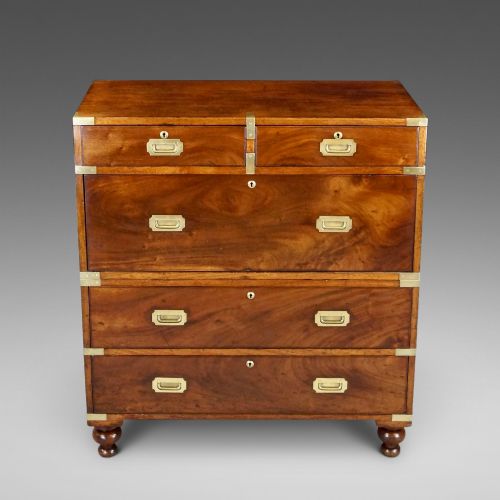
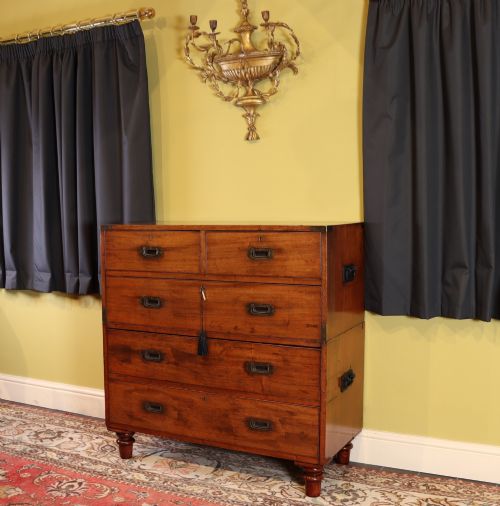
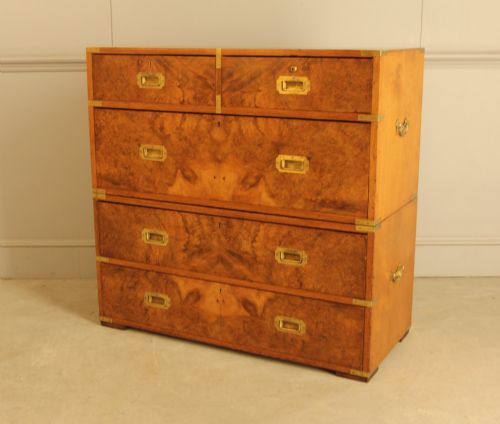
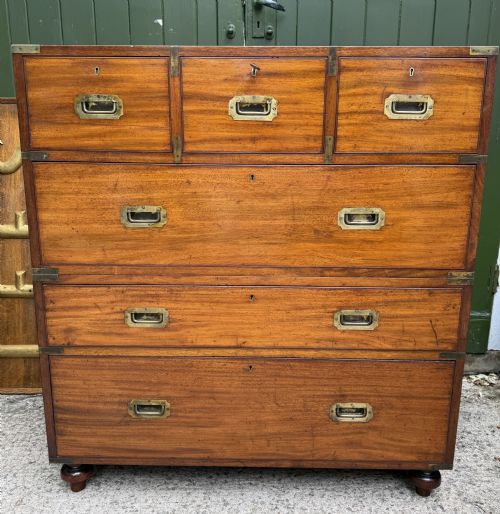
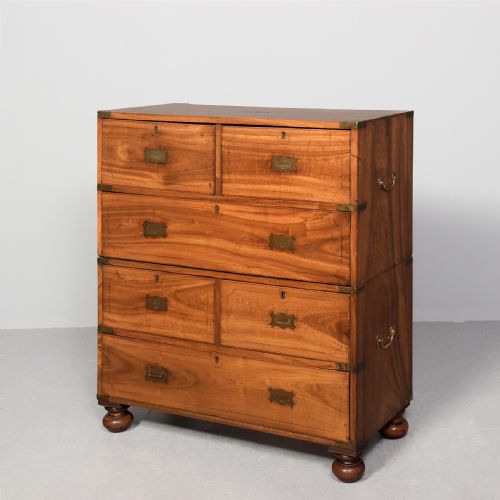
Brass bound drawers encompass the robust campaign chests and portable writing slopes designed for travel.
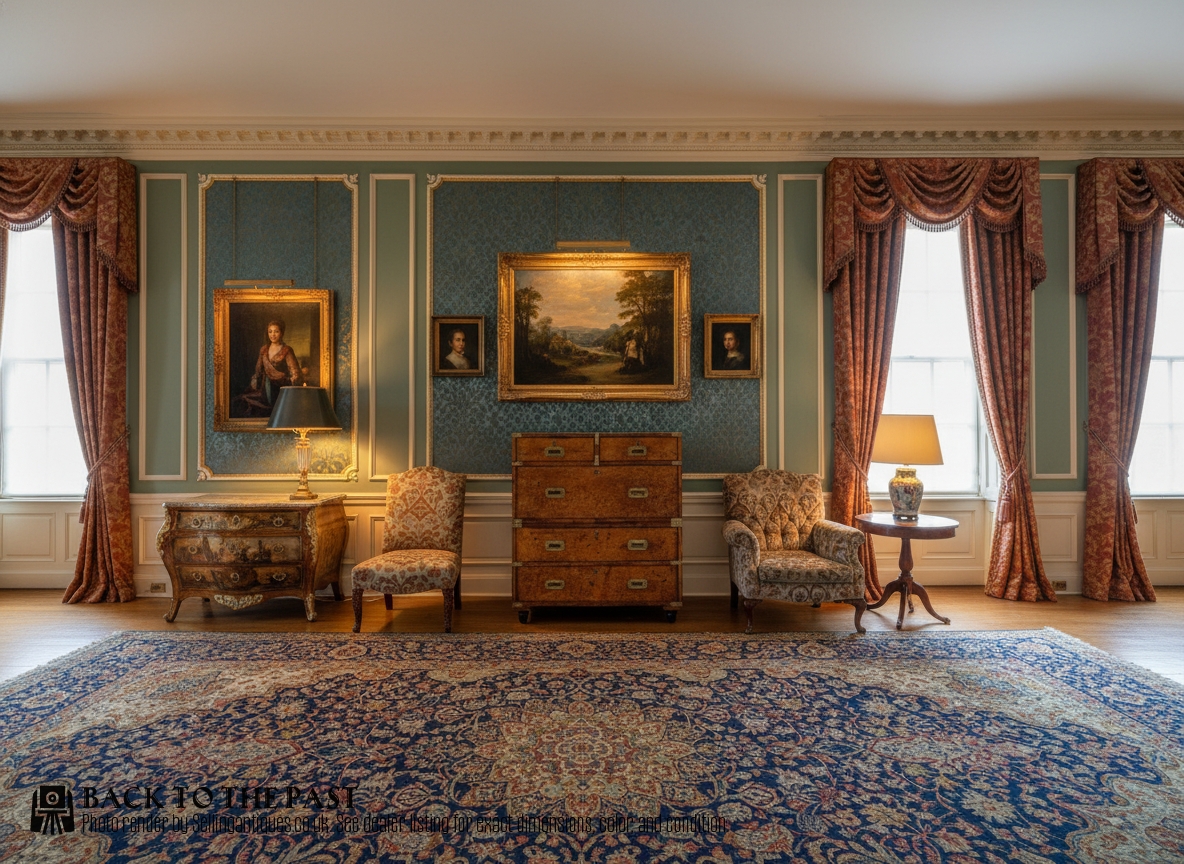
Brass Bound Drawers
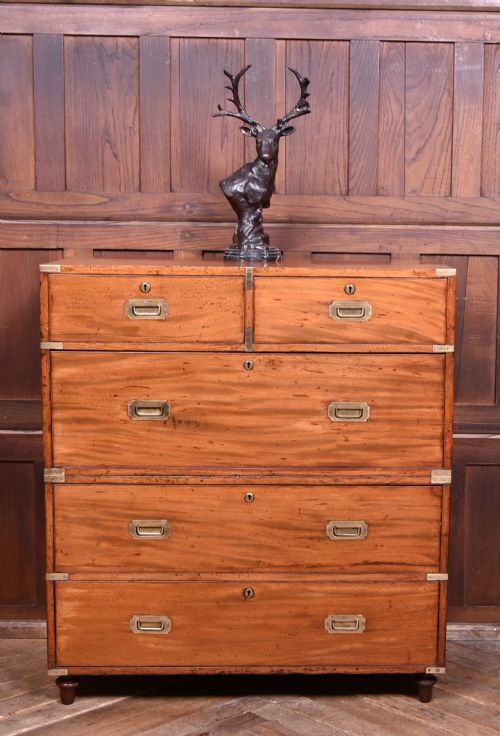
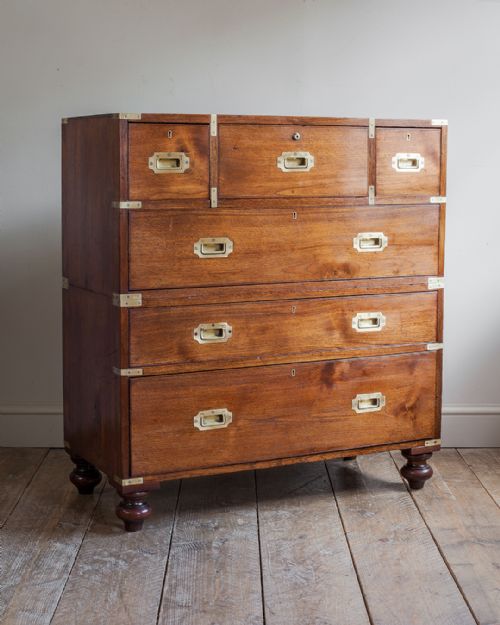
When you search for brass bound drawers, you encounter utilitarian furniture built for officers on the move during the nineteenth century. These pieces divide into two primary forms: modular campaign chests constructed in sections for easy transport, and portable writing slopes lined with velvet and fitted with secret compartments.
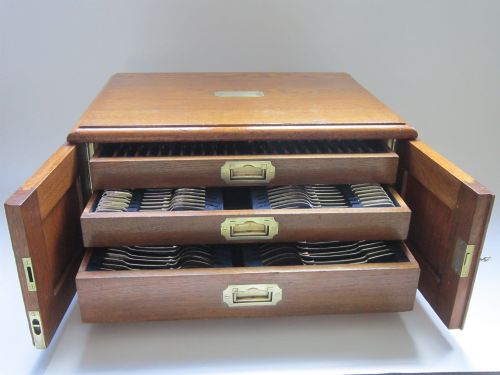
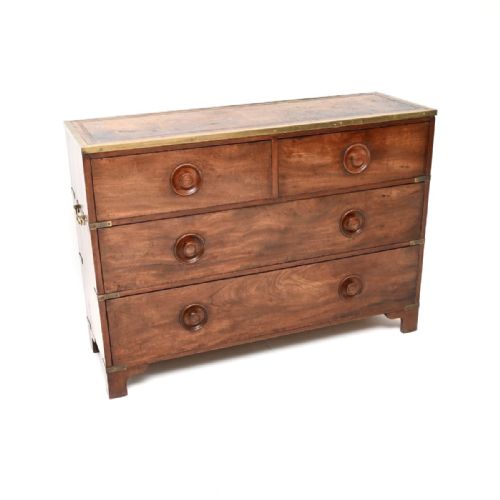
The majority of what you meet on this page dates from the Victorian era, particularly the middle decades of the nineteenth century. Alongside full-size chests of drawers, the selection includes smaller desktop storage items, trunks, and compact bureaus that share the same metal corner reinforcement.
Woods such as mahogany, teak, and camphor wood predominate, chosen for their resilience in tropical climates. Walnut and burr walnut appear frequently on more refined domestic iterations and writing slopes intended for static use rather than field service.
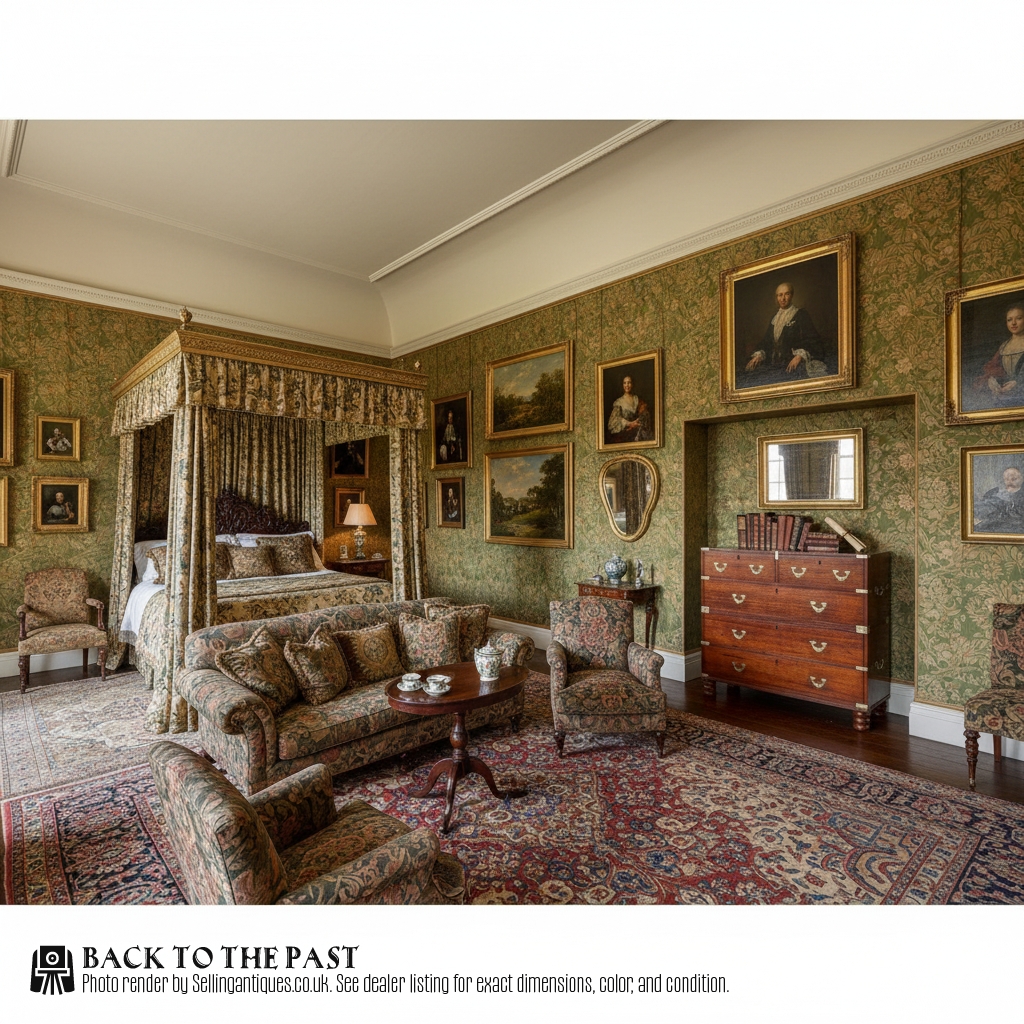
How they were made
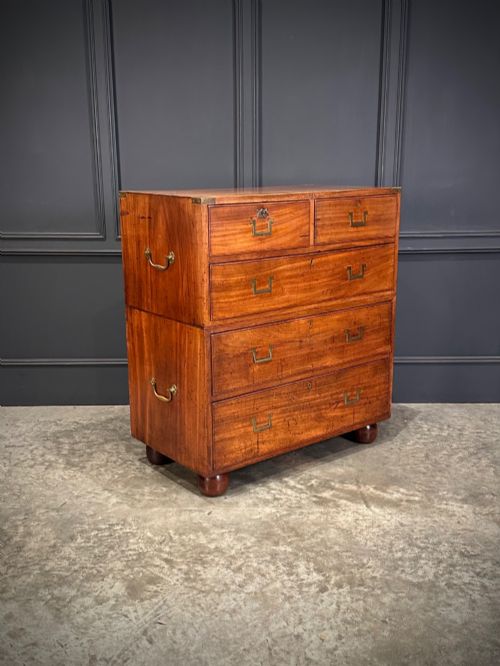
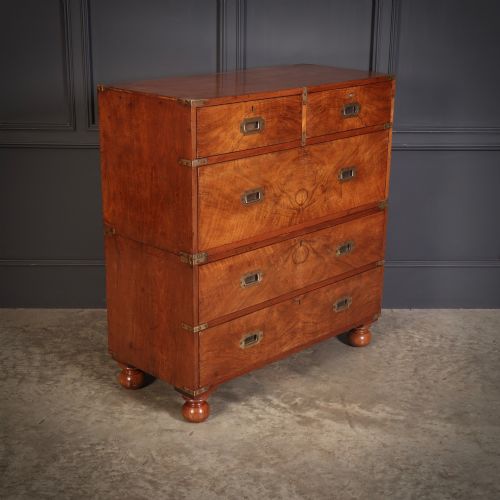
Cabinetmakers constructed campaign chests in two or more stacking sections, housing the joints in solid mahogany, teak, or camphor wood. Brass corners, strapwork, and flush inset handles protected the edges from the knocks of military transit and prevented the timber from splitting in extreme humidity.
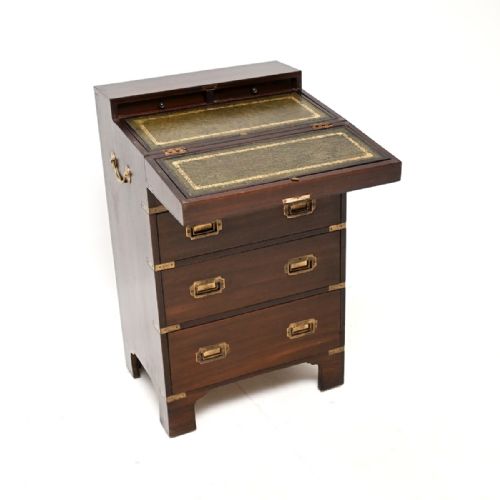
Writing slopes utilised dense hardwoods like rosewood, coromandel, and walnut, reinforced with heavy brass edging and escutcheons. These portable boxes contained internal partitions, leather writing surfaces, and concealed drawers released by hidden spring mechanisms.
Secret drawers require pressing hidden spring catches inside the stationery partitions to release the panels.
What varies in quality
The distinction between standard campaign furniture and exceptional pieces rests on the weight of the brasswork and the precision of the joinery. Superior examples utilise heavy, hand-cast brass plates screwed directly into recessed timber pockets, whereas lesser versions rely on thinner brass sheets or superficial corner brackets.
Internal secondary timbers also separate the grades. Top-tier pieces maintain solid oak drawer linings and original Bramah locks, while more modest variants employ softer secondary woods and standard mechanical locks without maker signatures.
S. W. Silver & Co. London & Liverpool·Ross & Co.·Army & Navy·Army & Navy CSL
The Brass Bound Drawers Glossary
- Campaign chest
- A modular chest of drawers built in two or more stacking sections for military transport. These units typically feature recessed brass handles and corner brackets to withstand rough handling.
- Writing slope
- A portable box with a slanted, hinged writing surface that opens to reveal storage for stationery. They often incorporate secret compartments and leather inserts.
- Secret drawers
- Concealed compartments hidden behind false panels or accessed via spring-loaded mechanisms within writing slopes and bureaus. They were designed to secure valuables and confidential papers.
- Bramah lock
- A high-security cylindrical lock patented by Joseph Bramah in the late eighteenth century. These locks are frequently found on quality nineteenth-century writing slopes and campaign pieces.
- Escutcheon
- A protective metal plate surrounding a keyhole. On these pieces, they are cast in brass and often flush-mounted into the wood surface.
Brass Bound Drawers: Frequently Asked Questions
Why do campaign chests split into sections?
These chests were engineered to divide into two or more distinct modular parts for ease of loading onto pack animals, wagons, and ships during military campaigns.
This construction also reduced the overall weight of each individual unit, allowing officers to move their heavy belongings without specialised lifting equipment.
How do I use a writing slope?
A writing slope opens outward to create an angled, leather-lined surface positioned comfortably for handwriting with ink and quill.
Inside the folding lid, you find dedicated slots for inkwells, pens, and paper, keeping your writing supplies organised in one portable case.
What is camphor wood used for?
Camphor wood provides a dense, aromatic timber that naturally resists insects and moisture, making it ideal for campaign furniture bound for tropical climates.
Chests made from this wood often retain a distinct herbal scent that protected stored uniforms and documents from moths.
How do I identify a military chest?
Military chests feature flush-mounted brass handles and reinforced brass corners that prevent the wooden edges from catching or splitting during transit.
They also tend to have removable turned feet and iron carrying side handles to assist with frequent relocation.