

Brass Fireside Log Bucket
A brass fireside log bucket brings functional metalwork and hearthside utility to the living room.
Brass Fireside Log Bucket
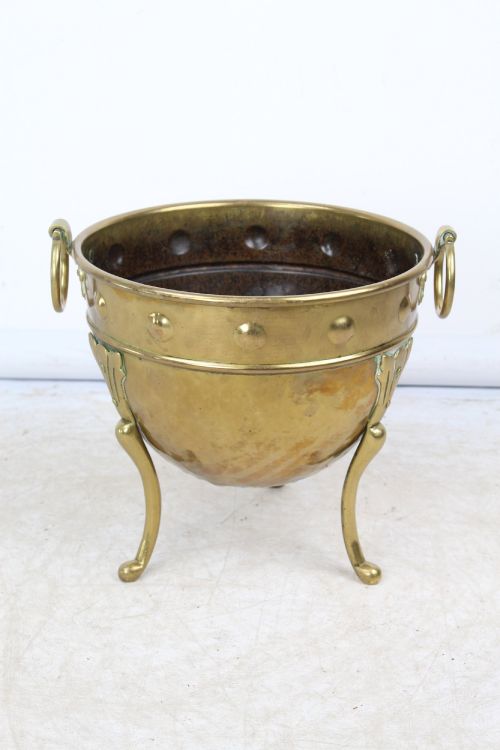
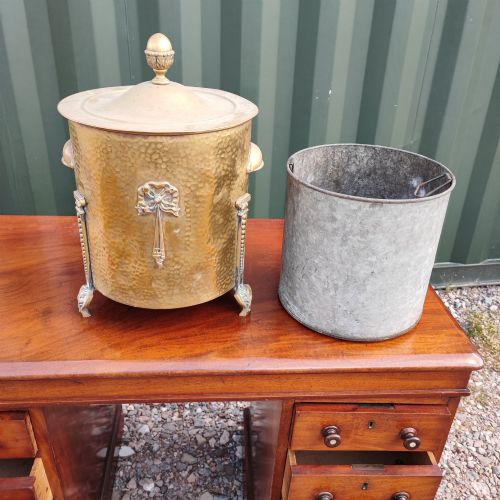
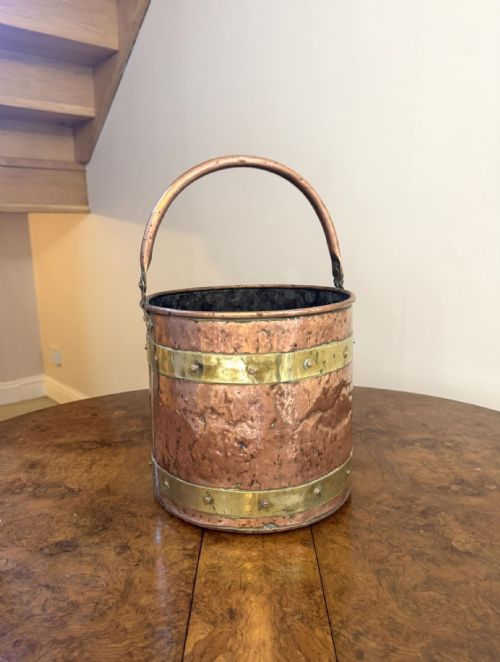
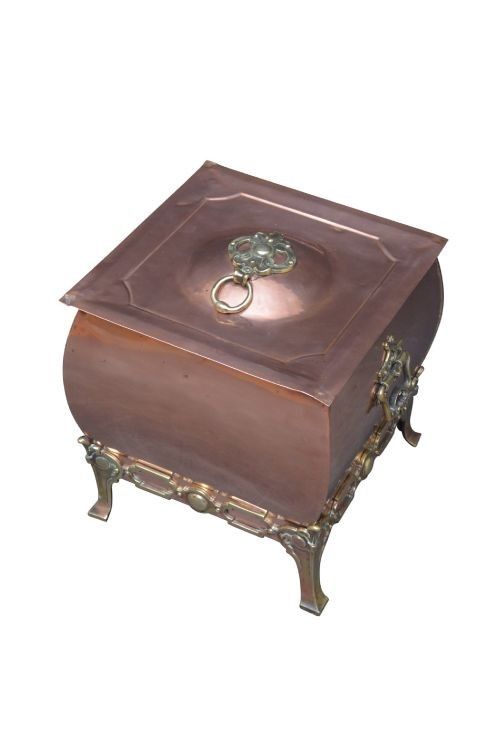
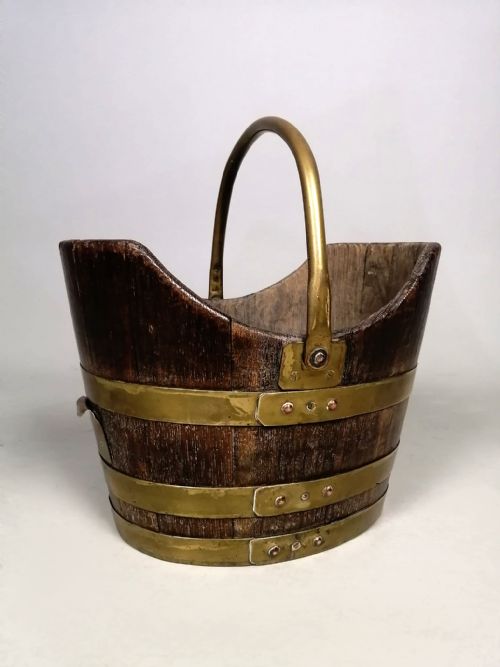
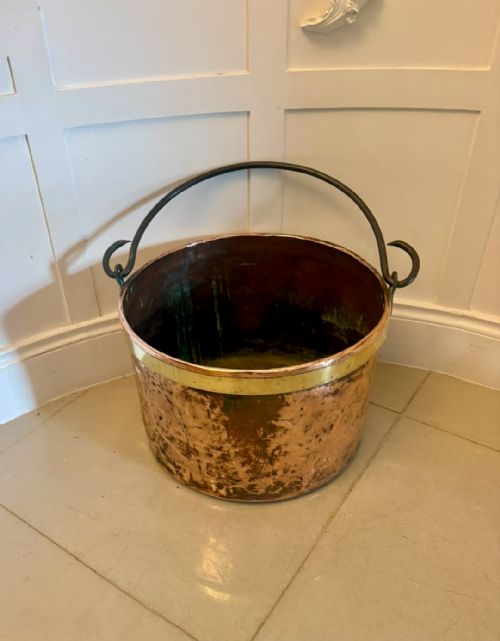
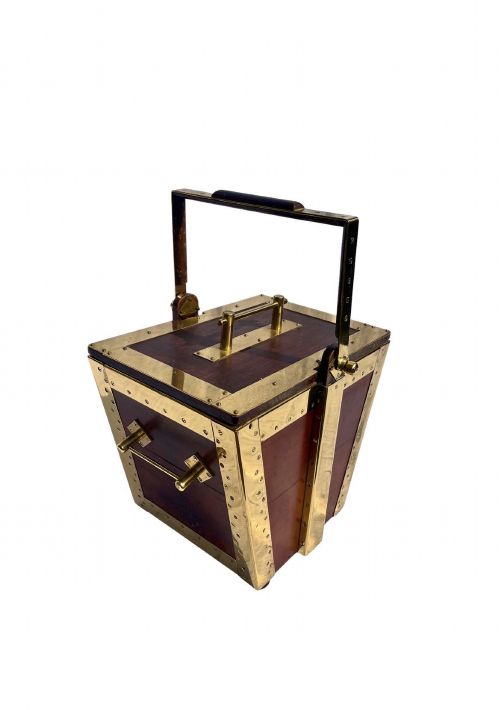
A brass fireside log bucket serves as a sturdy container for hearth fuel, combining practical fuel storage with decorative metalwork. You will frequently encounter Victorian and Edwardian examples on this page, alongside pieces from the Regency and Arts and Crafts periods.
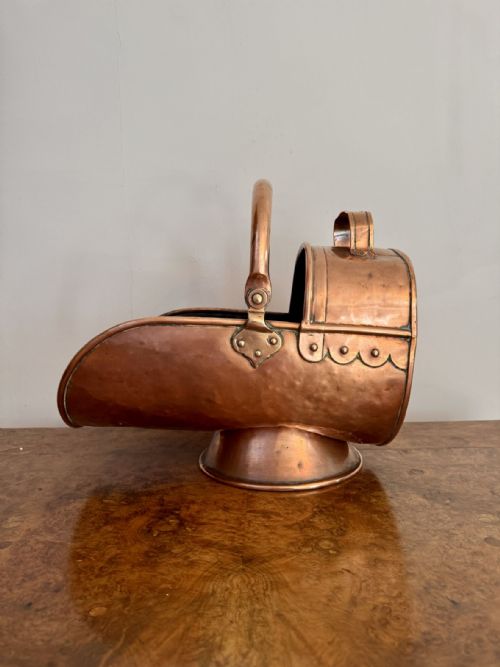
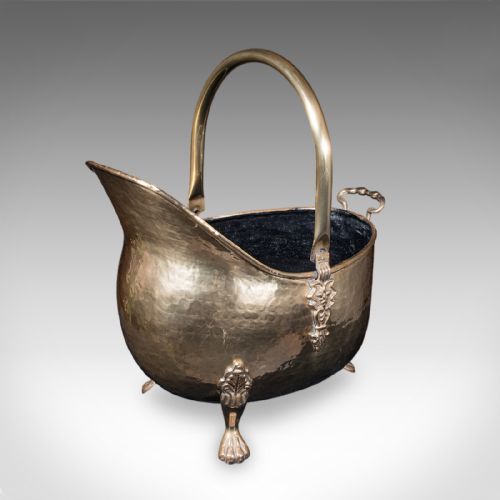
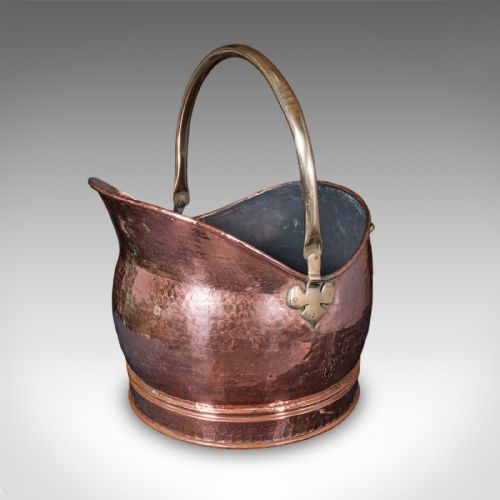
The selection ranges from helmet-shaped scuttles to cylindrical bins and banded wooden buckets fitted with metal hardware. Many double as planters or general fireside stores, reflecting domestic uses past and present.
How They Were Made
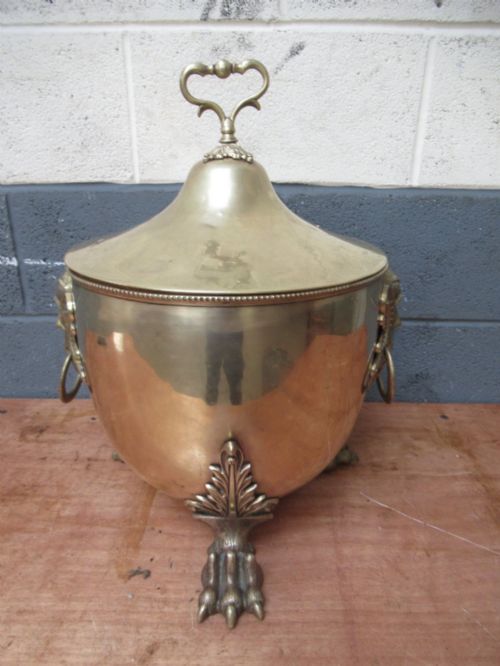
Craftsmen shaped sheet brass and copper through beating, riveting, and embossing, often applying contrasting bands of metal or wood. Oak and mahogany bodies appear frequently, secured with brass hoops, lion-mask ring handles, and liners.
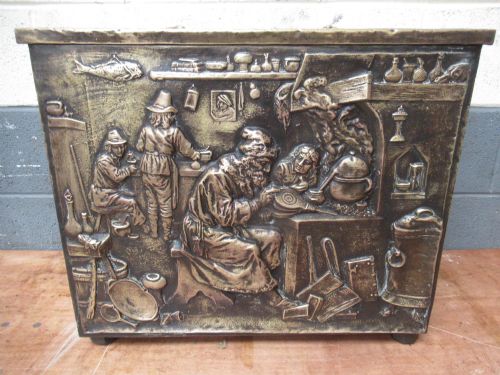
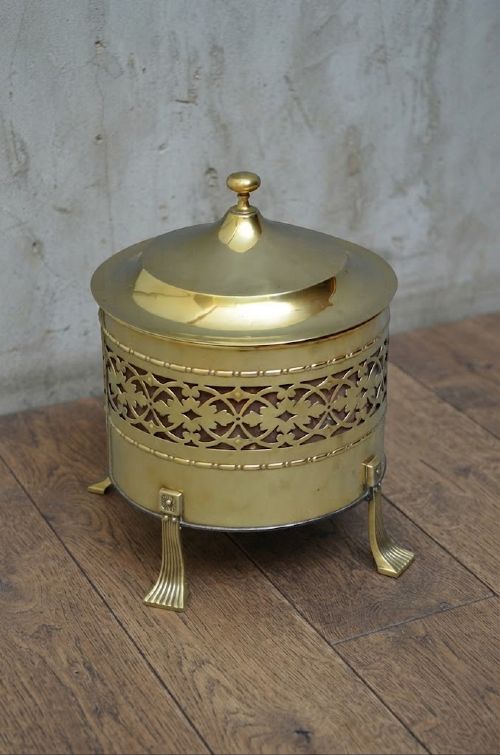
Surface decoration spans hand-beaten textures, fretwork designs, and embossed tavern scenes, particularly within Arts and Crafts pieces. Handles and shovels were cast or forged separately to withstand daily handling.
Some Edwardian buckets moonlighted as indoor planters when the coal fire went out for the summer.
What Varies in Quality
The distinction between standard containers and finer work rests on gauge thickness and the crispness of hand-finishing. Heavy-gauge metal resists dents and holds its form better under the weight of logs and coal.
Attention to detail separates routine items from superior ones, visible in the precision of riveted seams, the depth of embossed or hand-hammered motifs, and the inclusion of matching shovels or original liners.
Henry Loveridge·Petrus Ramus
The Brass Fireside Log Bucket Glossary
- Helmet Scuttle
- A coal container featuring a high back and a sloping spout designed for pouring fuel cleanly. This shape was widely produced in the Victorian and Edwardian eras.
- Purdonium
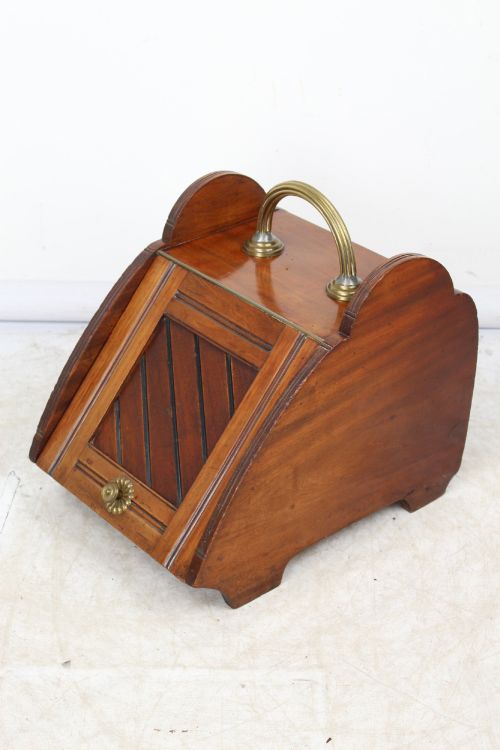
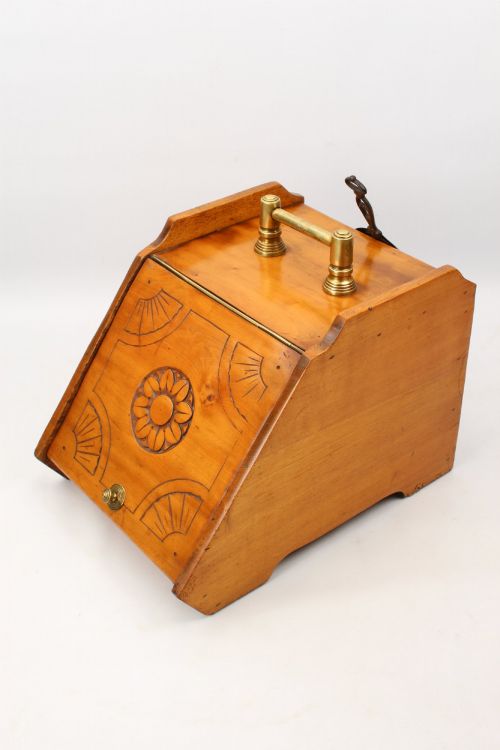
- A domestic coal box, usually featuring a hinged lid and a sloping front drop-door containing a metal liner. These were designed to sit neatly in a Victorian drawing room.
- Fretwork
- Openwork ornamentation cut from sheet metal or wood using a piercing saw. Edwardian buckets frequently utilise this technique around the rim or body.
Brass Fireside Log Bucket: Frequently Asked Questions
What is a brass fireside log bucket?
A brass fireside log bucket is a functional hearthside container designed to hold firewood, kindling, or coal. These vessels combine metal bodies with sturdy handles for carrying fuel to the grate.
They appear in various forms, including cylindrical bins, helmet scuttles, and wood-stave buckets banded in brass.
How do I date a brass log bucket?
Dating relies on stylistic clues, construction methods, and materials recorded across Victorian, Edwardian, and Regency periods. Embossed floral motifs and helmet shapes often point to the nineteenth century.
Arts and Crafts examples show hand-hammered surfaces typical of the late nineteenth and early twentieth centuries. Oak and mahogany staves with brass lion-mask rings frequently suggest Regency or early nineteenth-century manufacture.
Can I use an antique bucket for real logs?
These vessels were originally built for heavy daily use carrying fuel, coal, and logs in domestic hearths. Many retain metal liners or robust riveted construction suited to holding wood.
Checking for a sturdy base and a watertight or durable interior helps determine if a piece suits active fireside service.
How should I clean a brass log bucket?
Cleaning depends on the desired finish and the presence of patination built up over decades of domestic use. Dusting with a soft cloth preserves the historic surface of copper and brass.
Polishing metal surfaces is a matter of personal preference, though many collectors choose to retain the aged dark tones found on antique examples.