


Brass Scuttle Lion Head
These brass scuttle lion head fireside pieces bring practical warmth and character to a hearth, uniting heavy metalwork with traditional utility.
Brass Scuttle Lion Head
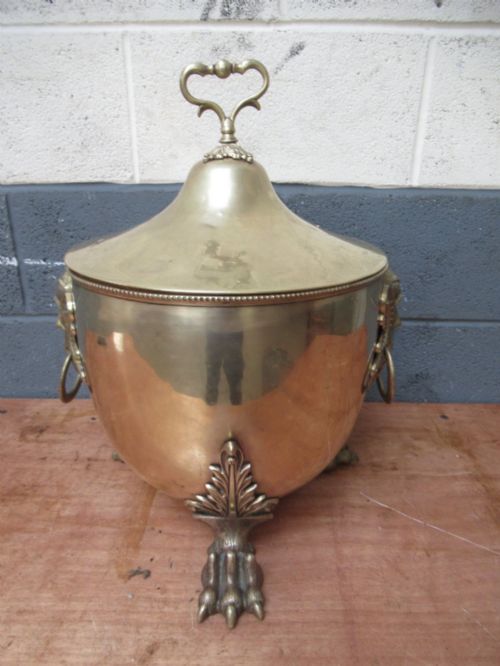
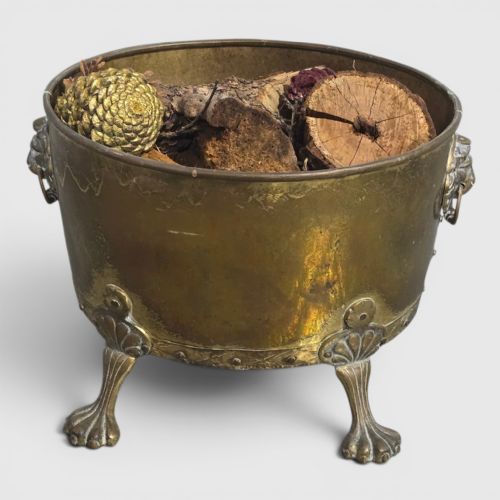
When you search for brass scuttle lion head accessories, you are looking at substantial hearthware designed for storing fuel by the fire. The pieces seen here span the Victorian, Regency, and Edwardian eras, with nineteenth-century examples forming the core of the selection.
These items serve primarily as coal buckets, log bins, and fireside stores, with several forms crossing over into large planters and jardinieres. The construction frequently pairs solid brass bodies with contrasting copper bands or pine linings to create a robust vessel.
Victorian and nineteenth-century examples dominate the offerings, showing how utilitarian fireside objects were elevated through decorative metalwork. Buyers will encounter both deep cylindrical bins and traditional scuttle shapes fitted with sturdy carrying handles.
Materials and construction methods
The primary material across the selection is hammered and embossed brass, often complemented by warm copper banding and heavy metal fittings. Makers utilised durable base metals that could withstand regular handling and the heat of a domestic hearth.
Construction techniques involve joining sheet metal bodies to sturdy internal structures, sometimes incorporating secondary woods like pine or ebony details. Surface ornamentation relies on repoussé work and embossed detailing rather than applied casting alone.
Judging quality in hearthware
Quality rests upon the crispness of the embossed metalwork and the gauge of the brass used in the body. Thicker metal resists denting better and maintains its structural integrity through decades of daily use.
The integrity of the construction, from the security of the handles to the tightness of the metal seams, separates standard utilitarian bins from finer decorative pieces. Better examples retain harmonious proportions and crisp surface detail without excessive thinning from polishing.
Petrus Ramus
The Brass Scuttle Lion Head Glossary
- Repoussé
- A metalworking technique where the metal is hammered from the reverse side to create a raised design on the front. This method gives Victorian coal scuttles their characteristic textured panels.
- Jardiniere
- An ornamental pot or stand designed to hold plants or flowers. Several large brass vessels function dually as fuel bins and indoor planters.
- Dinanderie
- An old term for medieval and later brass or bronze wares, particularly domestic vessels. It refers to the traditional Belgian centre of brass production.
- Aesthetic Movement
- A late nineteenth-century design style that emphasised visual beauty over narrative subject matter. Pieces from this period often display refined surface patterns and simple geometric harmony.
- Regency
- An architectural and decorative style spanning the early nineteenth century. Items from this era typically exhibit classical restraint and clean proportions.
Brass Scuttle Lion Head: Frequently Asked Questions
What were brass scuttle lion head bins used for?
These vessels served primarily to hold coal, logs, or peat beside a fireplace for domestic heating.
They kept fuel close at hand while concealing messy debris within a decorative metal container.
How do I clean an antique brass scuttle?
Gentle dusting with a soft cloth is usually sufficient to maintain the surface without removing historical character.
Avoid harsh chemical dips that strip away the aged patina built up over generations.
Can these bins be used as planters today?
Many large brass and copper vessels function effectively as indoor jardinieres for substantial house plants.
Using an internal liner protects the historical metal from direct contact with damp soil and water.
How do I identify a Victorian piece?
Victorian items often feature heavier gauge brass, embossed floral or figurative panels, and robust copper banding.
Construction methods typically show hand-finished seams and traditional riveting consistent with nineteenth-century workshops.