
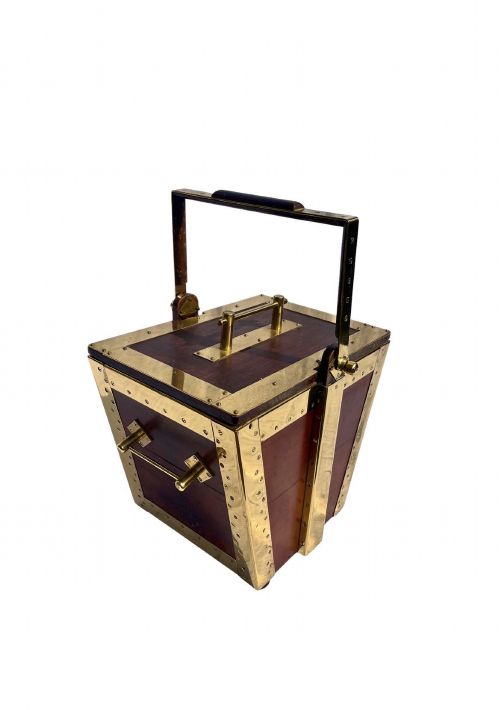
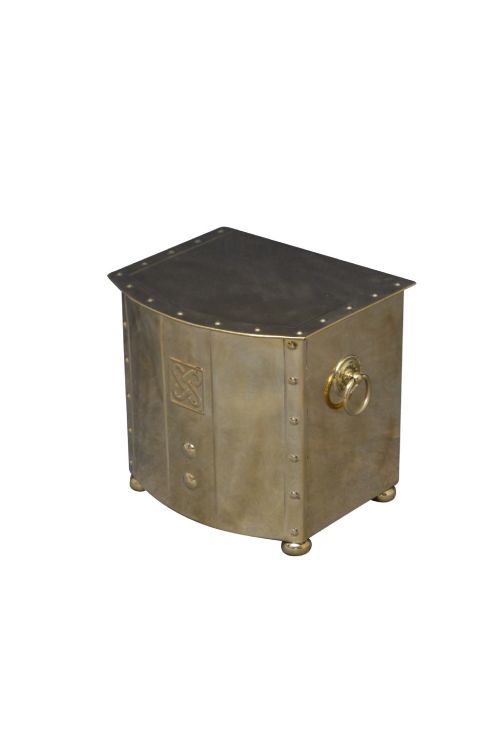


Brass Fireside Box
A brass fireside box brings domestic utility and gleaming metalwork into the hearth room.
Brass Fireside Box
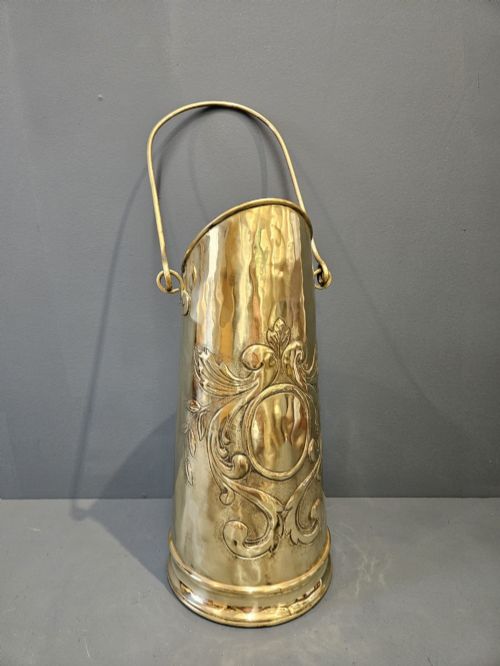
A brass fireside box serves as a functional container for coal, logs, and kindling, keeping fuel tidy beside the hearth. These pieces appear across Victorian, Edwardian, and Art Deco periods, manifesting as scuttles, purdoniums, and helmet buckets.
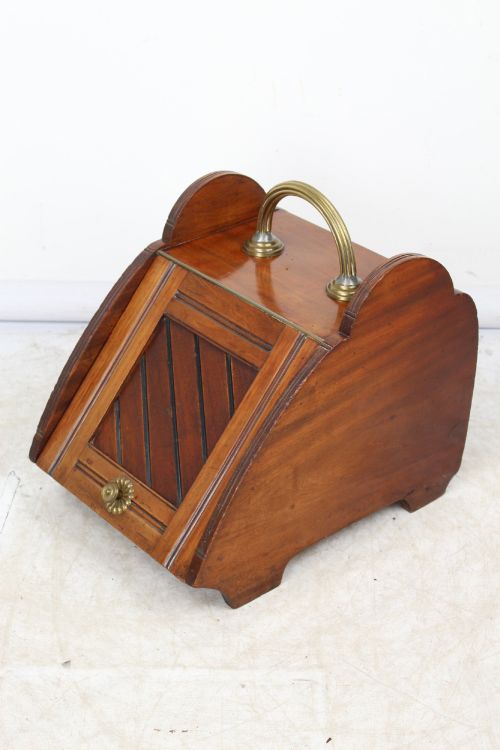
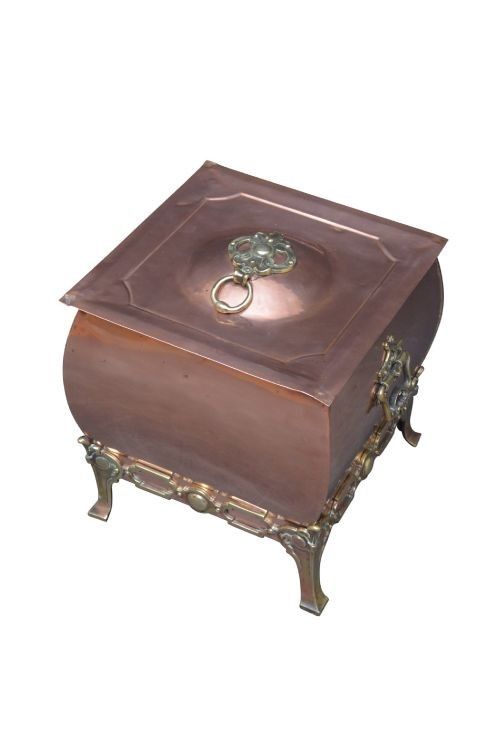
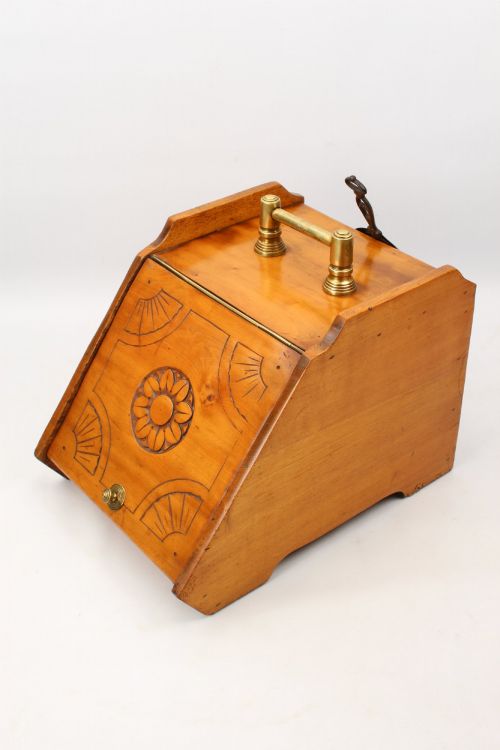
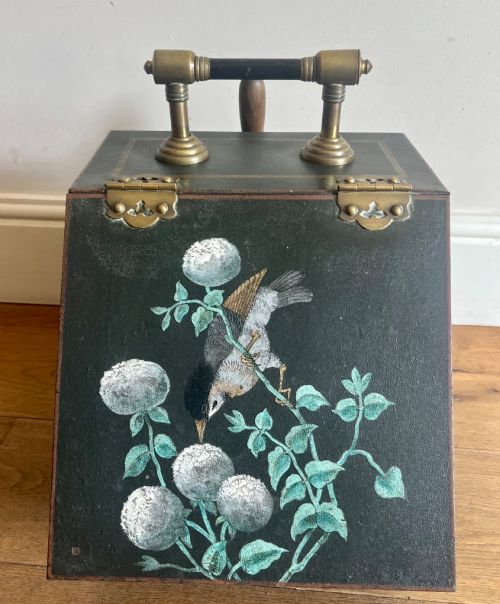
The most common version on this page is the Victorian brass-mounted coal box or scuttle, frequently paired with wooden bodies of oak or walnut. Metal versions in polished brass, copper, or toleware sit alongside fitted cabinets and lidded bins.
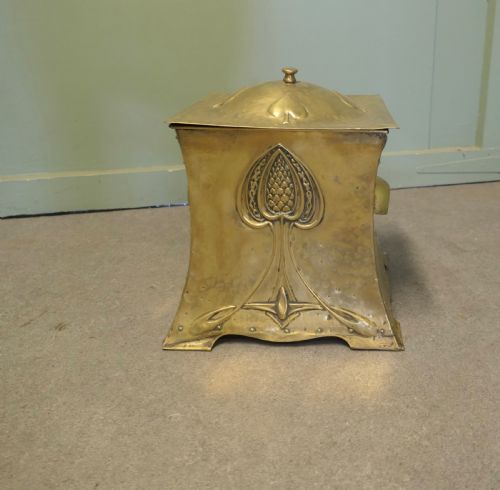
Origins stretch from English workshops to Scottish and French makers, incorporating stylistic influences from the Arts and Crafts movement, Art Nouveau, and Aesthetic periods. Buyers encounter everything from simple bucket forms to ornate cabinets with original liners and shovels.
How They Were Made
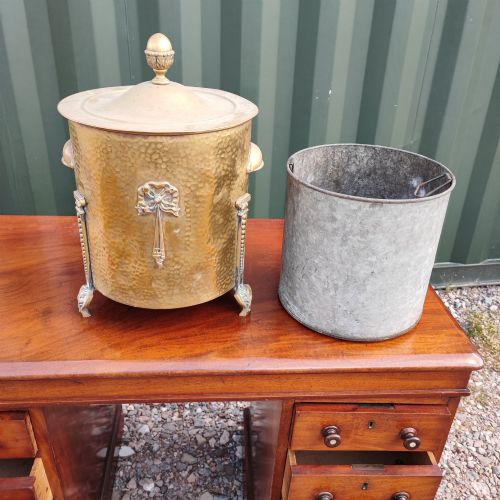
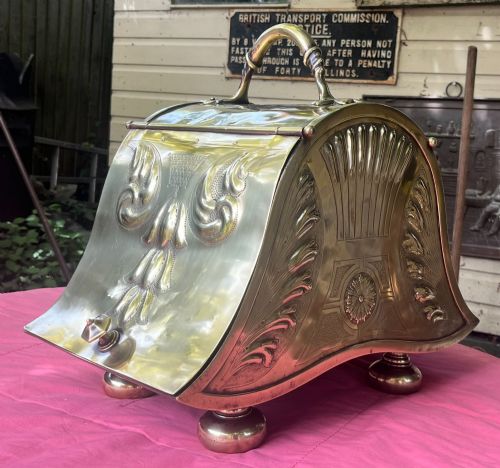
Constructed primarily from sheet brass and copper, these pieces combine metalworking techniques with traditional cabinetmaking in oak, mahogany, and walnut. Hand-beaten surfaces, embossed panels, and applied ormolu mounts demonstrate the varied metal manipulation of the nineteenth and early twentieth centuries.
Wooden bodies utilise dovetail joints and fielded panels, enhanced by brass hinges, handles, and drop-down fronts designed for frequent hearthside use. Many incorporate zinc or tin liners to contain coal dust and moisture, preserving the timber and metal framework.
Listings span the Victorian, Edwardian, and Art Deco periods, featuring materials such as brass, copper, oak, walnut, and pine.
What Varies in Quality
Quality rests upon the weight of the gauge used in the brasswork and the crispness of any hand-beaten or embossed decoration. Thicker metal plates resist dents and hold structural integrity under the daily demands of fuel storage.
Cabinetwork distinguishes the finer examples, seen in tight joinery, figured walnut or oak veneers, and intact original liners and shovels. Well-executed Art Nouveau or Arts and Crafts motifs elevate an ordinary fuel container into a considered decorative object.
Benham and Froud·Henry Loveridge
The Brass Fireside Box Glossary
- Purdonium
- A dedicated coal cabinet featuring a sloping front or drop-down door designed for domestic hearths. These Victorian and Edwardian boxes often house a removable metal liner.
- Coal Helmet
- A bucket or scuttle shaped like an inverted military helmet with a wide mouth for scooping fuel. The form allows easy access to coal while containing smaller pieces.
- Toleware
- Lacquered or enamelled metalware produced in imitation of Asian lacquerwork. These decorative painted boxes add colour to fireside settings.
- Ormolu
- Gilded bronze or brass ornamentation applied to furniture and boxes. The technique enhances the decorative appeal of nineteenth-century bins.
- Slipper Box
- A covered fireside box with a sloping lid resembling a slipper. They were traditionally used to store slippers, logs, or kindling near the heat.
Brass Fireside Box: Frequently Asked Questions
What is a brass fireside box?
A brass fireside box is a utilitarian container designed to hold coal, logs, or kindling near a fireplace. These lidded bins, scuttles, and purdoniums keep hearth fuel neatly stored.
They combine metal construction with decorative detailing, serving as both practical fuel stores and ornamental accessories for the chimney breast.
How were they used historically?
These boxes sat beside open fires to supply fuel throughout the day without frequent trips outside. They often included matching metal shovels and removable liners for ash and coal dust.
Cabinet versions with drop-down fronts made it easy to shovel fuel directly into the grate while concealing the contents from view.
How do I style one at home?
Place a brass box directly beside a working or decorative fireplace to anchor the hearth arrangement. They work well filled with neatly stacked logs, even if you do not burn coal.
The reflective metal surface complements both traditional brick hearths and contemporary minimalist living spaces.
How do I date a fireside box?
Dating relies on stylistic clues, materials, and construction methods characteristic of different eras. Victorian examples often feature heavy brass mountings and carved oak, while Edwardian pieces lean towards inlaid mahogany.
Art Nouveau and Arts and Crafts versions display characteristic hand-beaten textures and stylised floral motifs from the late nineteenth and early twentieth centuries.