


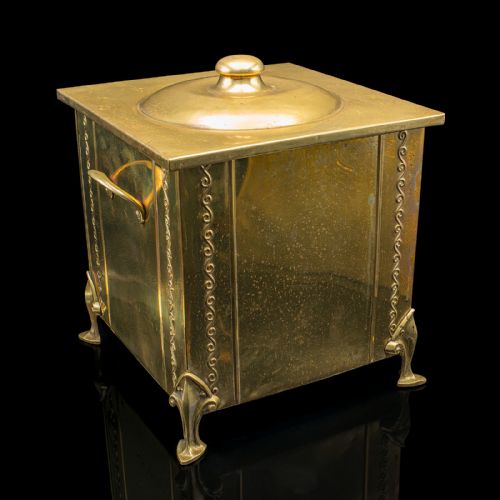

Metal Log Box
These metal log box pieces bring sturdy fireside utility and distinctive period character to the hearth, drawing on Victorian and Arts and Crafts traditions.
Metal Log Box
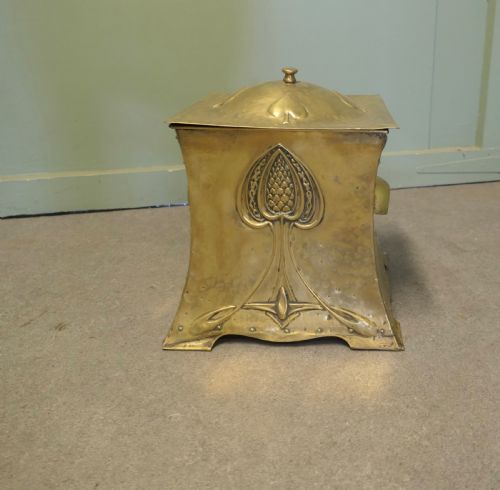
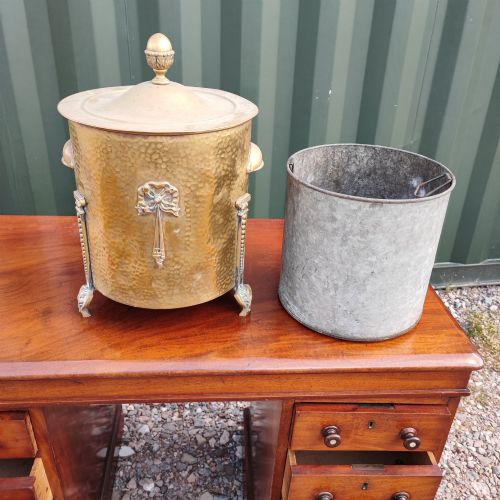
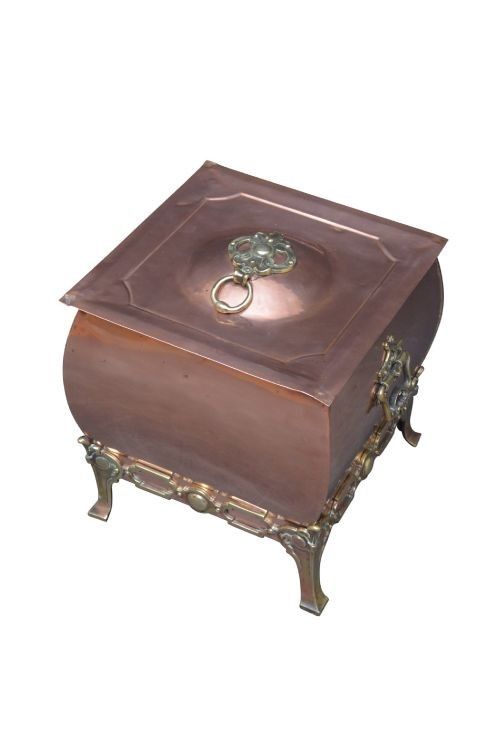
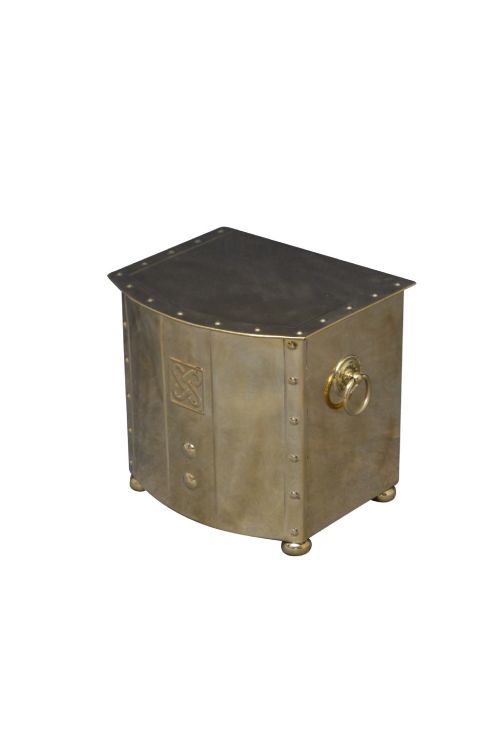
A metal log box is a fireside accessory designed for storing fuel, appearing across periods from the nineteenth century into the early twentieth century. You will encounter various forms here, including lidded bins, coal scuttles, slipper boxes, and bucket planters.
The pieces on this page span styles such as Victorian, Arts and Crafts, Art Nouveau, and Industrial Utilitarian. Many bridge the gap between practical coal storage and decorative hearth furniture.
Makers utilised resilient metals and sometimes paired them with wood or wrought iron. The selection includes brass and copper examples alongside galvanised iron and folk art painted toleware.
How they were made
Makers worked primarily in sheet brass and copper, hammering, riveting, and embossing the metal plates to create decorative panels and sturdy bodies. Wrought iron and plain iron provided rigid framing and handles for heavier containers.
Many items incorporate internal metal liners to contain debris and moisture from fuel. Mahogany and other woods occasionally form the main body or base, augmented by metal bands, lids, and accessories such as shovels.
Design styles represented include Victorian, Arts and Crafts, Art Nouveau, Folk Art, and Industrial Utilitarian.
What varies in quality
Quality rests in the weight of the metal gauge and the firmness of the construction. Thicker brass and copper resist dents, while robust riveting and solid handles show the maker's hand.
Decoration separates standard utility items from finer examples. Hand-beaten repoussé work, specific style motifs like Arts and Crafts spade decoration, and blacksmith-made detailing elevate the piece.
Henry Loveridge
The Metal Log Box Glossary
- Repoussé
- A metalworking technique where the artisan hammers the design from the reverse side to form raised patterns on the front. This method appears frequently on decorative copper and brass boxes.
- Toleware
- Metalware coated with lacquer or enamel and often hand-painted. Folk art examples sometimes use this finish to display colourful decorative motifs.
- Slipper box
- A covered container with a slanted lid, traditionally shaped like a slipper. These pieces served to hold fuel neatly by the hearth.
- Arts and Crafts
- A design movement valuing handcraftsmanship and simple forms over mass production. Pieces from this style often display visible rivets and hammered metal surfaces.
Metal Log Box: Frequently Asked Questions
What is a metal log box?
A metal log box is a fireside container used to hold firewood, kindling, or coal beside a fireplace. These pieces combine practical fuel storage with decorative metalwork.
They appear in materials like brass, copper, and iron, reflecting periods from the Victorian era through the early twentieth century.
How were these boxes used?
They sat by the hearth to keep fuel dry, tidy, and ready for the fire. Many included internal metal liners and matching scoops or shovels for tending the hearth.
Some designs doubled as planters or general storage when not holding logs.
How do I date a metal log box?
Dating relies on stylistic clues, manufacturing techniques, and materials. Victorian and Arts and Crafts examples often feature hand-beaten copper panels, specific latch types, and characteristic aesthetic movement motifs.
Later pieces from the 1920s and 1930s lean towards simpler industrial or Art Deco forms.
Can I use an antique log box for real logs?
Yes, many sturdy brass, copper, and iron boxes remain entirely functional for daily fireside use. Checking for an internal metal liner helps protect the original structure from moisture and dirt.
Lighter decorative pieces may suit dry storage or display purposes better.