


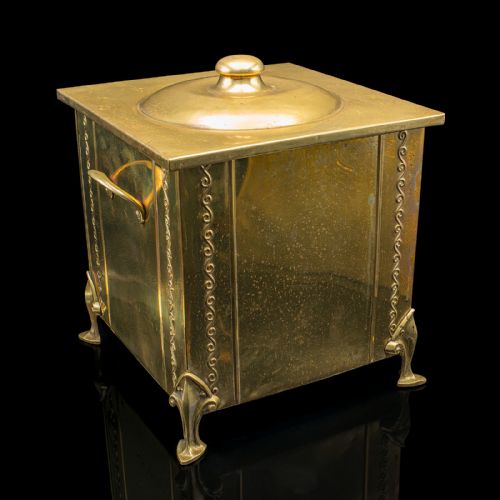


Antique Hearth Fuel Store
An antique hearth fuel store keeps logs, peat, or coal beside the fire, combining sturdy utility with period character.
Antique Hearth Fuel Store
An antique hearth fuel store comprises vessels, boxes, and buckets designed to hold coal, logs, or peat beside a fireplace. Buyers searching this phrase encounter coal boxes, scuttles, log bins, and peat buckets spanning the eighteenth, nineteenth, and early twentieth centuries.
The most common forms on this page include Victorian oak coal boxes, riveted copper buckets, and wrought iron log bins. Pieces range from simple English pine and Scottish coopered examples to French provincial and Belgian decorative stores.
Regional variations appear across the selection, such as Scottish coopered peat buckets and Edwardian oak boxes. These items served a purely domestic function in period homes before evolving into decorative fireside accessories.
Materials and construction
Metals form a large share of these fuel stores, utilising heavy copper, brass, wrought iron, and cast iron. Copper and brass vessels frequently feature hand-riveted construction, while iron pieces showcase the forged work typical of the nineteenth century.
Woodworking traditions shape the timber examples, utilising oak, mahogany, pine, and coopered staves held by metal hoops. Carved detailing and applied brass mounts appear on finer Victorian and Edwardian boxes designed for formal reception rooms.
Design movements represented include Arts and Crafts, Art Nouveau, Aesthetic Period, and French Provincial.
Judging quality and construction
Quality rests on the integrity of the materials and the competence of the assembly. Heavy gauge copper, thick oak panels, and solid forged iron separate substantial pieces from lighter commercial output.
Subtlety of hand execution distinguishes better examples, such as clean dovetailing on wooden boxes and neat, evenly spaced rivets on metal buckets. Decorative elements like carved oak motifs or embossed metal designs indicate greater workshop attention.
The Antique Hearth Fuel Store Glossary
- Coopered
- A method of construction using curved wooden staves joined side by side and bound by metal hoops, traditionally used for buckets and barrels.
- Coal scuttle
- A metal container with a hinged lid and handle, specifically shaped for carrying and tipping coal onto a fire.
- Log bin
- A large freestanding container designed to hold firewood beside a hearth, often constructed from metal or heavy timber.
- Riveted
- Fastened with metal pins hammered flat at the ends, common in nineteenth-century copper and brass bucket construction.
Antique Hearth Fuel Store: Frequently Asked Questions
What is a hearth fuel store?
A hearth fuel store is a container used to hold coal, logs, peat, or kindling near a fireplace. These pieces were essential items in period homes for keeping fuel dry and close at hand.
Over time, utility items evolved into decorative household accessories. Today they serve the same practical purpose while adding period texture to a room.
How do I clean copper and brass?
Cleaning depends on the desired appearance and the age of the object. Many collectors prefer to leave a dark, aged patina rather than polishing the metal to a bright shine.
If cleaning is necessary, use a mild metal cleaner suitable for copper or brass. Avoid abrasive pads that can scratch the original surface.
Can I still use these for real logs?
Most antique fuel stores are sturdy enough to hold firewood or coal today. Metal buckets and oak boxes were built to withstand heavy daily use.
Check the interior for moisture damage or rust before loading fuel. Lining older wooden boxes can protect the interior timber from damp logs.
How do I date a coal box?
Dating relies on materials, construction techniques, and stylistic movements. Aesthetic Period, Arts and Crafts, and Art Nouveau pieces carry distinct design markers from the late nineteenth and early twentieth centuries.
Machine screws, modern adhesives, and bright synthetic finishes indicate later reproductions. Hand-cut joints, forged ironwork, and period wear point to older origin dates.