



Brass Desk Globe
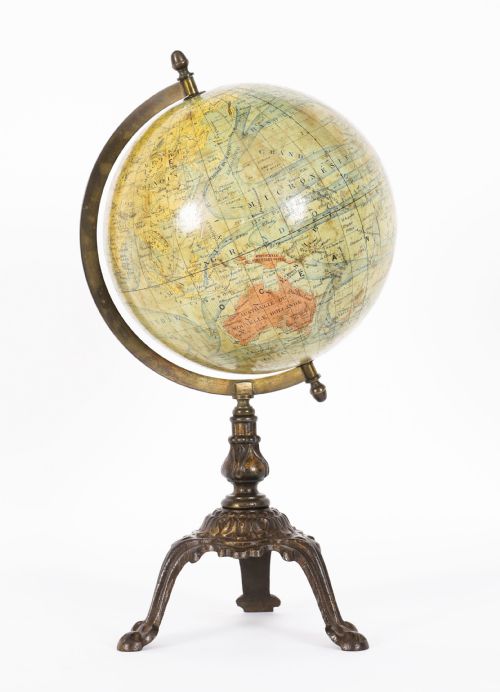
A brass desk globe is a compact geographical instrument mounted for close study, bringing period cartography and metalwork to a surface.
Brass Desk Globe
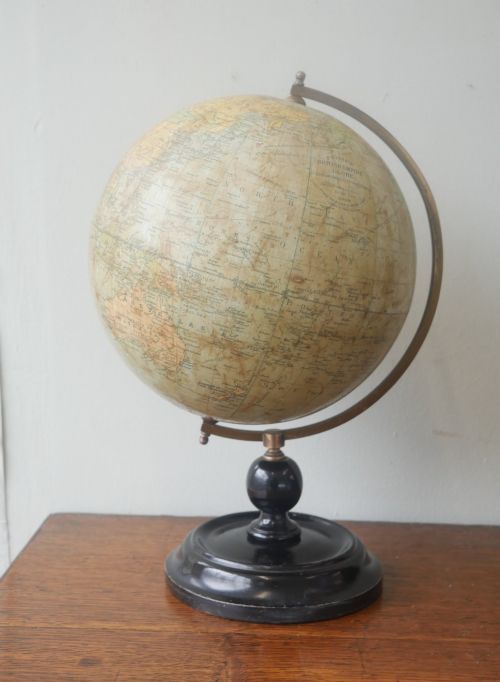
A brass desk globe combines terrestrial mapping with a metal mounting designed to sit upon a table or writing surface. These pieces appear across various periods including the nineteenth century, the Edwardian era, and the nineteen-thirties.
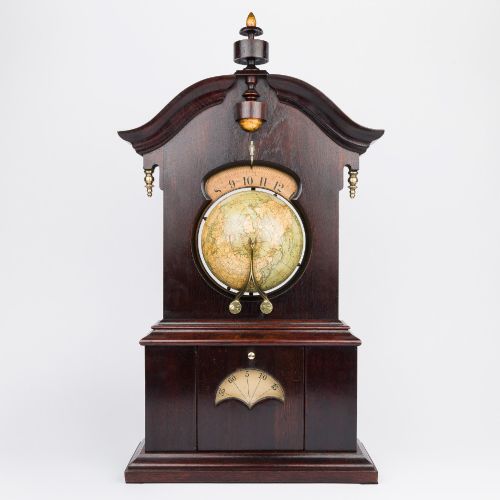
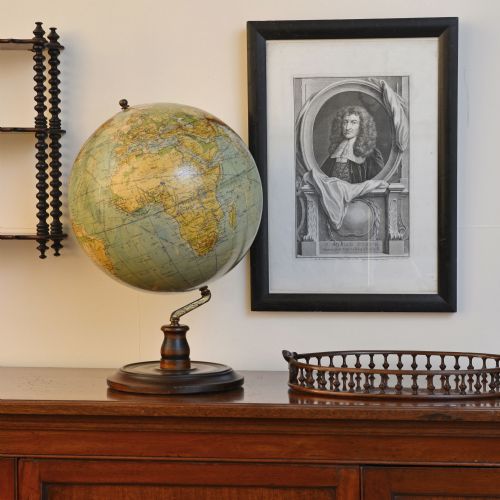
The objects on this page span several functional forms and scales, ranging from small four-inch German pocket or miniature globes to twelve-inch plaster spheres on walnut or brass stands. Terrestrial globes by makers such as Malby, Bacon, and George Philips and Son form the core of this selection.
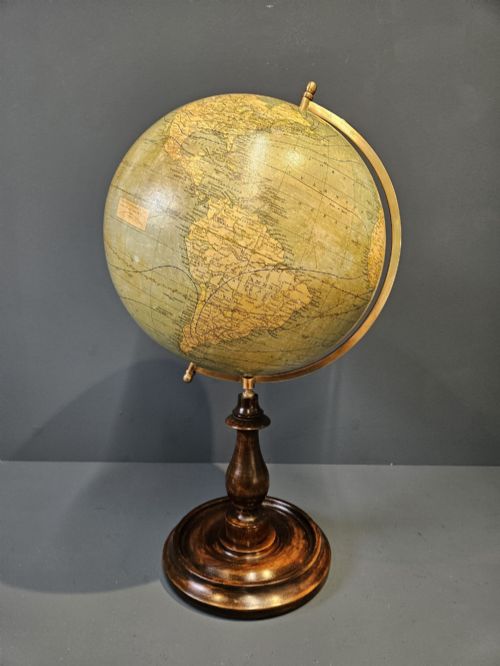
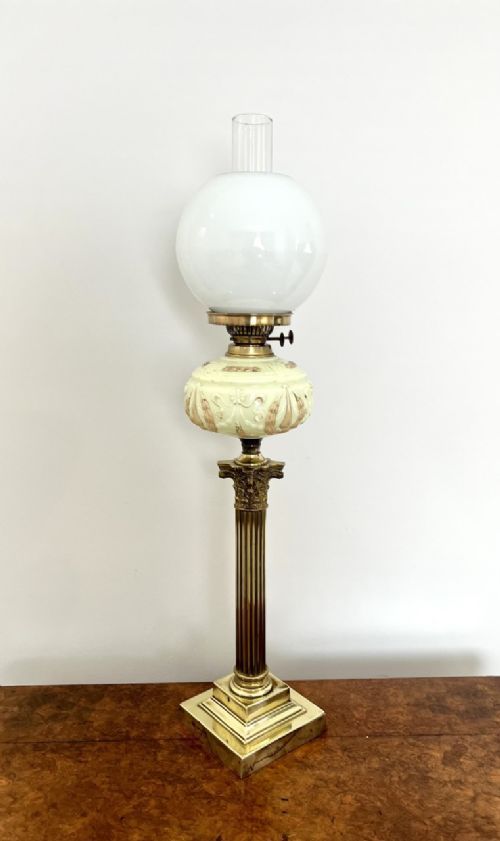
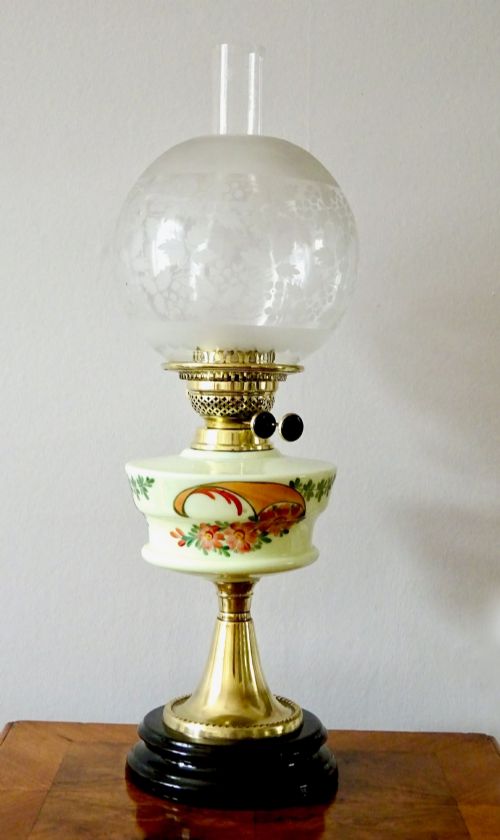
Makers utilised paper gores applied to plaster spheres, supported by brass meridians and stands of wood, ebonised wood, or mahogany. Alongside dedicated desk globes, the inventory includes related nineteenth-century and early twentieth-century table lamps and oil lamps incorporating glass and brass elements.
How they were made
Craftsmen built the core sphere using plaster or paper-mache, creating a solid base to receive the printed map. Printed paper gores, showing geographical details of the earth, were pasted precisely onto the curved surface by hand.
Brass formed the structural meridians, half-circles, and desk stands that held the globe at the correct axial tilt. Turned wooden components, including walnut and mahogany feet, provided stable bases for the metal mountings.
Brass Desk Globe Retail Price Guide 2026
Typical asking prices for brass desk globe among the pieces listed under this phrase on Sellingantiques today, from the lower quarter to the upper quarter. They describe what is for sale here now, not the wider market.
Materials on this page combine cast brass and glass with traditional walnut, mahogany, and paper-mache.
What varies in quality
The clarity and detail of the cartographic printing determine the visual richness of the surface. Crisp lines, legible town names, and well-preserved colouring on the paper gores elevate an example.
The weight and casting quality of the brass mountings shape the overall substance of the piece. Substantial metalwork combined with sound wooden or brass bases distinguishes superior globes from simpler productions.
Lebegue and Cie·Phillips·George Philips and Son Ltd·J Forest·Malby's·Chandy Charan and Co·Carl Adami·Bacon's·Crunchley·Geographia
The Brass Desk Globe Glossary
- Gores
- Printed paper segments shaped like liquescent triangles that are pasted onto a sphere to form a complete map. These strips require precise alignment during manufacture.
- Terrestrial globe
- A spherical model representing the earth rather than the celestial sphere. These instruments display political and physical geography from the date of their publication.
- Meridian
- The brass ring surrounding the globe that holds it on its axis and allows rotation. It is often graduated with degree markings.
- Paper-mache
- A composite material made of paper pulp reinforced with glue or paste, moulded into spherical shapes for lightweight globes. It provides a stable ground for applied paper gores.
- Plaster globe
- A sphere cast in plaster of Paris, offering a heavier and more rigid foundation than paper-mache for the map gores.
Brass Desk Globe: Frequently Asked Questions
How do I date a brass desk globe?
Examine the political boundaries and place names printed on the paper gores, as these often reflect the specific era of manufacture.
Makers frequently included publication dates near the cartouche, though mounts and wooden stands from periods like the Victorian or Edwardian eras provide further stylistic clues.
What sizes do these globes come in?
The selection ranges from small four-inch miniature German globes designed for compact spaces up to larger twelve-inch and eighteen-inch table globes.
Desk globes vary in height depending on whether they sit on a simple brass foot, a walnut base, or a full meridian ring.
How should I clean a paper globe?
Paper gores are sensitive to moisture, so cleaning should be limited to very gentle dusting with a soft, dry cloth.
Avoid using water, chemical sprays, or abrasive cleaners, as these will damage the historic paper and dissolve the printed ink.