




Early Century Globe
An early century globe brings geographical history and period craftsmanship into a room.
Early Century Globe
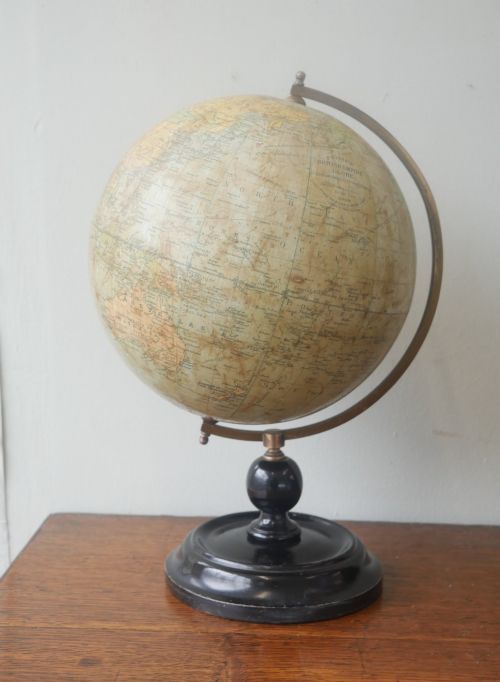
When you search for early century globe, you encounter pieces spanning from the nineteenth century through the Edwardian era and the 1920s and 1930s. These items primarily comprise terrestrial desk globes, library globes on stands, and spherical light shades or pendant globes.
Cartography from this span records historical political boundaries, colonies, and trade routes that differ significantly from modern maps. Makers such as Philips, Bacons, and Geographia produced educational and library models that survive today in varied scales.
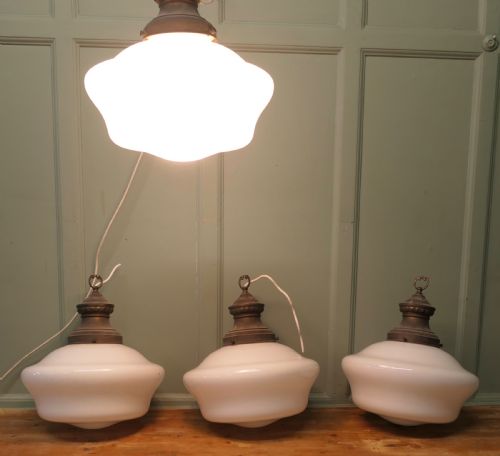
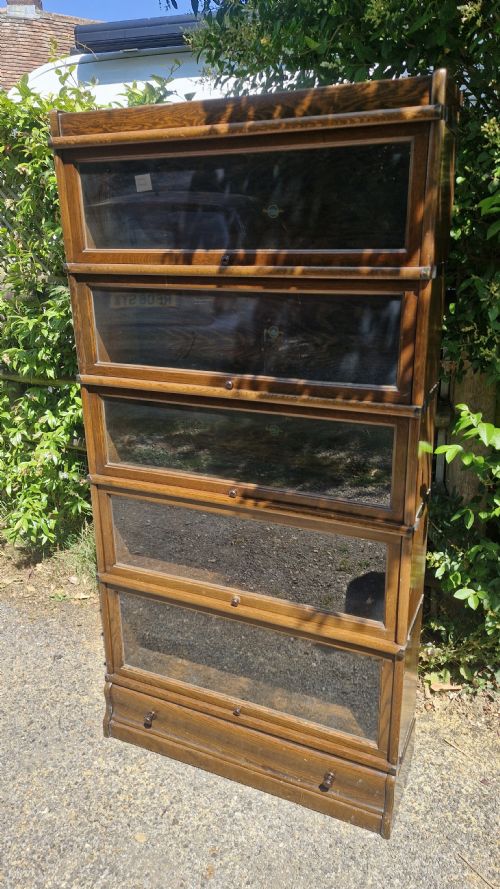
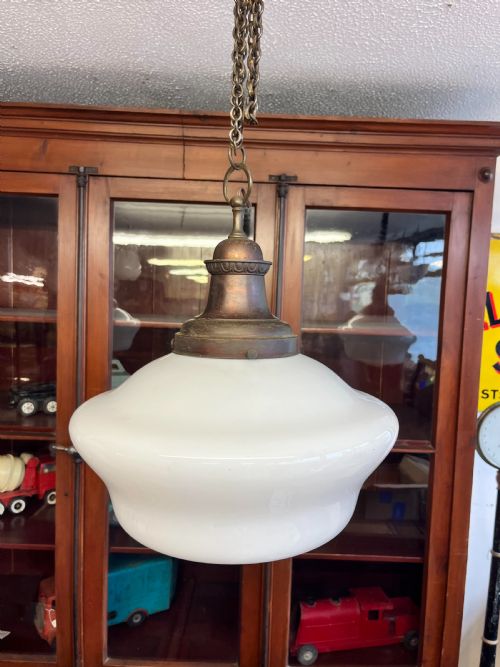
Alongside cartographic globes, the listings frequently include furniture bearing the Globe Wernicke name, specifically sectional barrister bookcases and cabinets. Spherical glass light fixtures also appear under this grouping, representing early twentieth century interior lighting.
Materials and construction
Terrestrial globes of this period were constructed using plaster spheres applied with printed paper gores that depict the map details by hand or mechanical press. These globes were mounted in stands made of wood, ebonised wood, or cast metal.
Lighting fixtures utilise brass, bronze, and iron combined with glass, opal glass, opaline glass, and prismatic glass to form spherical or globe shapes. Furniture pieces employ oak and mahogany, often featuring sectional stacking designs with glazed doors and original brass hardware.
Object types recorded across the archive include terrestrial globes, desk globes, library globes, pendant lights, ceiling lights, wall lights, and sectional bookcases.
Factors of quality
The standard of an early century globe depends heavily on the preservation of its printed paper map surface and cartographic clarity. Discolouration, fading, and losses to the paper gores alter the desirability of a terrestrial or library globe.
For furniture and lighting, the integrity of original components dictates quality. Retaining original hardware on sectional bookcases, or undamaged glass and brass on pendant globes and chandeliers, separates standard examples from superior ones.
Phillips·Bacons·Geographia·G.Thomas, Paris·Jordglob·Globe Wernicke·E.J. Arnold & Sons Ltd. Leeds·Messenger
The Early Century Globe Glossary
- Gores
- The paper strips printed with map segments that are applied to the spherical surface of a globe. Accurate alignment of these gores is essential for correct geographical representation.
- Globe Wernicke
- A style of modular sectional bookcase or cabinet manufactured with stacking tiers and glazed lifting doors. This design became popular for offices and libraries during the early twentieth century.
- Terrestrial globe
- A scale model of the Earth displaying continents, oceans, countries, and cities. These objects served educational, reference, and decorative purposes.
- Opaline glass
- A type of semi-translucent milky glass used extensively for light shades and spherical globes during the period. It diffuses light evenly across interior spaces.
- Cartography
- The science and practice of drawing maps. Period cartography reflects the geopolitical boundaries and territorial names of the era in which it was printed.
Early Century Globe: Frequently Asked Questions
How do I date a globe?
Dating relies on examining the political boundaries, country names, and colonial territories printed on the map gores. Comparing these geographic details to historical records provides an approximate decade of manufacture.
Maker signatures, cartographic credits, and the materials used for the base or meridian ring also offer chronological clues for identification.
Where were these globes used?
Terrestrial and library globes were designed for schools, offices, studies, and private libraries as reference tools and decorative objects. Larger globes stood on dedicated floor stands while smaller versions rested on desks.
Globe shaped glass lights and pendant fixtures illuminated hallways, chapels, and domestic interiors during the Edwardian period and the 1920s and 1930s.
Are Globe Wernicke pieces original?
Globe Wernicke bookcases feature modular stacking sections with patented mechanisms and specific hardware markings. Genuine pieces display matching timber grain, stamped manufacturer marks, and period brass fittings.
Many examples survive with their original glass doors and stacking bases intact, though mixed sections occur from years of assembly.
How do I clean an antique globe?
Cleaning requires extreme caution to avoid damaging the delicate paper gores and printed cartography. Dusting should be done gently with a dry, soft cloth without applying moisture or chemical cleaners.
Library globes with varnished paper surfaces tolerate very light cleaning, but unvarnished paper easily absorbs liquids and stains permanently.