


Vintage Educational Globe
A vintage educational globe brings physical geography directly onto the desk, offering a tactile record of changing borders from the Edwardian era to the mid-twentieth century.
Vintage Educational Globe
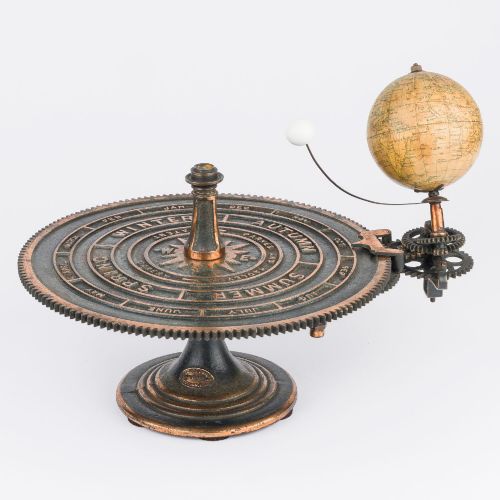
Buyers seeking a vintage educational globe encounter desktop formats designed for classroom instruction or office reference during the early to mid-twentieth century. The selection ranges from small four-inch models dated around nineteen-twenty up to physical desk globes produced in the nineteen-fifties.
Most examples originate from British publishers such as George Philips and Son, alongside continental European makers like Raths. These pieces span Edwardian, interwar, and mid-century modern styles, reflecting the geopolitical boundaries of their respective decades.
Materials and construction
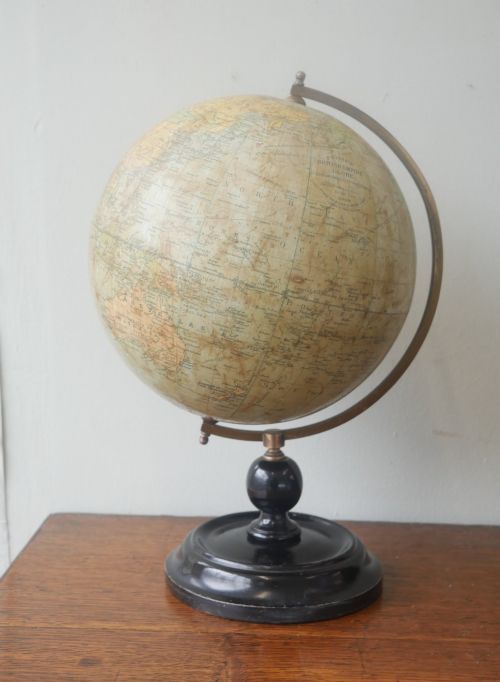
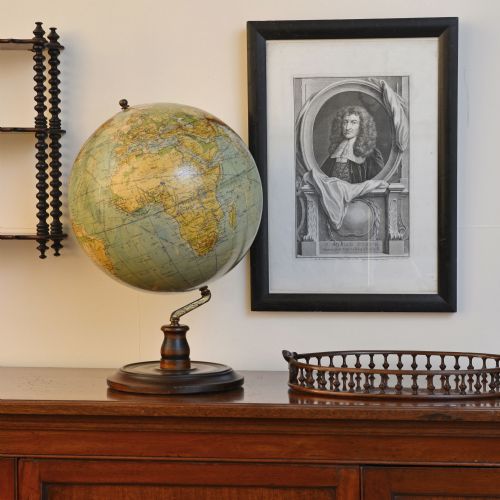
Makers constructed these globes using printed paper gores applied over a spherical core, paired with turned wood or ebonised wood stands. Metal and brass components frequently form the meridian rings and axis mountings that support the sphere.
The combination of traditional woodworking techniques for the desk bases and detailed cartographic lithography on paper creates the characteristic weight and finish of these geographical instruments.
Vintage Educational Globe Retail Price Guide 2026
Typical asking prices for vintage educational globe among the pieces listed under this phrase on Sellingantiques today, from the lower quarter to the upper quarter. They describe what is for sale here now, not the wider market.
Current listings feature materials including paper, wood, metal, brass, ebonised wood, and turned wood across mid-century modern, interwar, and Edwardian styles.
Judgments of quality
Quality rests upon the legibility of the cartographic detail and the preservation of the paper gores across the spherical surface. Finer examples maintain crisp typography and vibrant political or physical colouring without excessive yellowing.
The integrity of the structural materials also distinguishes individual pieces, particularly the stability of the turned wooden bases and the smooth movement within the brass or metal meridians.
George Philips and Son Ltd·Raths
The Vintage Educational Globe Glossary
- Gore
- A tapering strip of printed paper map pasted onto a globe sphere to form a continuous representation of the Earth's surface. Multiple gores are joined precisely at the poles.
- Meridian
- The circular metal ring, often brass, that surrounds the globe and holds it at an angle representing the Earth's axial tilt. It frequently carries degree markings.
- Ebonised wood
- Timber treated with a finish that darkens the grain to imitate ebony. This treatment appears frequently on the desk stands of early twentieth-century models.
- Desk globe
- A portable terrestrial globe scaled for placement on a table or desktop rather than resting on a floor-standing floor ring. These pieces served both educational and reference functions.
Vintage Educational Globe: Frequently Asked Questions
How do I date a vintage globe?
Dates are determined by examining the political boundaries, place names, and railway lines printed on the paper gores. Publishers often included publication years in the cartographic cartouche.
Comparing the depicted nations against known historical changes provides a reliable bracket for the manufacturing period.
What materials make up the base?
Bases are typically fashioned from turned wood, ebonised wood, or heavy metals designed to anchor the weight of the sphere. Brass hardware frequently secures the meridian ring to the stand.
These materials reflect the standard manufacturing practices of Edwardian and mid-century workshops.
Are these globes physically accurate?
They reflect the geographical knowledge and political boundaries of the specific decade in which they were printed. Empires, colonies, and historical territories feature prominently on early twentieth-century editions.
Over time, changing borders mean these items serve as historical documents rather than current navigational tools.
How should I clean the paper surface?
Dusting gently with a dry, soft cloth is the safest method for maintaining the paper gores. Moisture and chemical cleaners can dissolve the old adhesives and ruin the lithography.
Keeping the globe away from direct sunlight prevents the paper and varnish from fading over time.