


Edwardian Desk Globe
An edwardian desk globe is a compact geographical sphere that sits upon a writing surface, bringing period cartography and brass or wood craftsmanship into your study.
Edwardian Desk Globe
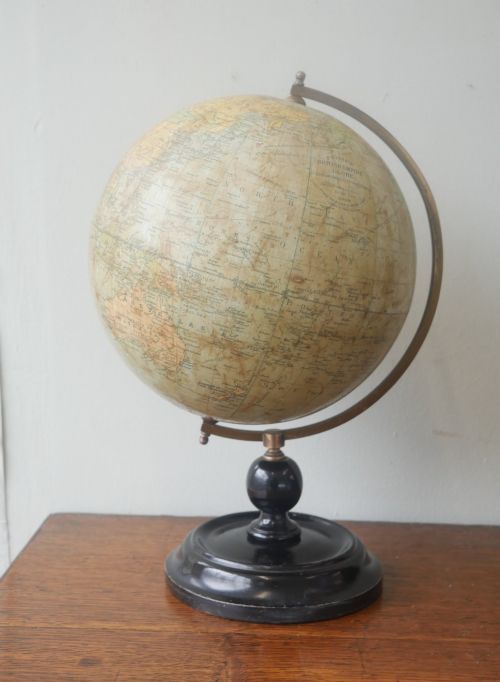
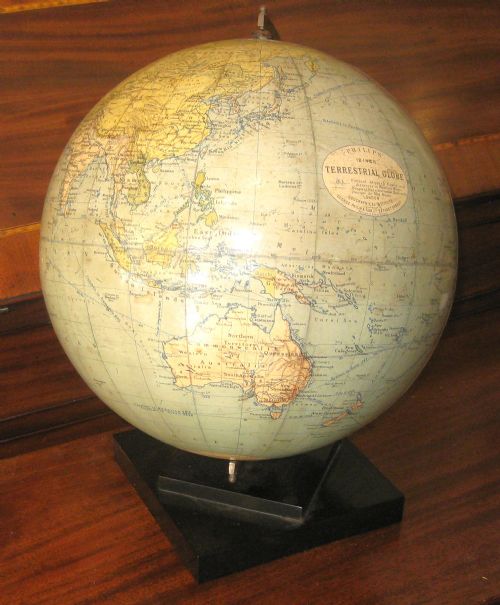
When you search for an edwardian desk globe, you encounter terrestrial spheres produced around the early decades of the twentieth century. These pieces record historical geopolitical boundaries on paper gores applied to plaster or glass cores.
The versions most frequently met on this page combine cartographic paper maps with brass mountings and ebonised wood or metallic bases. Makers such as Phillips, Bacons, and Geographia supplied these instruments for offices and libraries.
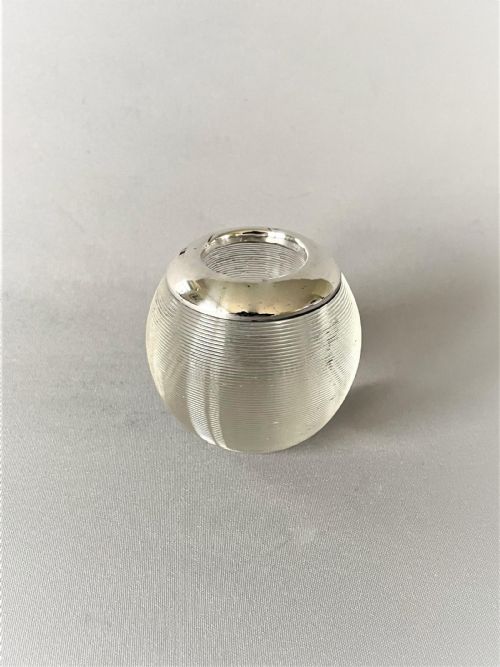
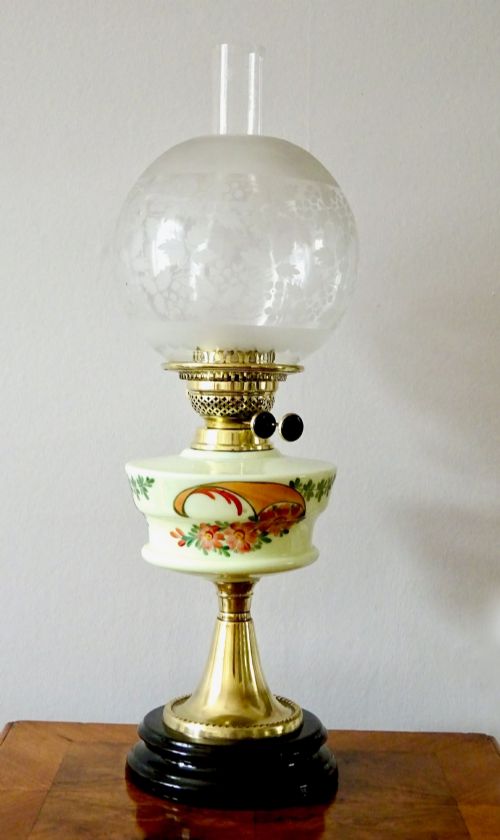
Beyond the standard terrestrial globe, related categories include table lamps, match strikers, and oil lamps that capture the same decorative aesthetic. Selecting the right piece depends on whether you prefer a functional cartographic tool or lighting with period charm.
Materials and Construction
Paper gores are printed with map details and carefully pasted over plaster or glass spheres by hand. This technique requires precise alignment to ensure the cartographic lines meet correctly at the poles.
Brass and ebonised wood form the structural mountings, holding the sphere at the correct axial tilt. Metal components are cast and turned, providing a sturdy meridian ring and a weighted base for the globe.
The objects recorded here span Edwardian, Art Deco, Art Nouveau, and Mid-Century styles.
Assessing Quality and Craftsmanship
The clarity and detail of the cartographic printing distinguish finer globes from standard examples. Sharp typography and distinct geopolitical boundaries indicate careful production by established mapmakers.
The integrity of the paper gores and the solidity of the brass mountings determine the overall condition and durability of the piece. Minimal fading and smooth rotation reflect careful historical preservation.
Phillips·Bacons·Geographia
The Edwardian Desk Globe Glossary
- Gores
- The paper strips printed with map details that are applied to the spherical surface of a globe. Precise alignment of these segments is essential for an accurate map.
- Terrestrial globe
- A spherical model of the Earth displaying landmasses, oceans, and political borders. These instruments were standard fixtures in Edwardian offices and studies.
- Ebonised wood
- Timber treated with a dark stain or finish to resemble ebony. It provides a heavy, stable base for many Edwardian desk accessories.
Edwardian Desk Globe: Frequently Asked Questions
How do I read date clues on a globe?
Examine the geopolitical boundaries and named territories depicted on the paper gores, as colonial possessions and country names changed frequently.
Compare these printed place names against historical maps from the Edwardian era to narrow down the decade of production.
Where should I place a desk globe?
Position your globe on a sturdy wooden desk, side table, or bookshelf where it can be viewed closely without risking falls.
Keep the piece away from direct sunlight and damp environments to protect the fragile paper gores and brass mountings over time.
What materials make up the base?
Bases on these pieces typically consist of turned ebonised wood, cast brass, or weighted metal structures.
These heavy materials provide the necessary counterweight to keep the tilted sphere stable during rotation.