


Vintage Tabletop Globe
A vintage tabletop globe brings cartographic history directly to your desk, offering a tangible piece of changing world borders and geographical knowledge.
Vintage Tabletop Globe
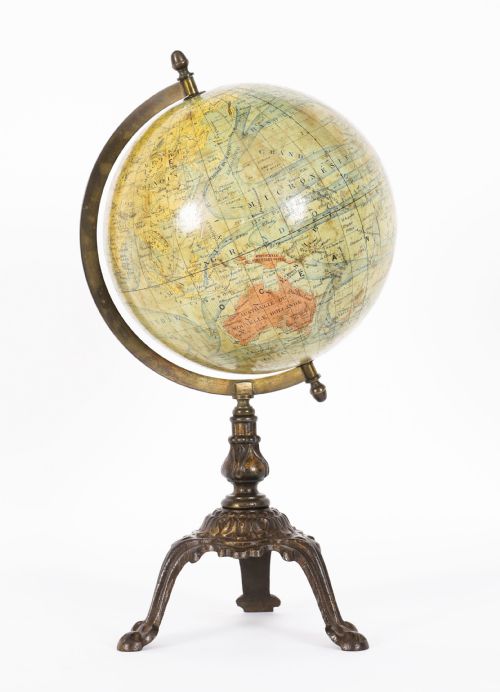
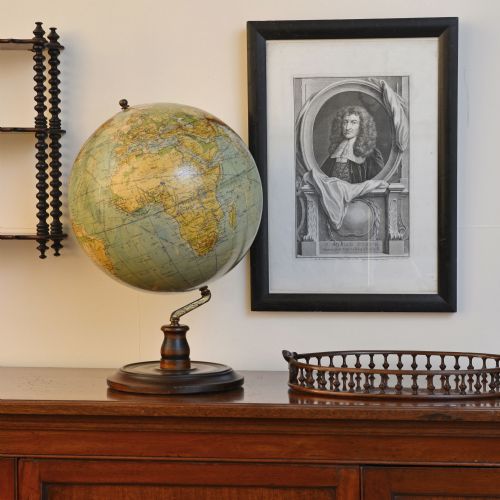
When you search for a vintage tabletop globe, you are looking at miniature cartographic models designed for desks, tables, and cabinets. These pieces range from small four-inch educational spheres to larger twelve-inch terrestrial representations.
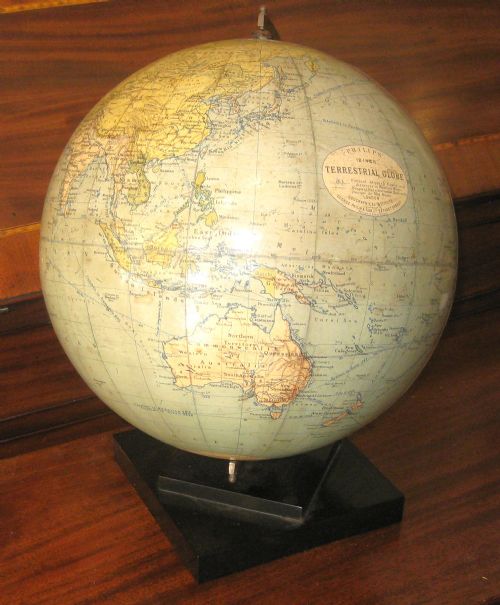
The selections you are most likely to meet on this page span from the late nineteenth century through to the mid-twentieth century. They include French terrestrial globes, British Empire editions, and German physical desk globes.
Makers utilised various formats, including standard terrestrial globes and more unusual desk objects that combined cartography with lighting, such as oil lamps. Each piece records the political geography and place names of its specific decade of publication.
How they were made
Makers constructed the spherical bodies using plaster or paper gores applied over a core, which were then printed with detailed maps and hand-coloured or varnished. These delicate paper surfaces required precise alignment of the printed segments to ensure correct geographical continuity across the sphere.
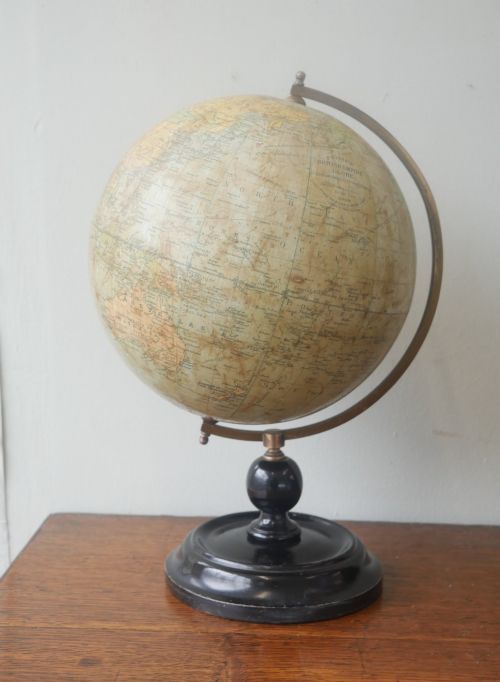
The mountings and stands relied on durable metals and turned woods, including brass, cast iron, and ebonised wood. These sturdy bases allowed the spheres to tilt along a specific axis, supporting the weight of the globe while permitting rotation.
Listings on this site feature nineteenth-century and mid-century globes constructed from paper, brass, cast iron, and turned wood.
What varies in quality
Quality in these globes depends significantly on the clarity of the cartographic printing and the intricacy of the mounting. Finer examples exhibit crisp topographical details, legible place names, and robust metal or turned wooden bases.
The condition of the printed paper surface and the preservation of the original varnish distinguish superior specimens from heavily worn items. Editions featuring detailed political demarcations or specialist physical mapping generally reflect higher manufacturing standards.
Lebegue and Cie·Geographia·George Philips and Son·J Forest·Raths·Messengers·Harrods
The Vintage Tabletop Globe Glossary
- Terrestrial globe
- A spherical map representing the earth rather than the celestial spheres. These objects display continents, oceans, countries, and major cities as they were known at the time of publication.
- Gores
- The printed paper segments shaped like liquescent triangles that are applied to the sphere to form a continuous map. Accurate placement of these sections is essential for correct geographical alignment.
- Ebonised wood
- Timber treated with a finish to imitate expensive ebony wood. Makers frequently applied this technique to the weighted bases and stands of desk globes.
Vintage Tabletop Globe: Frequently Asked Questions
How do I date a vintage tabletop globe?
You can date a globe by examining the political boundaries, country names, and capital cities printed on the cartography. Major historical shifts, such as the naming of empires or the creation of new nations, provide clear chronological markers for the year of production.
Publishers often included a date of manufacture near the cartouche or legend on the map itself. Comparing these geographical details against historical records helps narrow down the decade of creation.
How should I care for a vintage paper globe?
Keep the globe away from direct sunlight to prevent the printed paper gores and delicate colours from fading over time. Maintaining a stable room humidity also protects the underlying plaster core and stops the paper from cracking.
Dust the surface very gently with a dry, soft cloth, avoiding any moisture or liquid cleaners. Because the paper and varnish are sensitive, harsh cleaning agents will permanently damage the cartography.
Why do some vintage globes include lighting?
Certain desk globes were designed to double as functional lamps, incorporating electrical fittings or oil burners into their stands. This allowed the owner to illuminate the globe for study or to use it as a desk light.
Combination pieces, such as those pairing lamps with cartography, reflect the Victorian and Edwardian desire for multi-functional household objects. These items combined practical illumination with geographical education.