

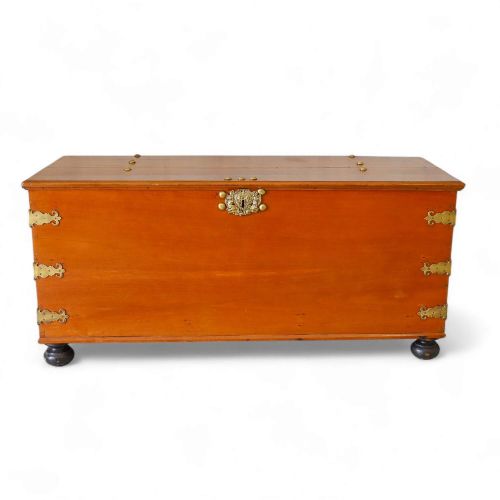

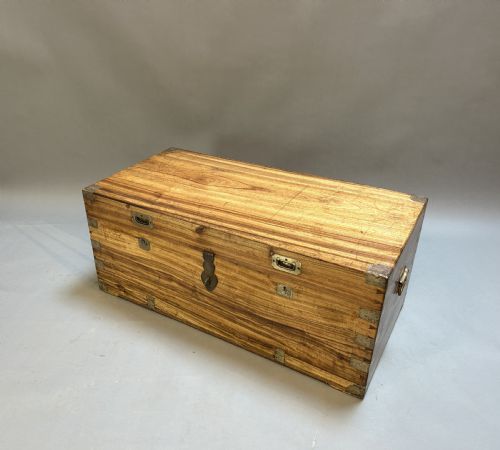


Brass Corner Coffer
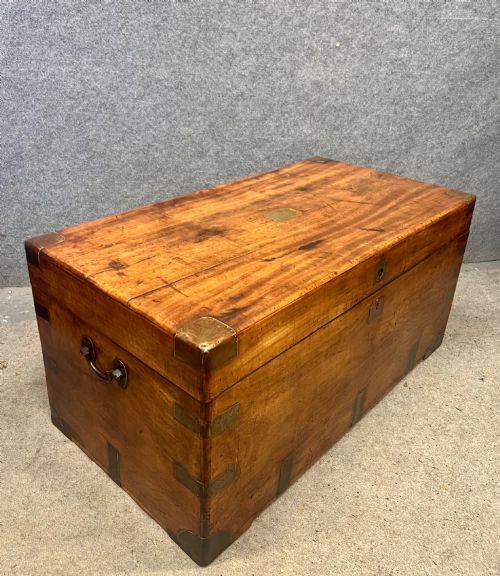
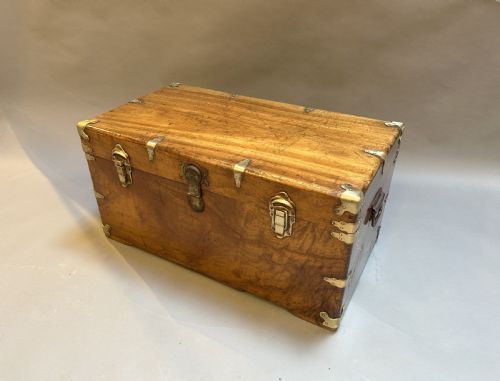
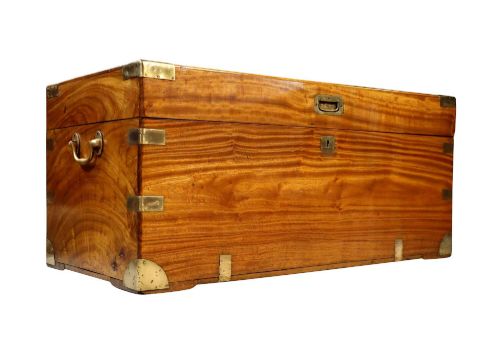
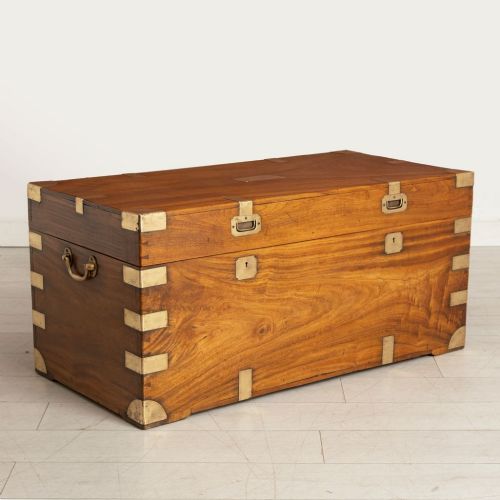
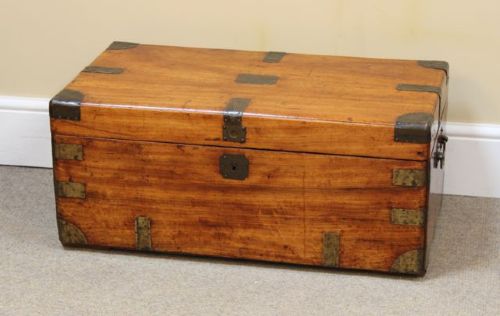
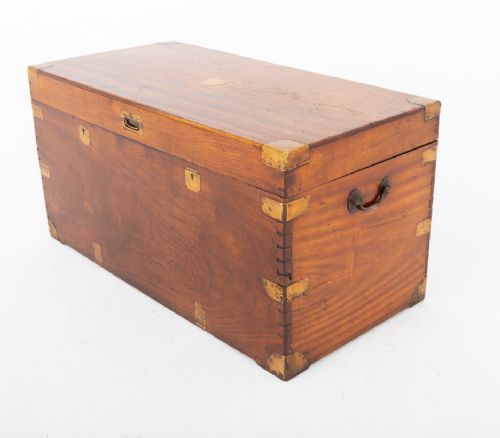
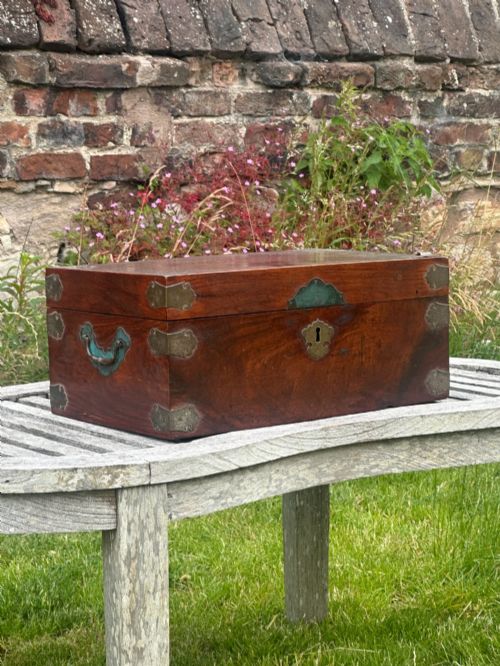
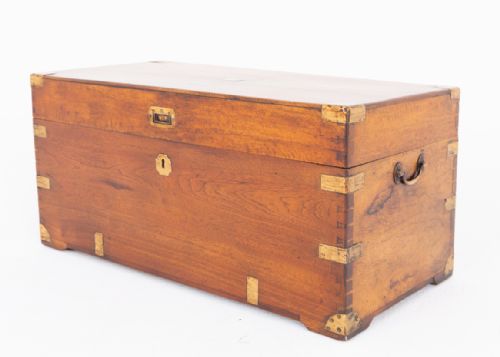
A brass corner coffer provides robust travelling storage with fitted metal corners designed to withstand rough transit.
Brass Corner Coffer
A brass corner coffer is a sturdy storage chest typically bound in metal straps and reinforced at the edges for travel. When exploring this selection, buyers frequently encounter campaign style trunks and chests originating from the nineteenth century.
These pieces primarily utilise durable timbers such as camphor wood and teak, often constructed in sections for military officers or merchants on the move. The most common format on this page is the nineteenth century camphor wood trunk featuring brass bindings and inset carrying handles.
How they were made
Joiners built these trunks using dense woods like camphor wood, teak and walnut, which resisted insect damage and warping in tropical climates. Carpenters fitted iron and brass plates at the vulnerable corners and edges to absorb the impacts of frequent transport.
Craftsmen recessed brass carrying handles and flush drawer pulls into the timber surfaces so the hardware would not catch during loading. Screws and strapping were countersunk to present a smooth exterior profile on military and merchant pieces.
Opening an antique camphor trunk still releases the distinct, lingering scent of aromatic wood after two centuries.
What varies in quality
The standard of timber grain and the thickness of the brass hardware distinguish finer examples from standard utility pieces. Richly figured camphor wood or burr walnut paired with heavy, original brass mounts indicates superior workshop production.
Integrity of construction and the retention of original internal fittings alter the standing of a trunk. Well-preserved joints, functioning locks with working keys, and undisturbed brass straps command greater appreciation among collectors.
The Brass Corner Coffer Glossary
- Campaign trunk
- A portable chest built in sections with recessed handles and metal corners for military officers on active service. These boxes dismantled easily for transport on pack animals or wagons.
- Camphor wood
- An aromatic timber native to Asia utilised for campaign furniture because its natural scent repels insects. It is easily recognised by its distinct fragrance and warm reddish-brown grain.
- Brass bound
- A method of reinforcing wooden chests by applying flat brass strips along the edges and corners. This technique protected the timber from splitting during rough handling.
- Deed box
- A smaller secure container designed for carrying documents and valuables. These compact boxes frequently feature heavy brass locks and corner reinforcement.
Brass Corner Coffer: Frequently Asked Questions
What is a campaign coffer?
A campaign coffer is a portable storage chest built for military officers or travellers on the move. These pieces feature robust wooden construction reinforced with metal corners to endure frequent journeys.
They often include recessed handles and secure internal compartments designed for practical use in temporary quarters.
Why use camphor wood?
Camphor wood was selected for travel chests because its natural aromatic oil deters insects and moths. This property made it ideal for protecting uniforms and textiles during long voyages in tropical climates.
The timber also resists moisture and provides a stable, durable structure for transport.
How to date these trunks?
Dating relies on examining the timber, construction methods, and brass hardware style. Nineteenth-century examples often display hand-cut dovetails and heavy brass corner plates fixed with slotted screws.
Changes in fastener types and the presence of maker stamps or specific campaign designs help narrow down the period of manufacture.
Where were they made?
Many of these pieces were produced in British colonial workshops across India and Asia for military personnel and merchants. Local craftsmen utilised regional timbers like teak and camphor wood alongside traditional European cabinet-making techniques.
They served active duty across the British Empire before returning home with their owners.