
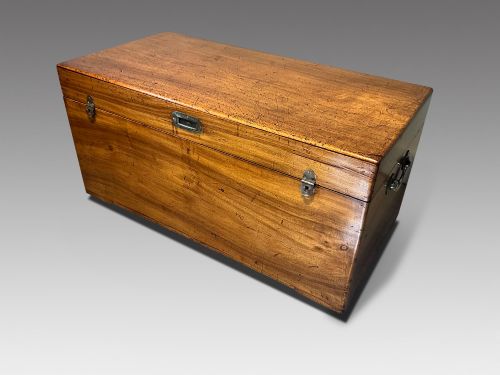


Naval Campaign Trunk
A naval campaign trunk is a robust portable chest built for officers on the move, offering durable storage with a utilitarian aesthetic.
Naval Campaign Trunk
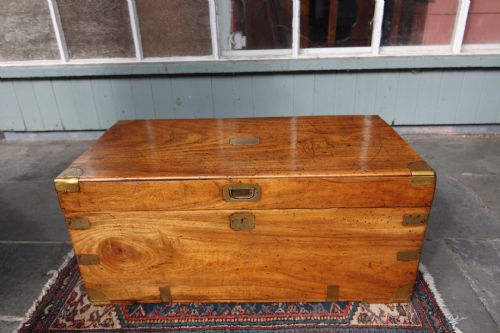
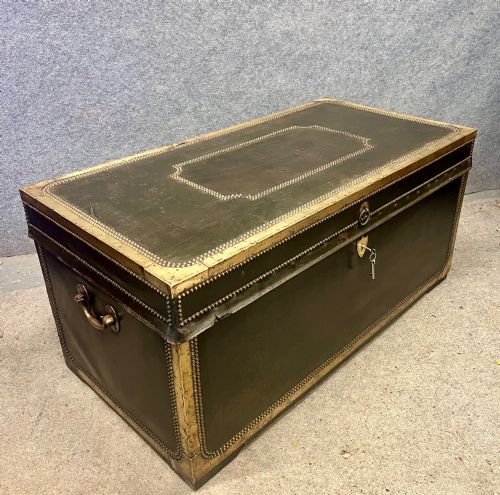
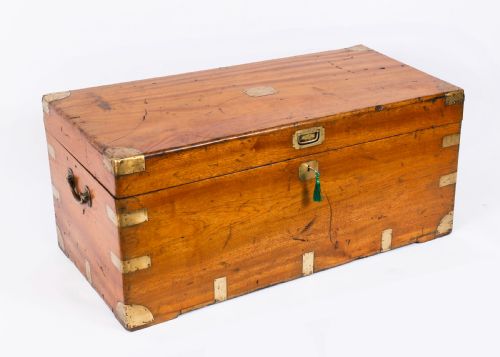
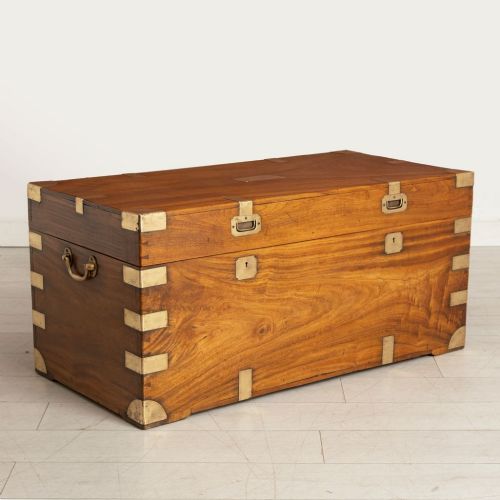
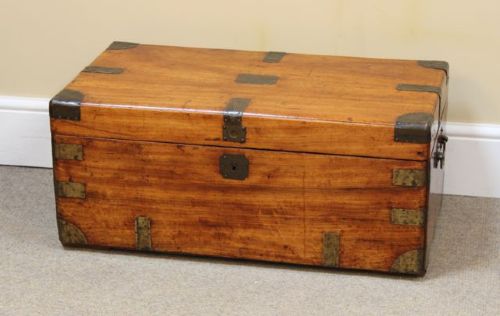
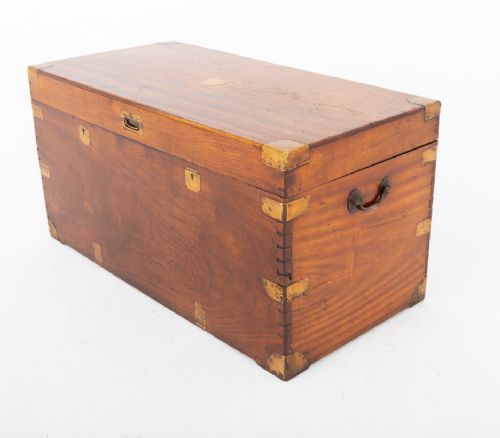
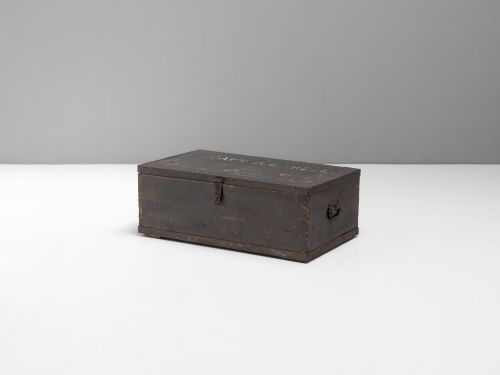
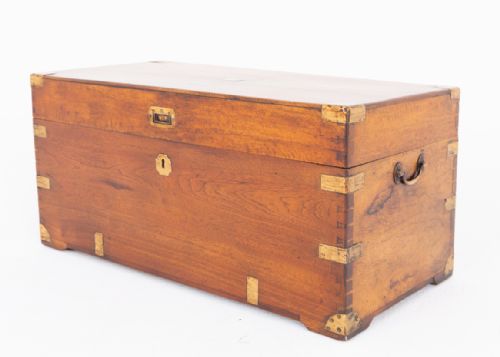
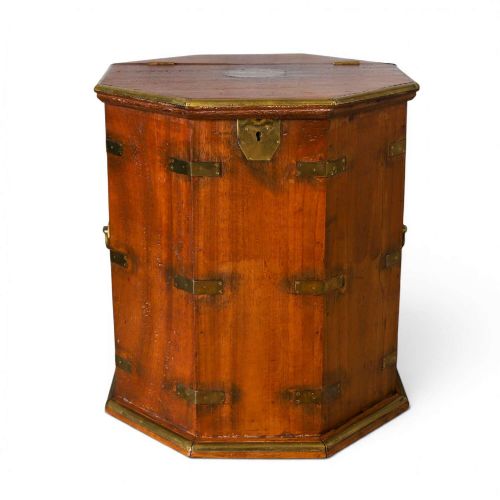
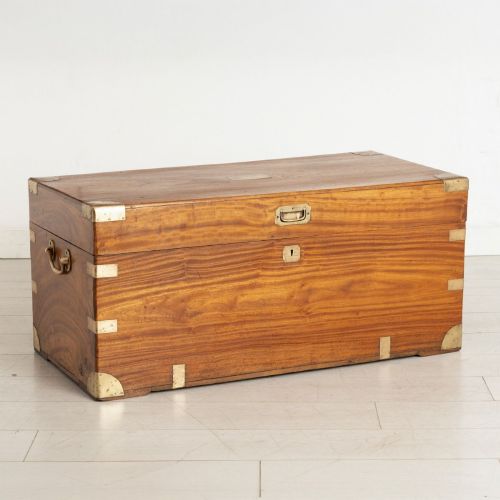
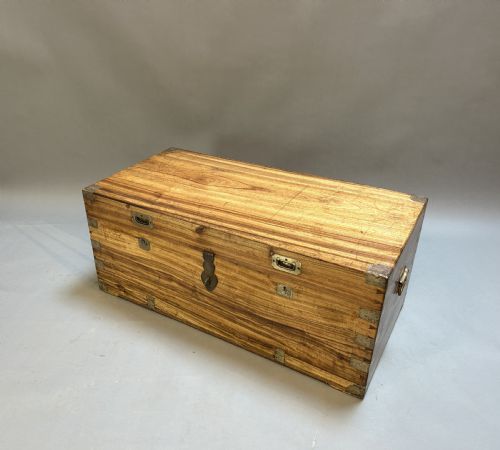
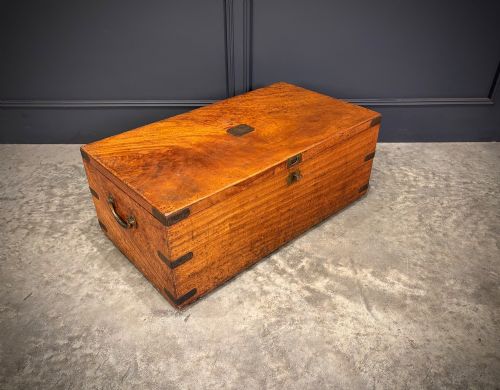
A naval campaign trunk serves as heavy-duty luggage and storage for officers travelling during the nineteenth century. These pieces appear in forms such as trunks, chests, and coffers, often constructed to withstand the rigours of maritime and land journeys. The most common version met on this page is the camphor wood trunk, frequently reinforced with brass bindings and fittings.
Originating from periods including the Regency, Georgian, and Victorian eras, these items reflect colonial and military engagements overseas. Pieces span from the early nineteenth century through to nineteen hundred, showing stylistic links to China Trade and military campaign design. Buyers select them for their combination of practical storage capacity and historic character.
Materials and Construction
Constructed primarily from durable timbers such as camphor wood, teak, and mahogany, these trunks utilise woods chosen for their resilience against humidity and pests. Camphor wood remains the predominant material across the listings, valued for its distinct aromatic properties and stable grain. Teak and mahogany also appear in merchant and military pieces.
Metal hardware plays a structural role in the manufacture of these items, with brass fittings, straps, and corner brackets protecting the edges from impact. Iron and general metal components also reinforce the timber framework to endure frequent transport. Hinged lift-up tops and fitted interiors provide functional access for officers and merchants.
The listings show pieces spanning the nineteenth century, with Victorian examples and camphor wood dominating the material selection.
Factors of Quality
The standard of a naval campaign trunk rests largely on the quality of the timber selection and the retention of original hardware. Examples featuring beautifully grained solid camphorwood and original brass fittings sit at the upper end of the range. The presence of a fitted interior further elevates a piece above a standard plain box.
Construction details such as tight joinery, substantial brass bound edges, and robust handles indicate superior workshop standards. Pieces that maintain their structural integrity alongside unblemished hardware demonstrate better preservation over time. The graduation from simple low chests to large fitted trunks marks the breadth of quality available.
The Naval Campaign Trunk Glossary
- Camphor wood
- A fragrant tropical timber utilised for its insect-repellent properties and resistance to moisture. It forms the primary body of most campaign trunks listed here.
- Brass bound
- A method of reinforcing box corners and edges with metal strips to prevent splitting during transit. This hardware defines the utilitarian aesthetic of military luggage.
- Campaign chest
- A modular chest of drawers or trunk designed to dismantle or travel easily. These items were essential possessions for officers on active service.
- China Trade
- Goods manufactured in East Asia during the nineteenth century specifically for export to Western markets. These pieces often feature distinctive regional craftsmanship.
Naval Campaign Trunk: Frequently Asked Questions
What is a naval campaign trunk?
A naval campaign trunk is a portable wooden box designed for officers to transport personal belongings during nineteenth-century military and maritime operations.
These pieces prioritise robust construction, utilising dense timbers and metal reinforcement to survive long journeys.
How were these trunks used?
Officers utilised these chests to store uniforms, documents, and valuables while travelling across the British Empire and on naval vessels.
The sturdy hinged lids and secure fastenings protected contents from damp conditions and rough handling.
How do I live with a campaign trunk?
These trunks function well as coffee tables, end-of-bed storage, or statement display pieces in contemporary living spaces.
The lift-up tops and internal compartments provide practical hidden storage for blankets and household items.
How do I identify the period?
Period attribution relies on timber type, brass hardware design, and construction methods characteristic of the nineteenth century.
References to Regency, Georgian, and Victorian eras help anchor the manufacturing date of individual pieces.