


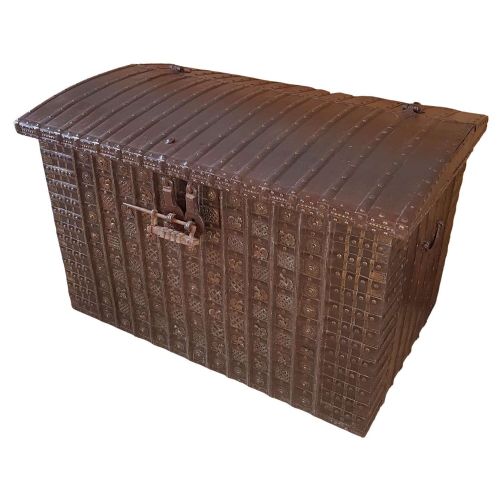


Brass Strapped Trunk
A brass strapped trunk is a sturdy piece designed for travel, offering robust storage and historic character for any interior.
Brass Strapped Trunk
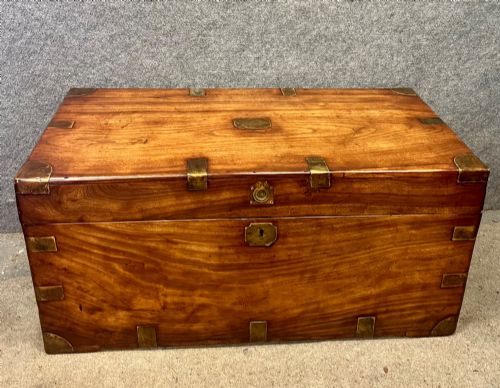
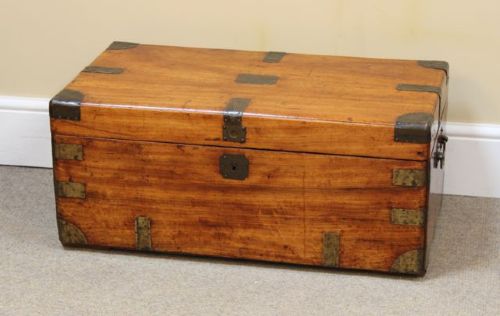
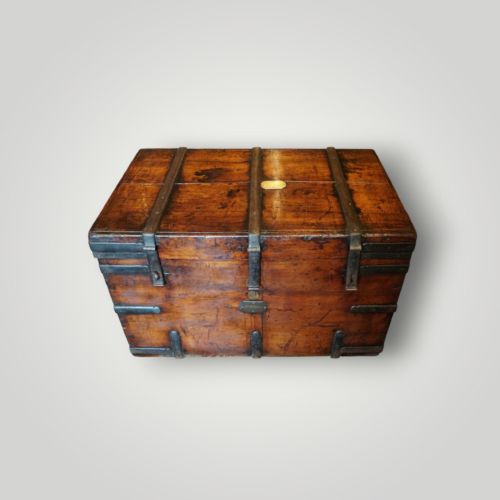
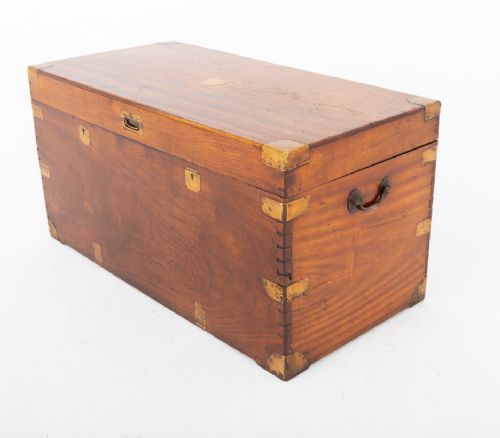
When you search for a brass strapped trunk, you encounter robust storage chests originally built for travel and household use. These pieces appear across various forms, including military campaign boxes, merchants chests, and dowry chests.
The selections available here lean heavily toward nineteenth-century examples and Victorian pieces, alongside Georgian items and eighteenth-century items. Common materials include teak, camphor wood, oak, and elm, reinforced with brass or ironwork.
Makers constructed these trunks for durability, utilising dense hardwoods that withstood long journeys by land and sea. Many specimens reflect distinct regional styles such as Anglo-Indian, Chinese Export, and Rajasthani.
How they were made
Craftsmen built these trunks using sturdy timbers like teak, camphor wood, and oak to endure heavy handling and travel. These woods provided natural resilience against warping and pests, making them practical for long voyages.
Makers reinforced the joints and corners with brass strapping, iron bands, and iron mounts to add structural strength. Fastenings included brass locks, corner braces, and flush handles designed to withstand constant movement.
Listings feature eighteenth-century to Victorian periods, using teak, camphor wood, oak, and iron.
What varies in quality
Quality in a brass strapped trunk depends on the selection of timber and the precision of the metalwork. Dense woods like teak and camphor wood exhibit finer grain and greater durability than softer alternatives.
The craftsmanship of the brass straps, corner mounts, and locks distinguishes standard utility items from finer officer pieces. Original inscriptions, untouched iron banding, and complex locking mechanisms elevate the standing of a trunk.
The Brass Strapped Trunk Glossary
- Campaign trunk
- A portable chest designed for military officers on active service, featuring recessed handles and reinforced corners. These boxes dismantled easily or packed efficiently for transport.
- Camphor wood
- A fragrant timber prized for nineteenth-century chests due to its insect-repellent properties. This wood protects stored textiles and woollens from moths.
- Coffre fort
- A heavy storage chest fitted with secure locks and iron bands, historically used for valuables and documents. These pieces often feature sturdy dome tops.
- Damchiya
- A traditional Indian dowry chest characterised by low proportions and decorative iron banding or carving. These regional trunks served practical household storage needs.
- Iron-bound
- A descriptor for storage pieces reinforced with iron straps or bands across the exterior. This construction method added vital strength to heavy wooden chests.
Brass Strapped Trunk: Frequently Asked Questions
What is a brass strapped trunk?
A brass strapped trunk is a portable storage box reinforced with metal bands for travel. These pieces date largely from the eighteenth and nineteenth centuries.
They served officers, merchants, and travellers as secure luggage on long journeys. Today, they function as practical coffee tables or blanket boxes.
How were campaign trunks used?
Campaign trunks carried uniforms, documents, and personal effects for military officers on active service. Their modular design allowed for straightforward packing during frequent relocations.
Fitted handles and reinforced corners helped the chests withstand rough handling by transport animals and ships. Officers kept them inside tents or quarters as portable furniture.
Are camphor wood chests safe for clothes?
Camphor wood chests suit clothing storage because the timber emits a natural aroma that repels insects. This aromatic quality protects woollens and linens without chemical treatments.
Many nineteenth-century trunks utilised this wood specifically for storing blankets and garments. The tight-fitting lids help maintain the protective environment inside.
How do I date an antique trunk?
Dating relies on examining the timber species, construction methods, and hardware styles. Nineteenth-century examples often feature camphor wood or teak with machine-rolled brass straps.
Georgian and eighteenth-century pieces display hand-forged ironwork and denser oak or elm construction. Inscriptions and original locks also provide clues to the exact decade of manufacture.