



Brass Coal Container
A brass coal container brings functional fireside storage into the room through polished metal and sturdy domestic craft.
Brass Coal Container
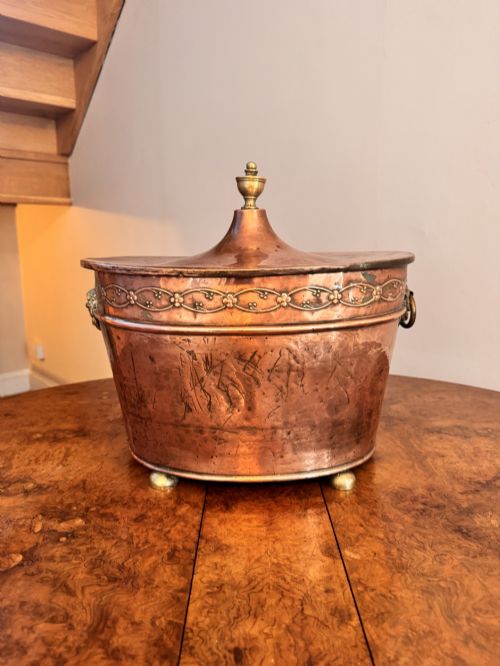
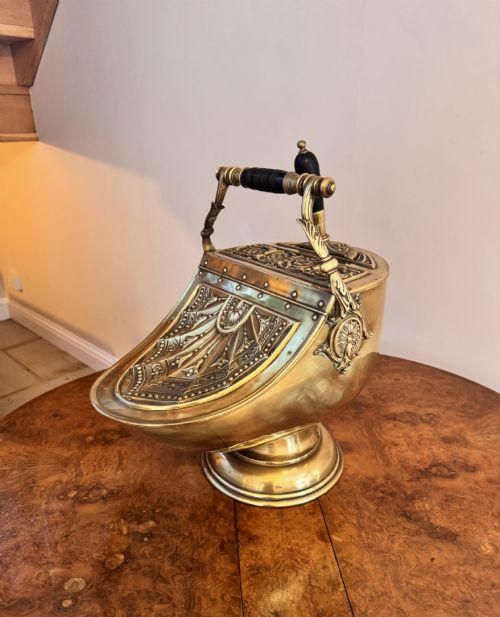
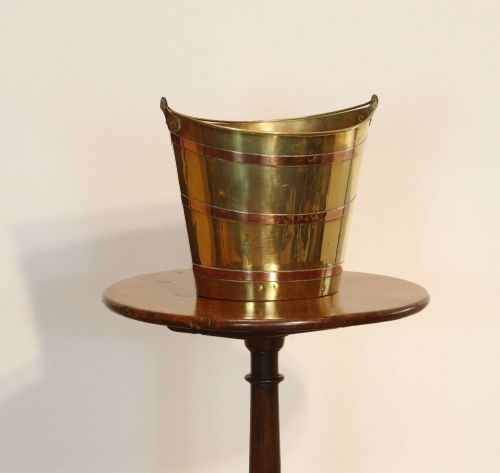
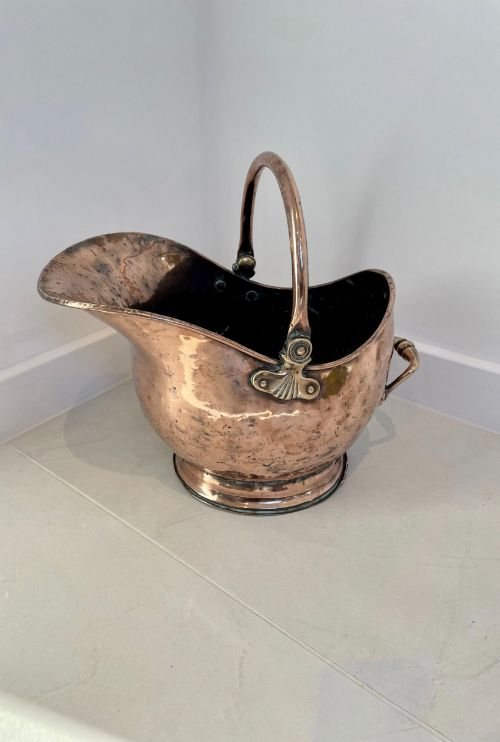
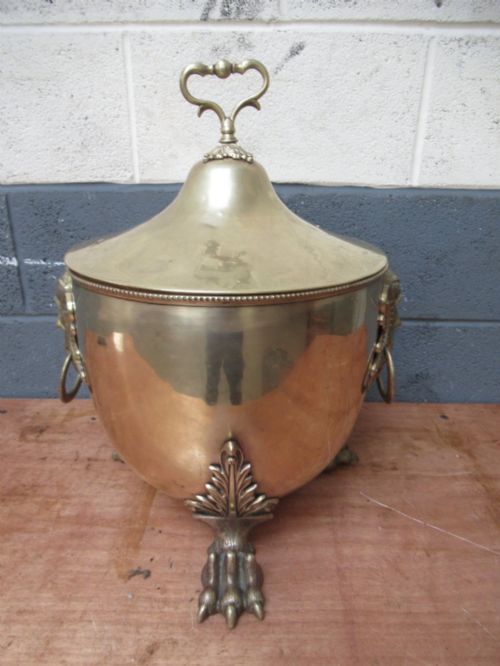
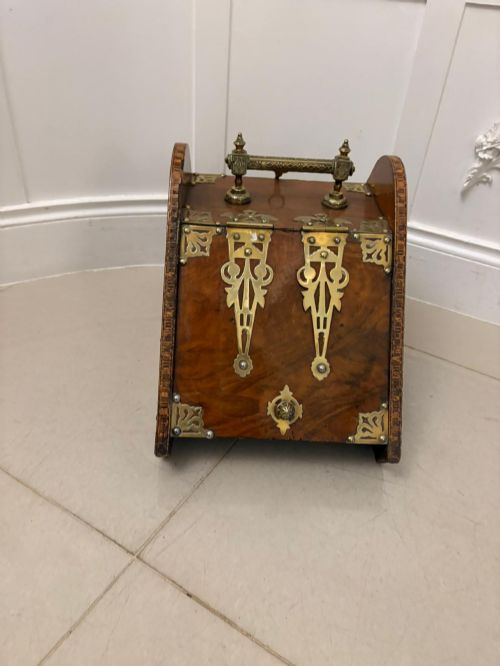
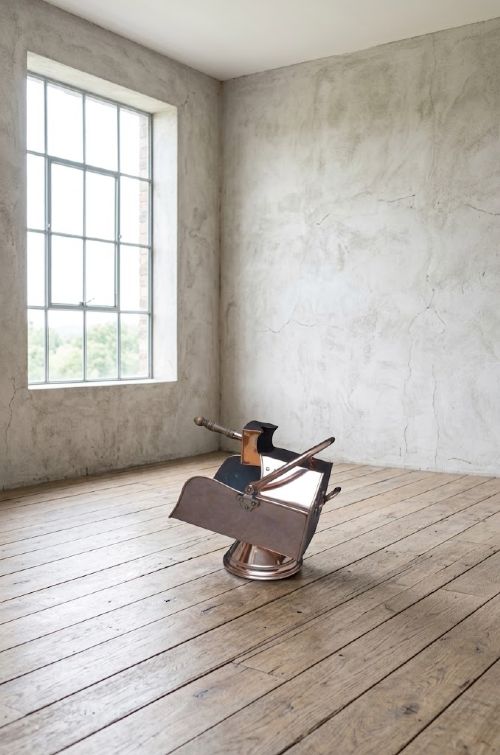
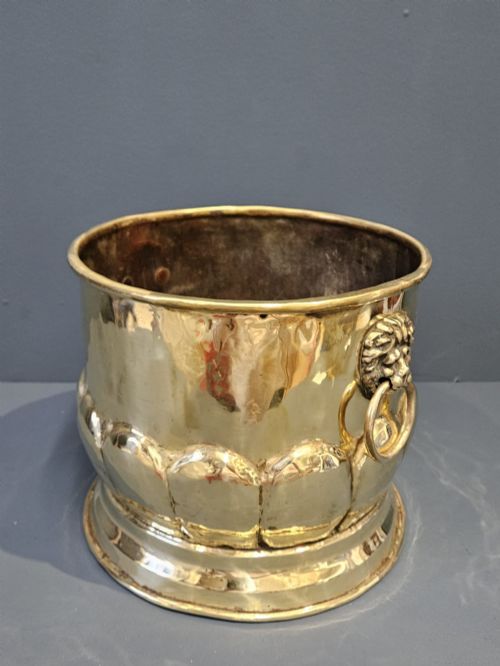
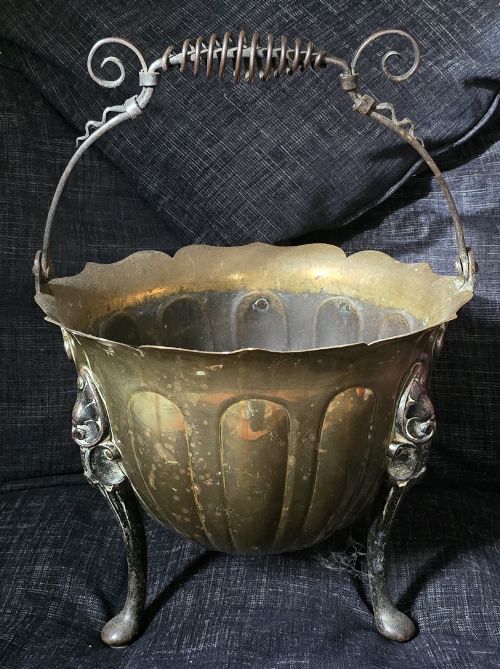
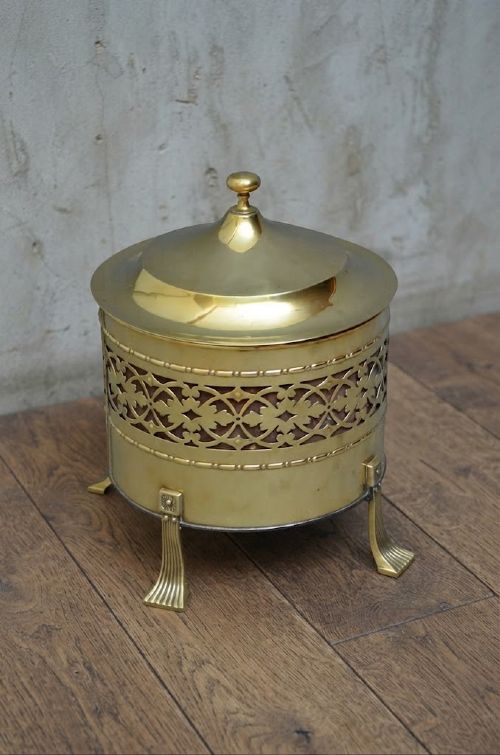
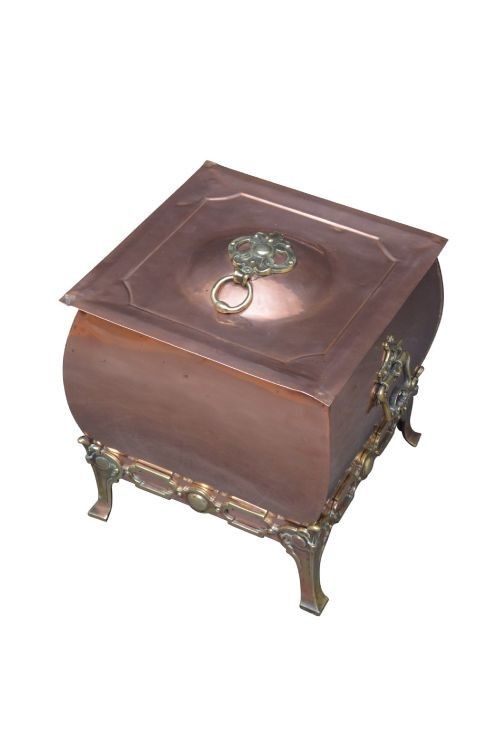
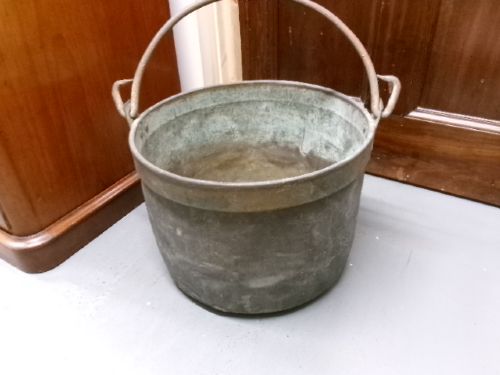
A brass coal container serves as a hearthside receptacle for solid fuel, taking the form of buckets, helmets, boxes, and cauldrons designed to hold coal or logs. The pieces seen here span the Victorian, Edwardian, and Art Deco periods, alongside earlier Georgian and Arts and Crafts examples.
Makers and workshops produce these items in circular, helmet-shaped, and rectangular formats, frequently incorporating swing handles, metal liners, and matching shovels. Many double as planters or log bins, reflecting how domestic objects adapt over time.
Materials and Technique
Construction relies primarily on sheet brass and copper, sometimes paired with iron, galvanised metal, or timber bodies such as oak and mahogany. Metalworkers utilise hammering, riveting, and embossing techniques to shape the bodies and apply decorative scenes or geometric fretwork.
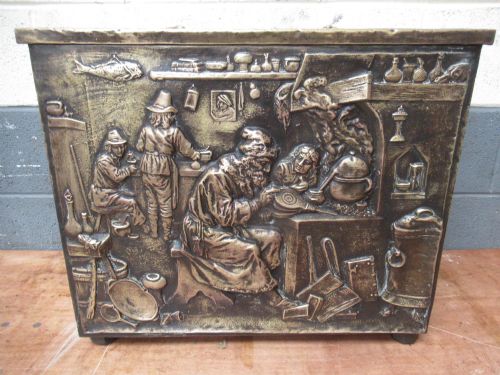
Surface treatment often involves contrasting copper bands against brass bodies, or applying repoussé motifs ranging from tavern scenes to spade decorations. Handles and feet are cast separately and attached firmly to the main container.
Brass Coal Container Retail Price Guide 2026
Typical asking prices for brass coal container among the pieces listed under this phrase on Sellingantiques today, from the lower quarter to the upper quarter. They describe what is for sale here now, not the wider market.
Listings feature items spanning the Georgian era through to the Art Deco period, constructed from brass, copper, and oak.
Evaluating Construction and Detail
The distinction between standard utility items and finer examples rests on the heaviness of the gauge metal and the crispness of the hand-beaten or embossed decoration. Superior pieces retain original components like metal liners and matching shovels rather than replacement parts.
Maker attribution also lifts a piece, with marked items from established metalwork studios demonstrating cleaner joints, more secure riveting, and more deliberate surface finishing than unmarked workshop output.
Henry Loveridge·Benham and Froud·Petrus Ramus·William Soutter And Sons
The Brass Coal Container Glossary
- Coal Helmet
- A coal container featuring a high, sloping mouth and a fixed handle at the back, shaped to pour fuel cleanly into a grate.
- Cauldron
- A round, swelling vessel resting on small feet, often fitted with a swing handle and utilised for holding coal or peat.
- Repoussé
- A metalworking technique where the artisan hammers the design from the reverse side to form raised patterns on the front.
- Planter
- A secondary function for many of these vessels, where waterproof liners allow them to hold potted plants instead of fuel.
Brass Coal Container: Frequently Asked Questions
What is a brass coal container used for?
These vessels were originally manufactured to store and transport coal or logs directly beside an open fireplace.
Today, they function as practical fireside fuel holders or decorative plant containers within living spaces.
How do I clean a brass coal container?
Maintenance involves removing dust with a soft cloth and applying a standard metal polish only if you wish to reduce oxidation.
Many collectors prefer to leave an aged patina intact rather than polishing the metal to a bright shine.
Are these containers waterproof?
Original metal liners help catch moisture and dirt from coal or peat, though some older vessels may have developed small leaks through wear.
Using a modern plastic insert inside the container protects the historic base when utilising the piece as a planter.
How do I date a brass coal container?
Stylistic clues such as Arts and Crafts motifs, Victorian embossing, or Edwardian fretwork provide a reliable guide to the period of manufacture.
Maker marks stamped onto the base or handles offer further evidence for dating the piece accurately.