
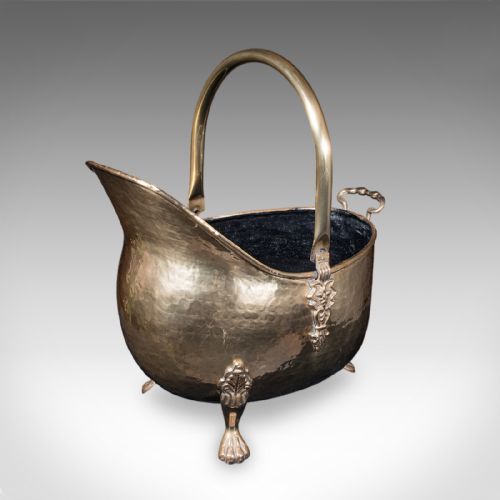
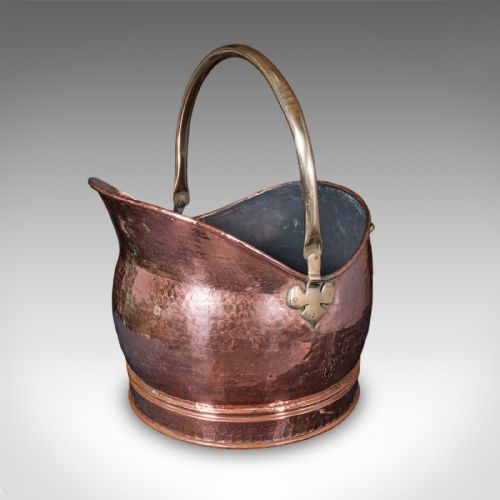
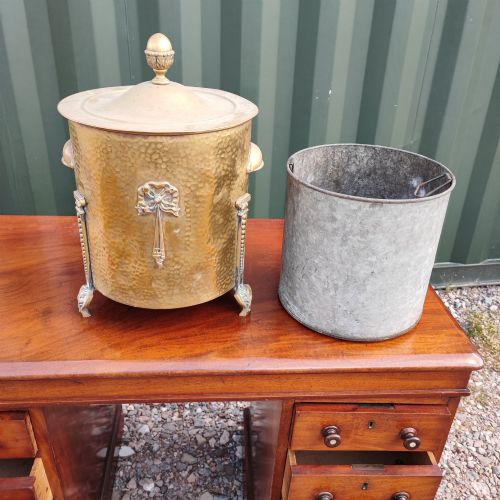
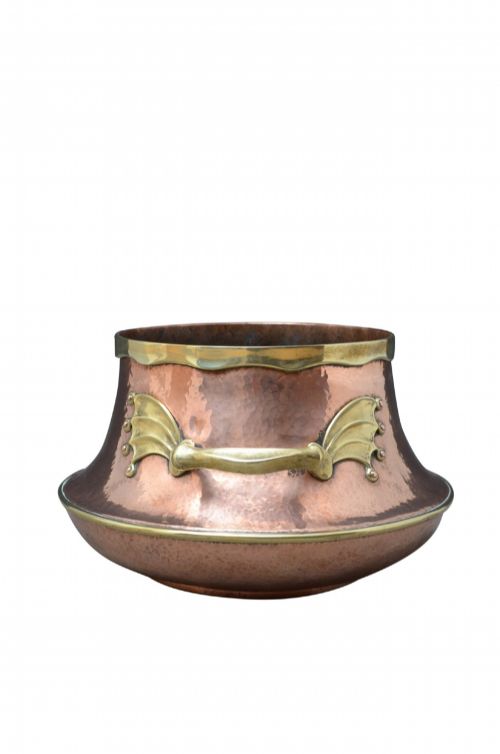
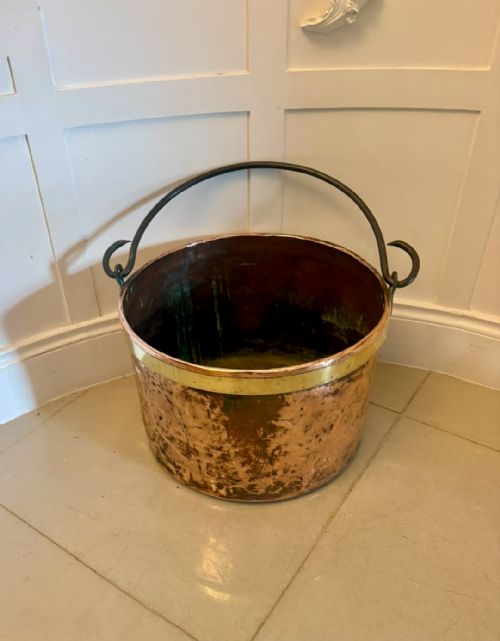


Hammered Brass Coal Bucket
These hammered brass coal bucket pieces bring tactile warmth to a hearth, combining robust utility with decorative metalwork.
Hammered Brass Coal Bucket
When you search for a hammered brass coal bucket, you encounter heavy fireside receptacles designed to hold fuel near an open fire. These objects serve practical storage needs while functioning as decorative focal points within nineteenth and early twentieth century rooms.
You are most likely to meet Victorian helmet-shaped coal scuttles and cylindrical bins on this page, often paired with copper or iron elements. The selection also includes cauldrons, log bins, and planters reflecting subsequent Arts and Crafts and Art Nouveau preferences.
The forms originate from nineteenth century English and continental workshops, ranging from plain utilitarian vessels to ornate handbeaten designs. Each piece reflects the domestic routines of period households where fuel storage demanded sturdy construction.
Materials and Construction
The construction relies on sheet brass and copper, frequently joined by visible rivets or handbeaten surface marks. Artisans shaped these metals over iron or wooden internal structures to provide rigidity for heavy loads of coal and logs.
Surface texture is achieved through manual hammering, creating a faceted finish that catches the light differently on every vessel. Additional components such as swing handles, feet, and shovels incorporate brass castings, wrought iron, and turned wood.
Factors of Quality
Quality rests in the weight of the metal and the crispness of the handbeaten surface work rather than surface gleam. Heavier gauges of brass and copper resist denting and maintain structural integrity during daily use beside the fireplace.
Distinction also lies in the integrity of the riveted joints and the presence of original fittings like matching shovels and sturdy swing handles. Finer examples display deliberate proportions and careful finishing around the rims and bases.
Henry Loveridge
The Hammered Brass Coal Bucket Glossary
- Dinanderie
- A term for worked brass or copper objects, originating from the Belgian town of Dinant. It applies to decorative and utilitarian vessels produced in base metals.
- Helmet Scuttle
- A coal container featuring a shaped mouth resembling a classical helmet, designed for pouring fuel cleanly. This form became particularly popular during the Victorian period.
- Handbeaten
- A surface technique where a hammer is used directly on the metal sheet to create an uneven, textured finish. This method leaves distinct marks of manual labour on the exterior.
- Cauldron
- A round metal vessel with a wide opening, often supported on small feet or a rounded base. These pieces serve as deep containers for logs or coal.
- Jardiniere
- An ornamental pot or receptacle intended to hold plants, though frequently repurposed as a fireside log bin. They share similar metalworking techniques with coal buckets.
Hammered Brass Coal Bucket: Frequently Asked Questions
How were these buckets used originally?
These vessels sat beside the fireplace to store coal, slack, or logs within easy reach of the hearth. Servants filled them from larger coal cellars before bringing them into domestic living rooms.
Once empty, they were carried back out for replenishment, which explains why the handles and bases needed to be robustly attached.
Can I still use them for coal?
Yes, many owners continue to use them for their original purpose beside active fires. The solid brass and copper construction handles solid fuel without issue.
Alternatively, many people repurpose them to hold rolled blankets, kindling, or large house plants in modern interiors.
How do I distinguish Victorian from later pieces?
Victorian examples generally rely on heavier brass gauges and specific helmet shapes with riveted seams. They often date from the mid to late nineteenth century.
Later pieces from the Arts and Crafts and Art Nouveau periods introduce more stylised surface patterns and softer, organic forms reflecting early twentieth-century design.
Are original shovels common?
Original matching shovels do appear with some coal scuttles, stored in dedicated side brackets or compartments. They are valued accessories because many were separated from their containers over the decades.
Finding a piece retaining its original shovel adds considerably to its completeness as a fireside set.