
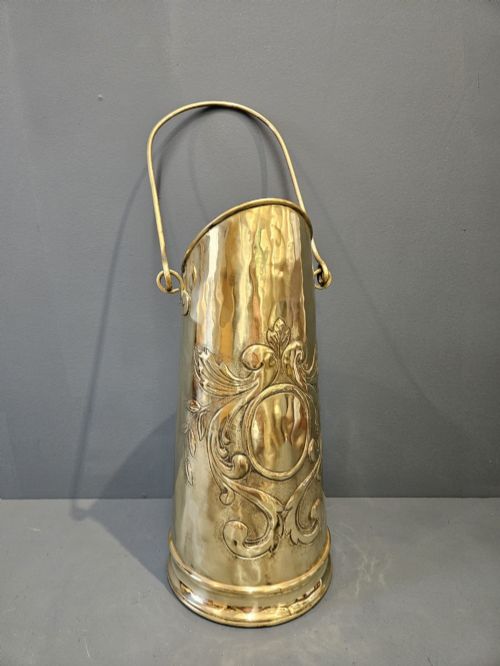


Victorian Metal Coal Box
These Victorian metal coal box examples are practical hearth containers designed to store fuel beside the fireplace while adding utilitarian character to a room.
Victorian Metal Coal Box
A victorian metal coal box is a fireside accessory built to hold coal, logs, or kindling near the hearth. The pieces found here span the nineteenth century and into the early twentieth century, taking forms such as coal scuttles, bins, purdoniums, and log holders.
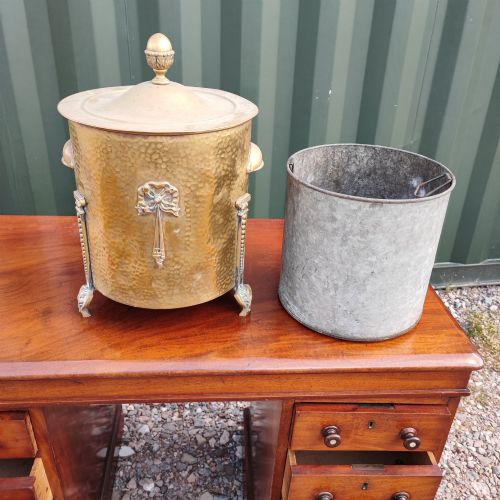
Most examples rely on durable metals like brass, copper, iron, and painted toleware, sometimes paired with wood or fitted with interior metal liners. Makers from the period applied stylistic movements ranging from Arts and Crafts and Art Nouveau to industrial utilitarian and folk art designs.
Buyers will encounter helmet buckets, lidded bins, slipper boxes, and wagon forms alongside related fireside accessories and planters. These containers served a purely domestic function in period homes before finding a second life as decorative room accents.
Judging quality and construction
The standard of a piece rests on the thickness of the metal, the integrity of the riveted joints, and the crispness of any embossed decoration. Hand-beaten surfaces and blacksmith-made frames show the direct hand of the maker more clearly than later mass-produced alternatives.
Preservation of original painted surfaces, patination on brass and copper, and the presence of matching internal liners or original scoops elevate an example. Heavy gauge metals and robust construction distinguish utilitarian items built to withstand heavy daily fireside use.
Listings feature metals including brass, copper, iron, wrought iron, painted iron, galvanised metal, and sheet iron across multiple decades.
Henry Loveridge
The Victorian Metal Coal Box Glossary
- Purdonium
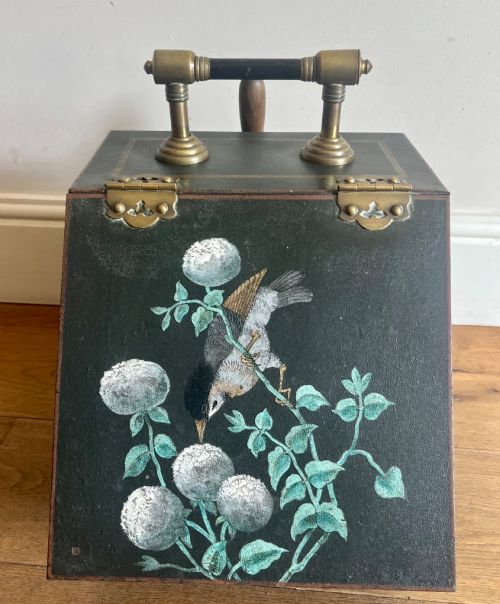
- A specialised coal box featuring a sloping front door and a shovel compartment at the back or side. This form became popular during the nineteenth century for neat fuel storage.
- Toleware
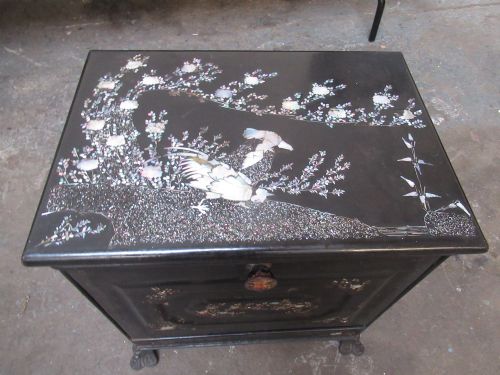
- Japanned or painted sheet metal items produced to imitate oriental lacquerware. These pieces often feature dark backgrounds with hand-painted floral or decorative motifs.
- Coal Scuttle
- A deep metal container with a hinged handle, designed for carrying fuel from an outdoor store to the fireplace. Many Victorian versions double as decorative hearth bins.
- Barge Ware
- Traditional polychrome painted folk art found on tinplate and metal household objects. The style typically incorporates stylized floral patterns and bright colours.
- Gladstone Bag
- A stiff-framed travelling bag style occasionally adapted by metalworkers for fireside coal and log storage. These metal bins borrow the distinctive hinged mouth opening.
Victorian Metal Coal Box: Frequently Asked Questions
What is a purdonium?
A purdonium is a specific type of nineteenth-century coal box designed with a drop-down front and an internal metal scoop. It allowed homeowners to store fuel neatly beside the fireplace without spilling dust onto the hearth.
These cabinets often stood on small feet and included a handle on top for carrying. They represent a more formal indoor fuel storage solution than an open bucket.
How do I clean brass and copper?
Cleaning depends on whether you prefer a bright polished finish or an aged dark patina. Most collectors choose to leave the historic surface untouched to preserve the character of the metal.
If polishing is necessary, use a mild non-abrasive metal cleaner and a soft cloth. Avoid harsh chemical dips that strip away centuries of accumulated oxidation.
Were these boxes only for coal?
While primarily manufactured to hold coal for open fires, many of these containers stored logs, kindling wood, or turf. Their robust metal construction easily accommodated various solid fuels.
Today, owners frequently repurpose them as umbrella stands, planters, or general fireside storage bins. The waterproof metal liners make them well-suited for holding potted plants.
How do I spot Arts and Crafts examples?
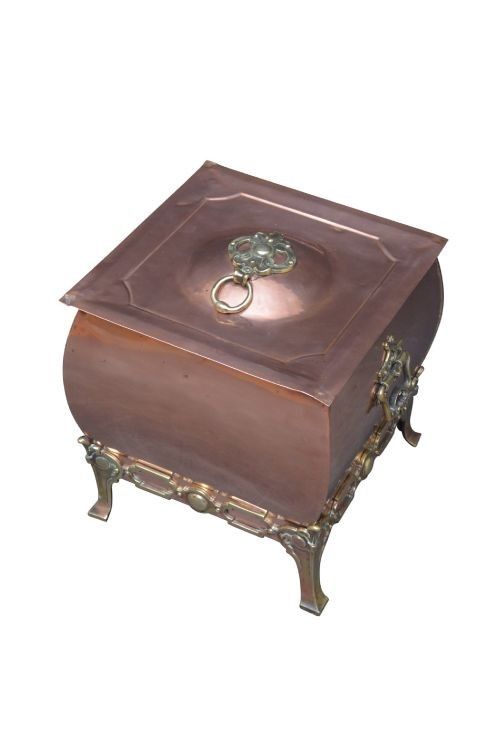
Arts and Crafts pieces emphasise visible hand-craftsmanship, such as hand-beaten copper panels, exposed copper rivets, and wrought iron strapwork. They often feature stylized plant motifs rather than classical ornamentation.
These items date from the late nineteenth and early twentieth centuries. They reflect a design philosophy that valued honest materials and traditional manufacturing techniques over factory production.