
Antique Hearth Coal Scuttle
An antique hearth coal scuttle is a fireside vessel designed to hold fuel, combining utility with period craftsmanship.
Antique Hearth Coal Scuttle
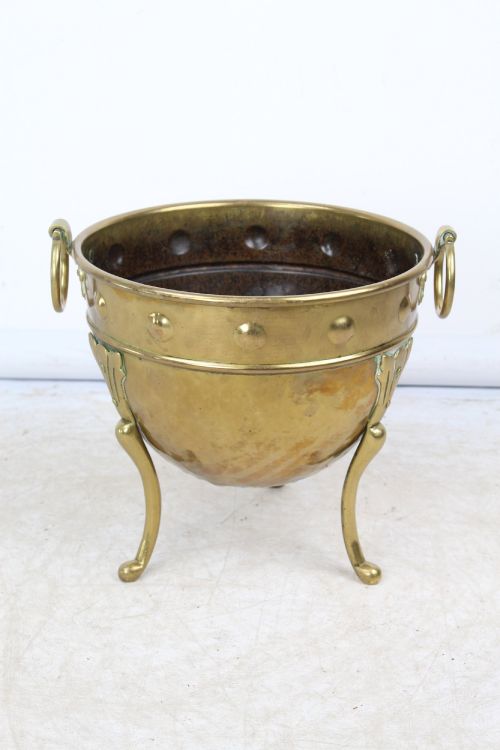
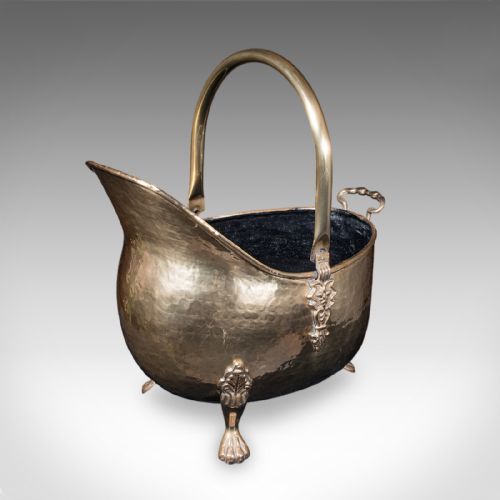
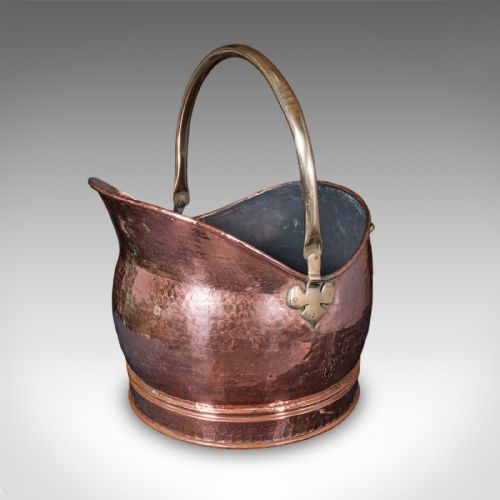
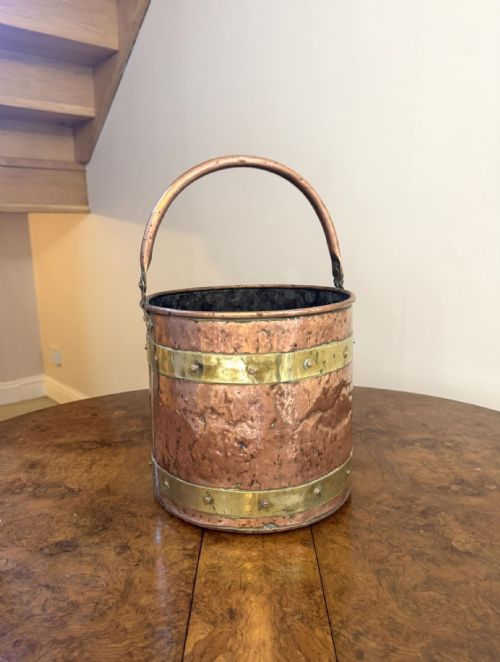
An antique hearth coal scuttle serves to store and transport fuel for an open fire, taking forms such as buckets, helmets, boxes, and bins. The pieces seen here span periods from the eighteenth century through to the Edwardian era, encompassing Georgian, Victorian, and Arts and Crafts styles.
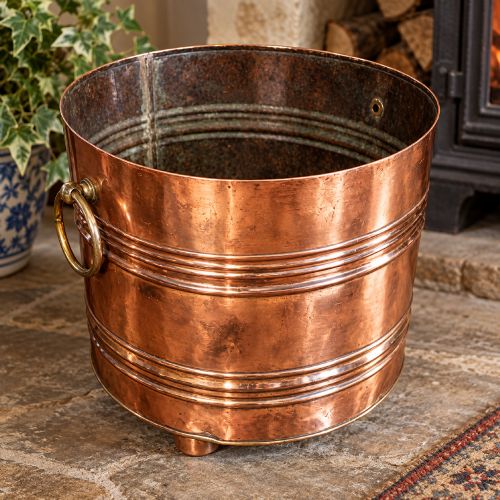
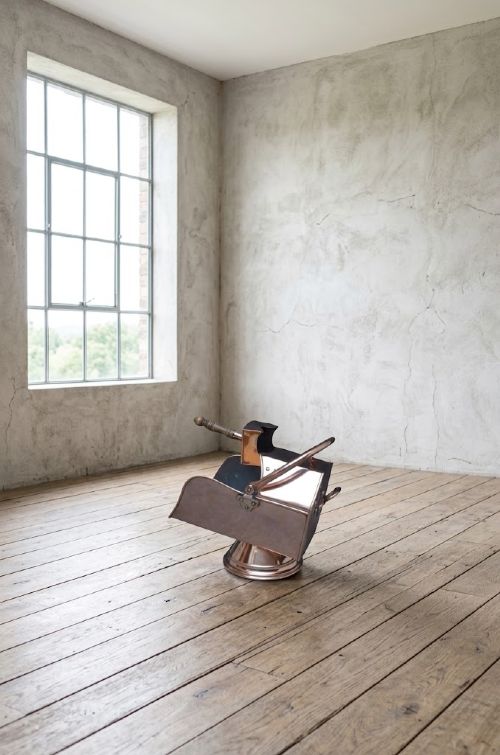
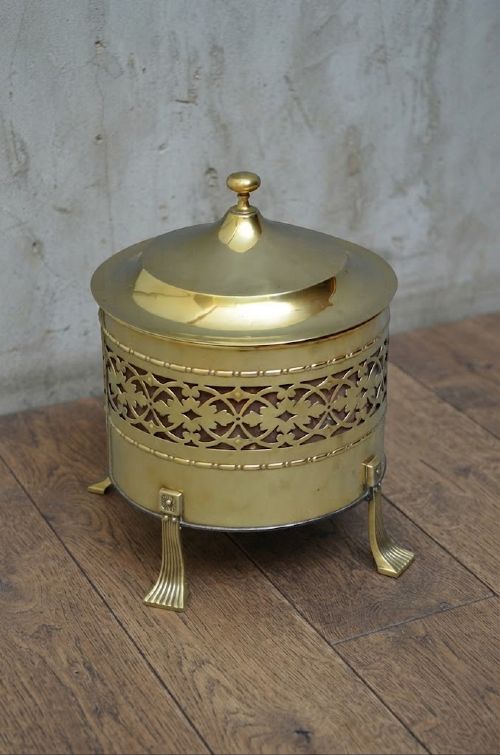
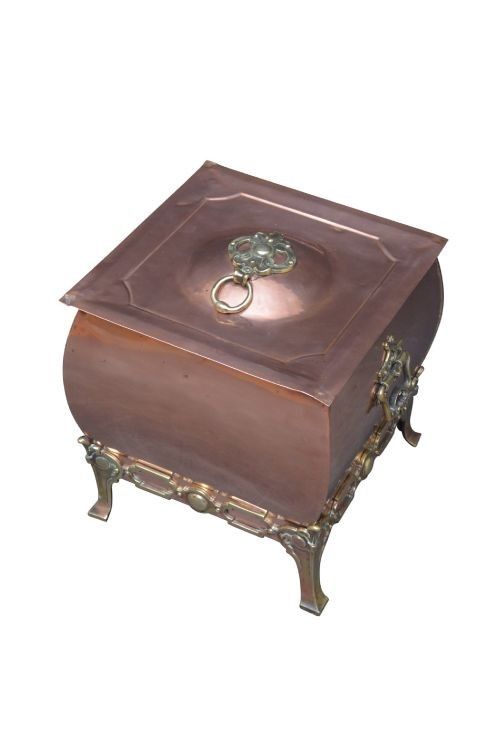
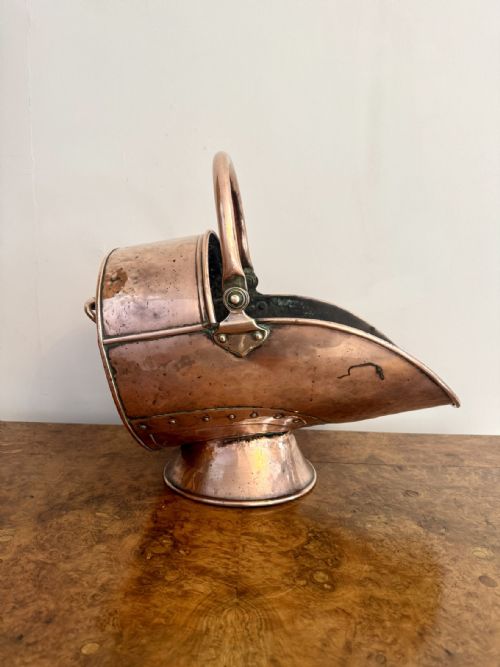
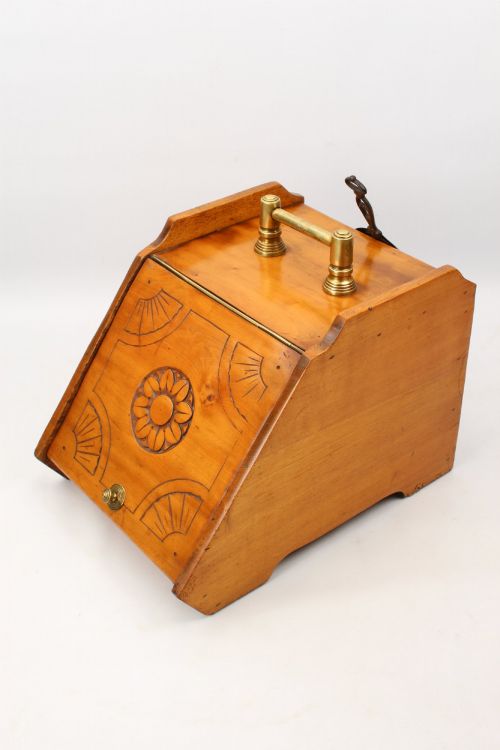
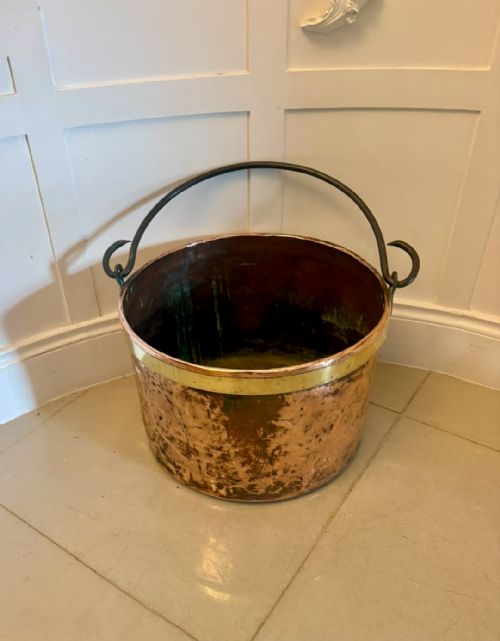
Buyers will most frequently encounter Victorian and Edwardian examples fashioned from metal or wood, often accompanied by original shovels or handling fixtures. Forms range from riveted copper buckets to wooden Purdonium boxes and brass coal helmets intended to sit beside the fireplace.
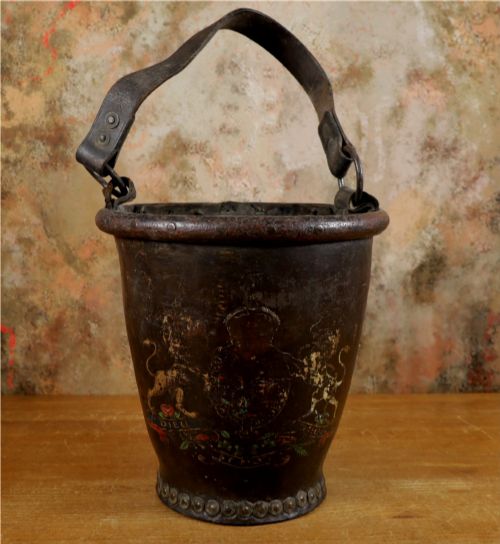
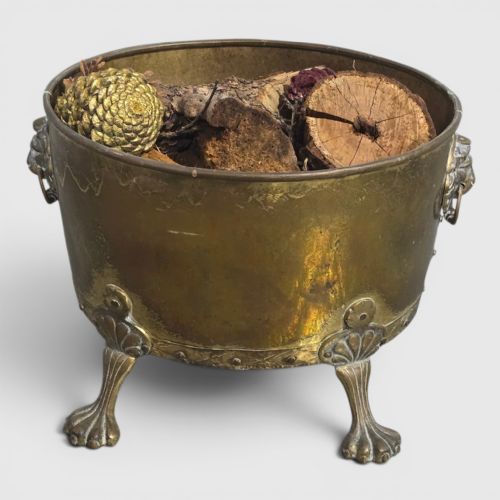
Alternative forms include coopered peat buckets, log bins, and leather fire buckets featuring studded coats of arms. These objects bridge utilitarian domestic storage and decorative metalwork or cabinetmaking.
Materials and construction methods
Metals dominate the construction of these pieces, with brass and copper utilised extensively for helmets, buckets, and bins alongside iron and wrought iron frames. Artisans shaped these materials through riveting, hammering, and hand-finishing, sometimes incorporating fretwork designs or brass banding.
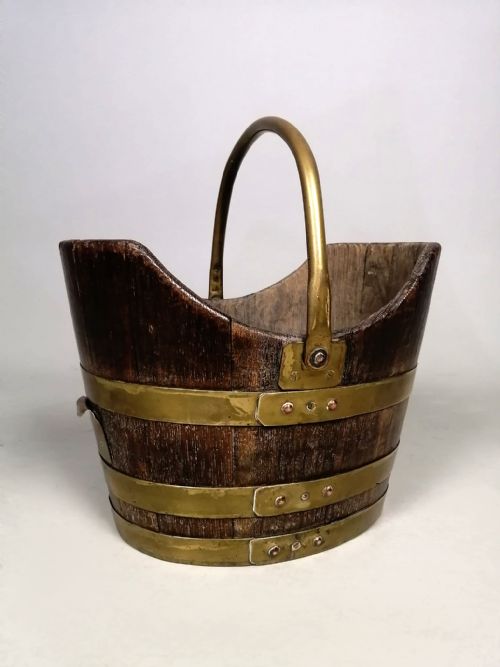
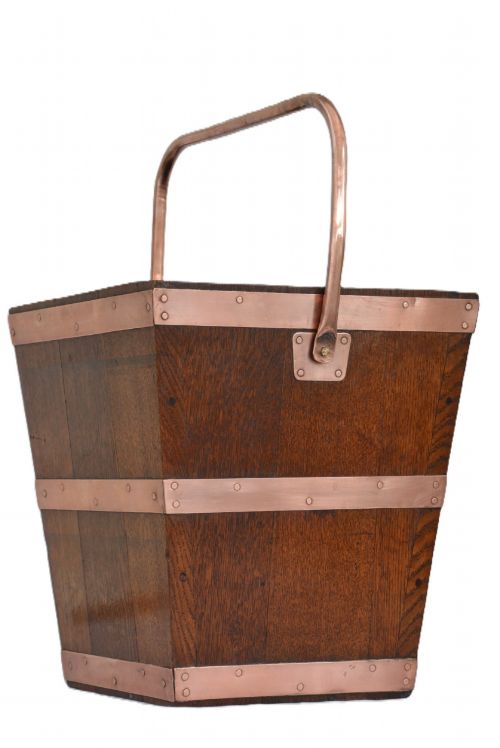
Timber examples employ mahogany, oak, and general wood construction, frequently utilising coopered staves or box forms known as Purdoniums. Leather also appears in early fire buckets, decorated with studded details and heraldic motifs.
Distinguishing quality across periods
Quality rests upon the integrity of the materials, the weight of the metal or timber, and the crispness of decorative detailing such as hand-finished riveting and fretwork. Pieces that retain their original shovels, internal liners, or iron frames hold greater documentary completeness.
Early examples from the Georgian period demonstrate traditional cooperage and heavier gauge copper, whereas later Victorian and Arts and Crafts pieces showcase industrial metalworking techniques and stylized Art Nouveau motifs.
Henry Loveridge·Benham and Froud·Petrus Ramus
The Antique Hearth Coal Scuttle Glossary
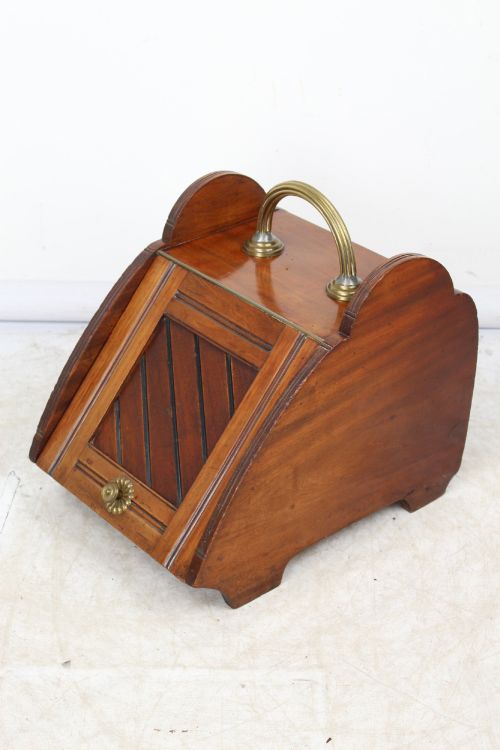
- Purdonium
- A specialised coal box, usually made of wood with an internal metal liner and a hinged front flap, popular in the Edwardian period.
- Helmet coal scuttle
- A container shaped like an uptended helmet with a flared mouth and a raised handle, designed for pouring coal cleanly onto a fire.
- Coopered
- Constructed from wooden staves bound together with metal hoops, a technique commonly used for peat buckets and cylindrical bins.
- Log bin
- A large freestanding container intended for storing firewood rather than smaller pieces of coal.
Antique Hearth Coal Scuttle: Frequently Asked Questions
What is a Purdonium coal box?
A Purdonium is an enclosed wooden coal box featuring a sloping front flap and an inner metal liner for holding fuel.
These pieces typically date from the late Victorian and Edwardian periods and often include a dedicated compartment for a shovel.
How do I clean antique brass and copper?
Maintenance depends on the desired finish, as many collectors prefer to leave oxidized surfaces and historic patina untouched.
Gentle dusting with a dry cloth preserves the metalwork without stripping the character accumulated over decades of fireside use.
Were these vessels only used for coal?
While primarily designed for coal, many receptacles served multiple duties storing logs, kindling, or peat.
Coopered wooden buckets and metal bins frequently functioned as general fuel stores or indoor planters depending on the household needs.
How do I distinguish Georgian from Victorian pieces?
Georgian coal containers often display heavier gauge hand-raised copper, brass banding, and simple leather construction with heraldic studs.
Victorian and Edwardian items introduce machine-assisted riveting, varied stylistic revivals, and specialised box mechanisms like the Purdonium.