


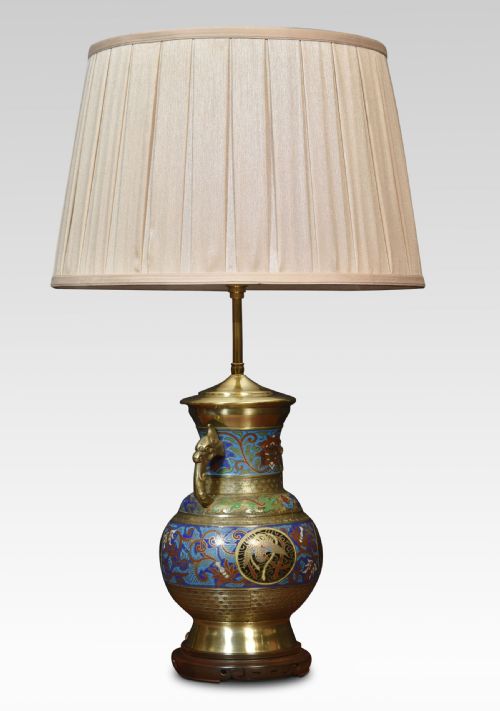


Brass Cloisonne Urn
A brass cloisonne urn brings vibrant colour and meticulous wirework into a room, offering centuries of Asian and European craftsmanship.
Brass Cloisonne Urn
When you search for a brass cloisonne urn, you encounter vessels that bridge functional utility and decorative display. The pieces on this page span the nineteenth century, the Edwardian era, and the early decades of the twentieth century, originating from both Chinese and Japanese workshops.
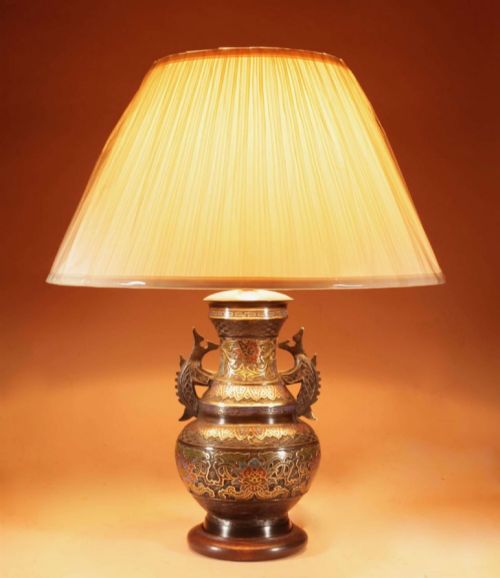
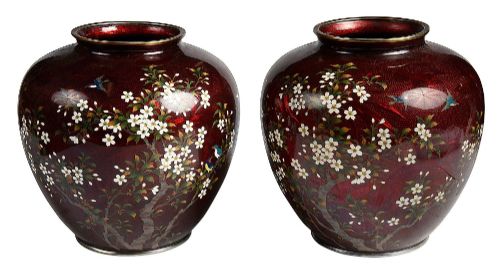
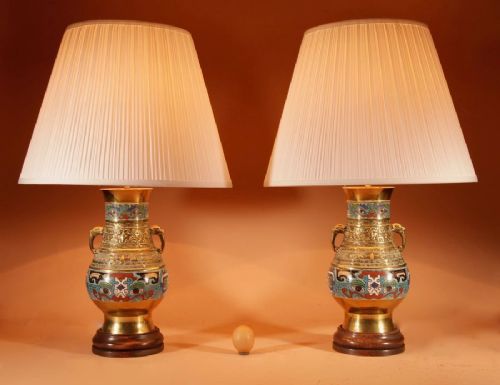
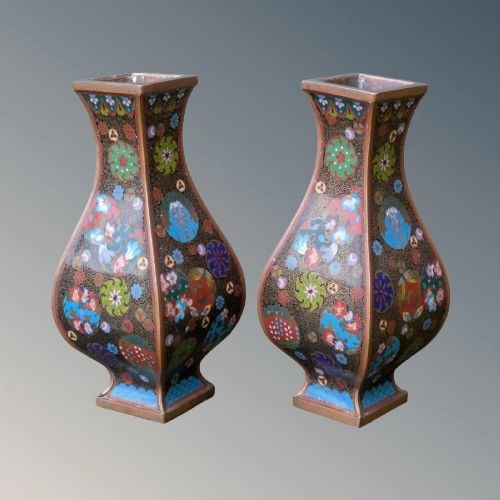
Most items you meet here take the form of vases, jardiniere bowls, or converted table lamps. They display characteristic metalwork bodies embellished with vibrant enamel compartments created through traditional techniques.
Materials and construction
The foundation of these vessels relies on robust base metals such as brass, bronze, and copper. Artisans shape these metals into substantial urns and vases before applying the structural framework.
Fine wire soldered to the metal surface creates individual cells, known as cloisons, which are subsequently filled with coloured enamel paste. Firing and polishing bring the metal ribbons and glass surfaces to a smooth, unified finish.
Some nineteenth-century vases enjoy a second life illuminating dark corners as converted table lamps.
Assessing quality and execution
Quality reveals itself in the precision of the wirework and the density of the enamel. Finer examples display intricate, symmetrical patterns with minimal pitting or bubbling in the coloured glass paste.
The weight of the metal base and the crispness of the finishing also distinguish superior vessels from simpler commercial pieces. Earlier nineteenth-century specimens often exhibit greater depth in the colour palette and heavier bronze or brass foundations.
The Brass Cloisonne Urn Glossary
- Cloisonne
- A decorative enamel technique where metal wires are soldered to a base to form compartments filled with paste and fired. This method creates the distinctive patterned surface seen on antique vases and urns.
- Champleve
- An enamelling process where troughs or cells are hollowed directly into the metal surface rather than formed by soldered wire. It yields a bold, integrated texture often found on bronze and brass vessels.
- Meiji Period
- The era of Japanese history spanning from 1868 to 1912, noted for a surge in export art including fine metalwork and enamel. Pieces from this time frequently demonstrate exceptional technical refinement.
- Qing Dynasty
- The final imperial dynasty of China, ruling from 1644 to 1912, responsible for significant developments in decorative arts. Urns and vases from this period utilise rich colour schemes and traditional motifs.
- Jardiniere
- A large ornamental pot or stand designed to hold plants or flowers. In metalwork, these sturdy vessels often feature wide rims and heavy brass or bronze construction.
Brass Cloisonne Urn: Frequently Asked Questions
Can I convert an urn into a lamp?
Many antique vessels arrive with electrical fittings or have been adapted as table lamps over the decades. This conversion preserves the decorative value while adding functional lighting to a room.
Professional rewiring ensures the internal components meet modern safety standards without damaging the antique metal base.
How do I date a cloisonne piece?
Dating relies on stylistic clues, the weight of the metal, and the composition of the enamel colours. Nineteenth-century examples often use heavier bronze or brass foundations with deeper, more subdued tones.
Later pieces from the early twentieth century may feature brighter palettes and lighter construction methods. Comparing the wiring regularity also aids in period identification.
Where were these pieces made?
The inventory on this page reflects traditional production centres in China and Japan. Chinese workshops produced substantial vessels during the Qing period, while Japanese makers contributed refined Meiji and Showa pieces.
European makers also adopted these Eastern techniques, creating Chinoiserie interpretations during the Victorian and Edwardian eras.