
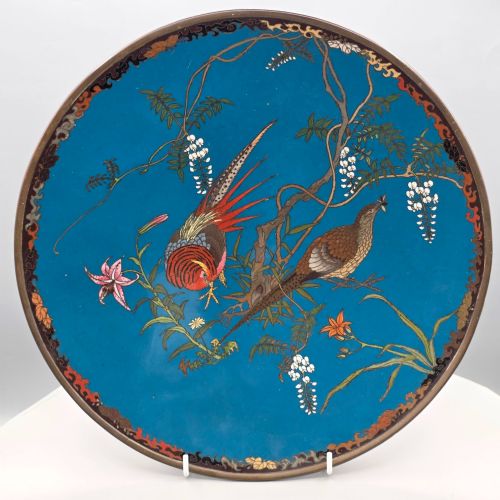
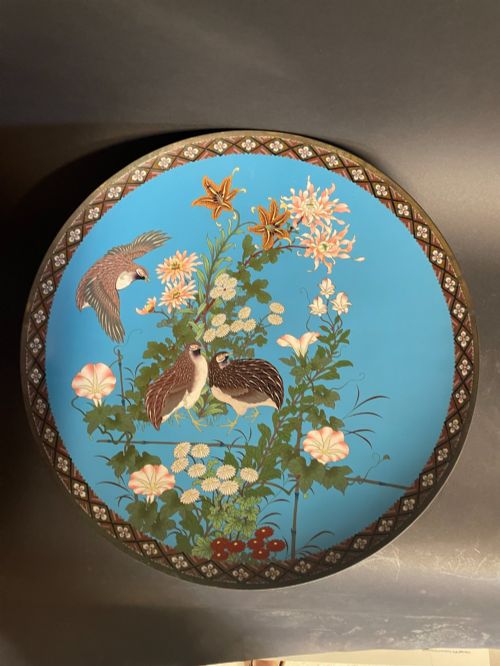
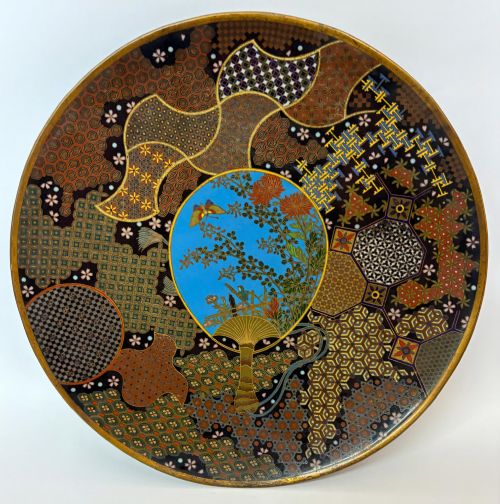


Brass Cloisonne Enamel Dish
These decorative brass cloisonne enamel dish pieces are metal vessels with wired patterns filled with coloured paste, prized for intricate natural scenes.
Brass Cloisonne Enamel Dish
A brass cloisonne enamel dish brings together intricate metalwork and vibrant glass pastes to create decorative plates, chargers, and bowls. When searching for a brass cloisonne enamel dish, buyers encounter large chargers and display plates decorated with birds, flowers, and landscapes.
The objects stem predominantly from the Meiji and Edo periods of Japan, alongside Qing Dynasty examples. Makers shaped these vessels into decorative trays, plaques, and lidded bowls intended for visual display.
Most examples date across the nineteenth century, ranging from the eighteen-sixties through to nineteen-hundred. The form spans smaller decorative plates up to huge chargers measuring fifty centimetres across.
How they were made
Artisans constructed these vessels using a base of brass, copper, or bronze. They soldered thin metal wires onto the metal surface to outline intricate patterns and compartments.
Workers filled the resulting cells with enamel paste before firing and polishing the surface to a smooth finish. This technique allowed makers to depict detailed subjects such as birds, koi, dragons, and Mount Fuji.
Materials recorded across the inventory include brass, copper, and bronze combined with cloisonne enamel.
What varies in quality
Quality depends upon the precision of the wirework and the complexity of the pictorial design. Finer pieces display exceptionally delicate wiring and sophisticated natural subjects like iris flowers, ibis, and leaping koi.
The scale and ambition of the vessel also separate standard examples from masterworks. Huge chargers with multi-coloured imagery and signed panels represent the upper end of the range.
The Brass Cloisonne Enamel Dish Glossary
- Cloisonne Enamel
- A metalwork technique where thin wires form cells that hold coloured glass paste. Artisans fire and polish the surface until smooth.
- Charger
- A large decorative plate or platter intended for display rather than dining. These vessels provide a wide canvas for complex pictorial scenes.
- Meiji Period
- A Japanese historical era lasting from eighteen-sixty-eight to nineteen-12. Many finely decorated metal objects originate from this time.
- Edo Period
- A Japanese historical era preceding the Meiji period, beginning in seventeen-three and ending in eighteen-sixty-eight. Early vessels often date from this era.
- Qing Dynasty
- The last imperial dynasty of China, spanning from sixteen-forty-four to nineteen-eleven. Pieces from this origin occasionally appear alongside Japanese items.
Brass Cloisonne Enamel Dish: Frequently Asked Questions
How were these dishes displayed?
These pieces were primarily created for visual display on walls, cabinets, or stands rather than for practical table use. Their intricate designs made them central decorative elements in period interiors.
Large chargers and plaques were often mounted or set on specialised stands to showcase the detailed enamel work and subject matter.
What subjects appear on the enamel?
Common subjects include natural scenes featuring birds, chrysanthemums, irises, and Mount Fuji. Artisans also depicted dynamic creatures such as dragons, koi, and phoenixes.
Landscape views and symbolic motifs like the mon appear frequently across plates and bowls from the nineteenth century.
How do I identify the period?
Dating relies on stylistic clues, historical eras, and construction methods associated with Japanese and Chinese manufacturing. Nineteenth-century examples frequently bear characteristics of the Meiji period.
Earlier pieces originating from the Edo period or Qing Dynasty display distinct wiring styles and heavier metal bases compared to later productions.
Are these items fragile?
The metal foundation provides structural strength, but the glass enamel surface requires careful handling. Impact can cause chipping or cracking to the fired paste.
Displaying them securely away from edges protects the delicate wires and polished enamel finish from accidental damage.