


Brass Castor Tea Table
A brass castor tea table brings together folding timber tops and metal wheel mounts for a functional piece that moves easily across a room.
Brass Castor Tea Table
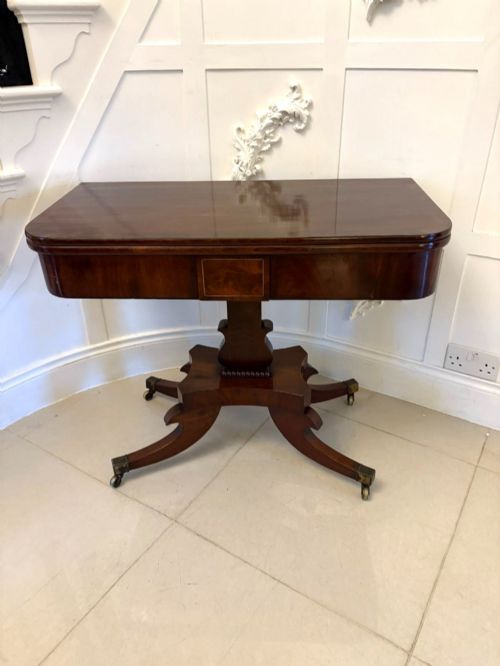
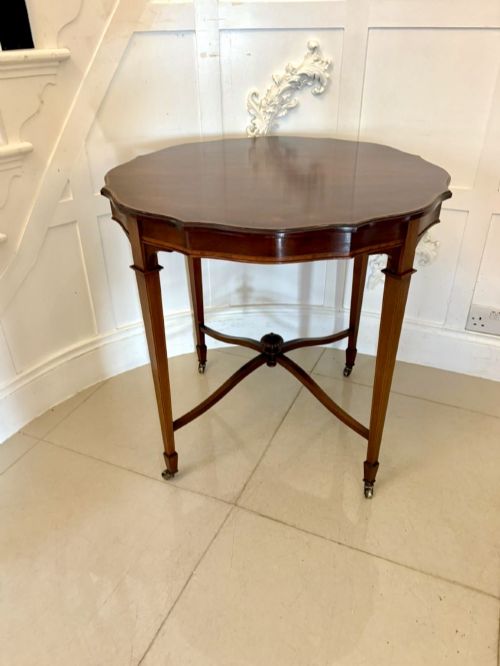
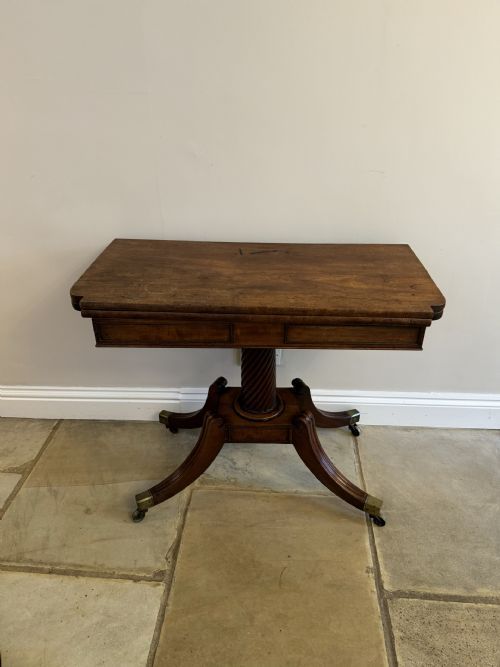
A brass castor tea table is a folding or occasional surface designed for the parlour, most frequently appearing in Regency, Georgian, and nineteenth-century forms. The listings show these surfaces functioning as tea tables, card tables, and pembroke tables, supported on pedestals or legs fitted with small metal wheels.
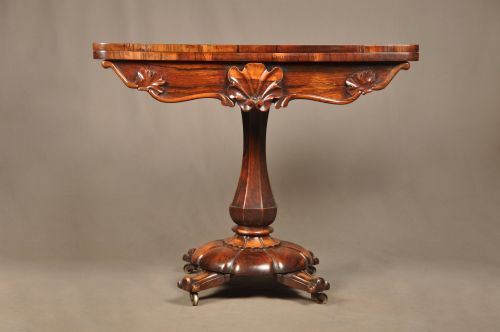
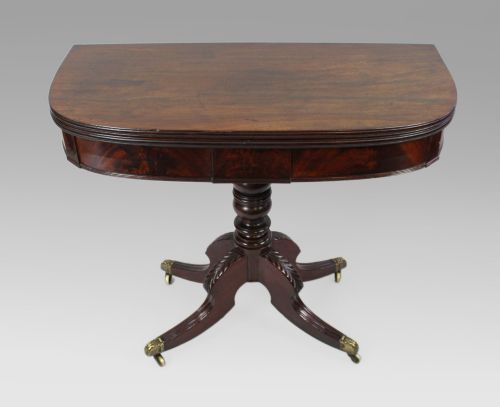
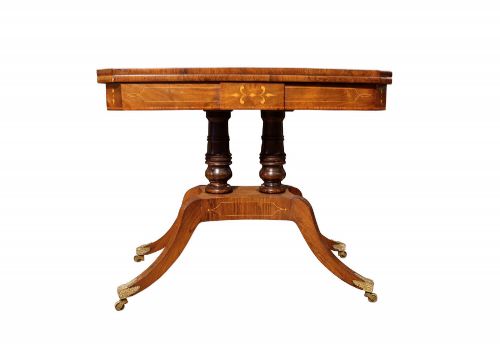
The most common version met on this page is the fold-over mahogany or rosewood tea table from the Regency period, often featuring inlaid details in satinwood, ebony, or brass stringing. These tables provide a dual surface, sitting flat against a wall when closed and opening out on hinges for evening use.
Makers and cabinet-makers working in Edinburgh and London produced these tables in various timbers including Cuban mahogany, amboyna, and satinwood. Alongside standard tea tables, the selection includes games tables, side tables, and occasional tables sharing the characteristic brass castor fittings.
Distinctions in craftsmanship
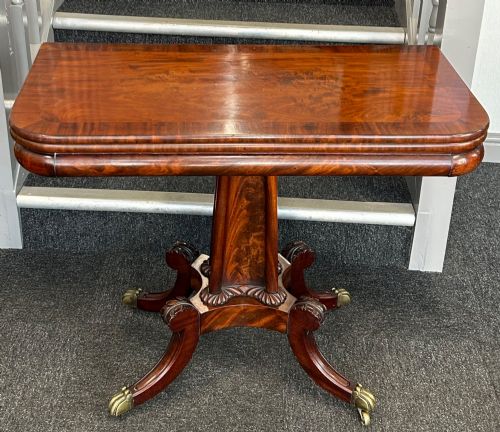
The standard of a brass castor tea table rests on the selection of timber veneers and the precision of the inlay work. Finer examples display highly figured mahogany or rosewood matched across the folding leaves, complemented by crisp boxwood and ebony stringing rather than painted substitutes.
Structural integrity in the pivoting top and the stability of the pedestal or leg joints separate superior pieces from standard workshop output. Original brass castors and fittings that retain their patina indicate an untouched state of preservation.
Brass Castor Tea Table Retail Price Guide 2026
Typical asking prices for brass castor tea table among the pieces listed under this phrase on Sellingantiques today, from the lower quarter to the upper quarter. They describe what is for sale here now, not the wider market.
Some nineteenth-century card tables hide secret compartments beneath their rotating tops for stashing late-night winnings.
William Trotter of Edinburgh
The Brass Castor Tea Table Glossary
- Castor
- A small wheel mounted in a swivel frame attached to the foot of a piece of furniture for easy mobility. They frequently utilise brass housings and rollers.
- Pembroke table
- A small rectangular table with two hinged drop leaves on opposite sides. They often include a single drawer and tapering legs.
- Card table
- A specialised folding table designed for evening gaming, lined with baize or leather on the interior surface. Many feature a rotating top that conceals a shallow compartment.
- Stringing
- A thin inlay of contrasting wood or metal inserted into channels cut into the surface of a piece. It creates delicate geometric borders around table tops and drawers.
- Sabot
- A metal sleeve or mount fitted over the foot of a furniture leg. They are cast in brass to protect the timber end grain.
Brass Castor Tea Table: Frequently Asked Questions
What is a brass castor tea table used for?
These tables served primarily in the parlour or drawing room for serving afternoon tea or hosting card games. The folding top allowed the surface area to expand when guests arrived and fold flat against the wall when not in use.
Today, they function well as side tables, console surfaces, or occasional desks in living spaces. Their mobility on castors makes them adaptable for placement beside seating or in hallways.
How do I identify a Regency period tea table?
Regency tables typically display classical proportions, dark exotic timbers like rosewood and mahogany, and decorative brass inlay or gilt mounts. They often feature pedestal bases with splayed legs ending in brass claw or cup castors.
Examining the construction of the pivot mechanism and the secondary woods beneath the top helps confirm the nineteenth-century origin. Maker labels or signatures, when present, provide a direct link to specific workshops.
Are the brass castors on these tables original?
Original castors show natural wear, patination, and hand-finished casting marks consistent with the age of the timber base. They fit snugly into the foot profile without modern screw replacements.
Replacements are common due to centuries of movement across floors, so matching screw types and brass coloration assist in determining originality. Even with replaced castors, the underlying table structure retains its period integrity.
How should I care for a mahogany tea table top?
Polishing the timber with traditional beeswax preserves the grain and protects the finish from drying out over time. Avoiding direct sunlight prevents fading in sensitive rosewood and mahogany veneers.
Using coasters and avoiding excessive moisture protects the French polished or waxed surface from water rings. Regular gentle dusting maintains the lustre of both the wood and the brass fittings.