
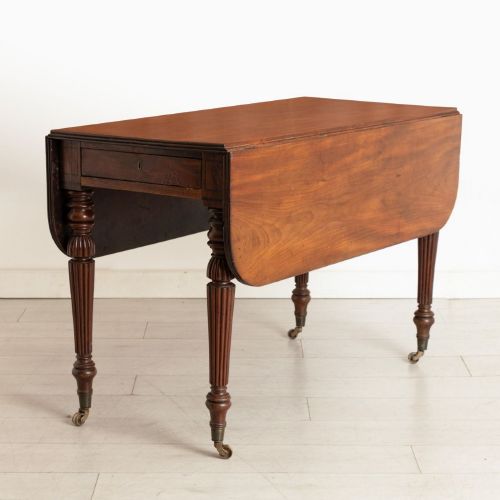
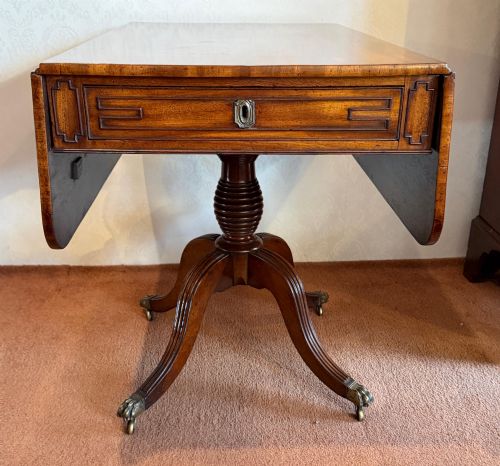


Brass Castor Drop Table
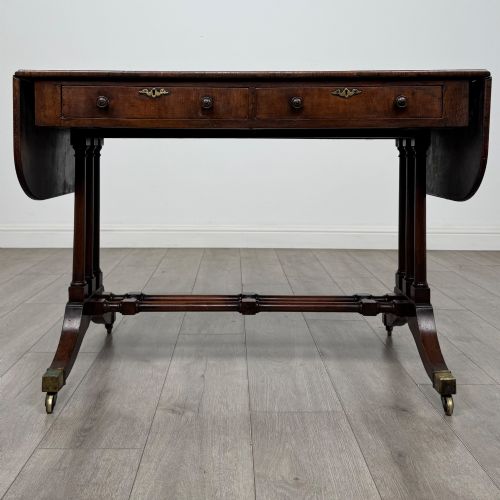
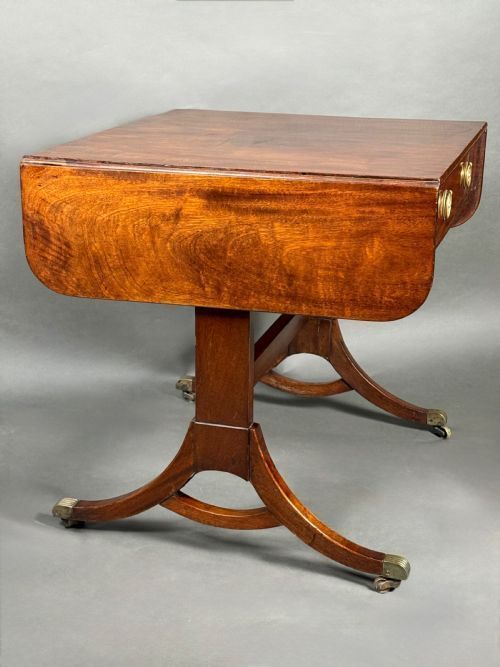
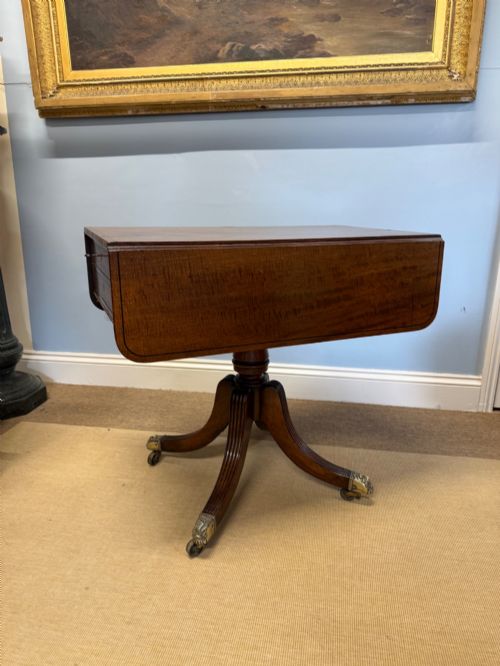
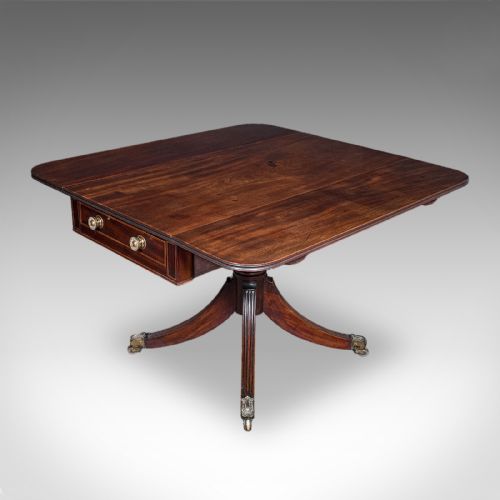
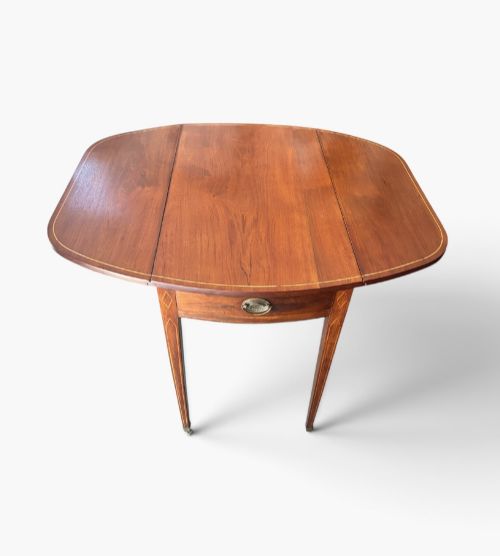
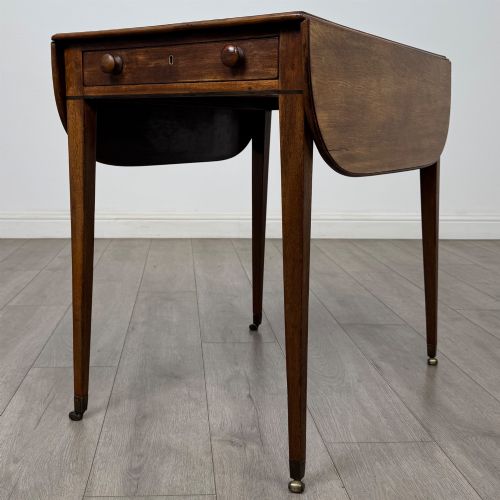
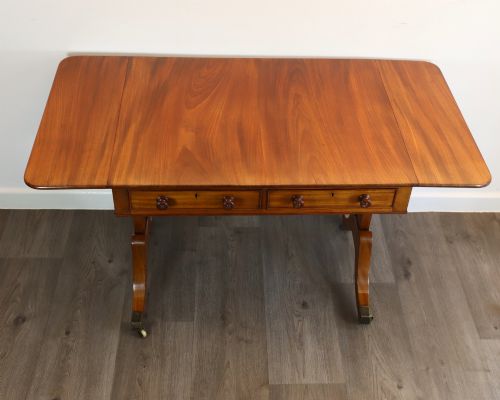
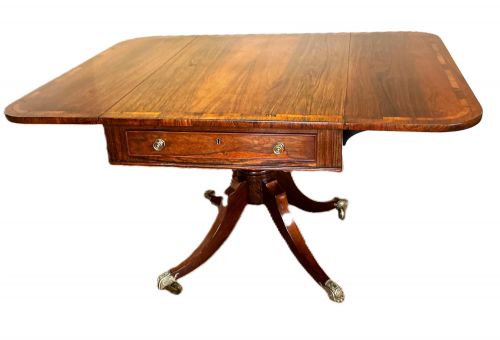
A brass castor drop table combines folding leaves and brass wheel mountings, offering a flexible surface that moves easily across a room.
Brass Castor Drop Table
When searching for a brass castor drop table, buyers encounter forms that fold or drop at the sides, including sofa tables, Pembroke tables, side tables, and occasional tables. These pieces emerge from periods spanning the eighteenth century through to the Edwardian era, incorporating Regency, Georgian, and Victorian designs.
The most common versions on this page are mahogany, flame mahogany, or rosewood drop-leaf and sofa tables fitted with small metal wheels at the base of their legs. These tables often feature dual flaps supported by hinged rule joints or swinging brackets, designed to expand surface area when needed.
Materials and construction methods
Cabinet makers constructed these tables primarily in solid and veneered timbers, selecting mahogany, rosewood, and yew wood for their dense grain and rich tone. Decorative elements frequently include boxwood inlay, satinwood stringing, and gilt brass mounts.
The characteristic drop leaves rely on precision-cut rule joints that allow the flaps to hang flush when lowered and lock level when raised. Bases range from pedestal columns with splayed legs to traditional four-legged frames, each terminating in castors.
Listings feature mahogany, rosewood, yew wood, satinwood, and boxwood inlay across Georgian, Regency, and Victorian periods.
Assessing quality in these tables
Quality reveals itself in the selection of timber and the matching of grain across the table top and drop leaves. Superior pieces utilise figured mahogany or rosewood with consistent colour and careful book-matching, whereas lesser examples show plain or patchy timber.
The integrity of the structural joints and the originality of the brass hardware also distinguish finer items. Well-executed inlay, crisp turnings on the centre column, and retained period castors indicate superior workshop origins.
Andrew Thomson & Sons
The Brass Castor Drop Table Glossary
- Drop leaf
- A table with hinged flaps that fold down to save space or lift up to extend the surface. These flaps are supported by swing brackets or gatelegs.
- Sofa table
- A rectangular occasional table traditionally placed in front of a sofa, usually featuring two small drawers and drop leaves on either side.
- Pembroke table
- A small rectangular or oval table with two hinged side leaves, often fitted with one or two small drawers at the ends.
- Castor
- A small wheel mounted on a swivel attached to the bottom of a table leg, allowing the piece to be moved across the floor with minimal effort.
- Rule joint
- A pivoting wooden joint connecting a table top to its drop leaf, shaped with a rounded edge that closes neatly against a hollowed moulding.
Brass Castor Drop Table: Frequently Asked Questions
What is a brass castor drop table?
It is a table with hinged drop leaves and small brass wheels on the feet, designed for versatile placement in a room.
These pieces typically date from the Georgian, Regency, and Victorian periods, using timbers such as mahogany and rosewood.
How were these tables used originally?
They served multiple functions in period homes, acting as Pembroke tables for writing, sofa tables for entertaining, or occasional dining surfaces.
The drop leaves allowed servants or residents to expand the surface quickly for tea or reading and lower them afterward to save floor space.
How do I tell a Regency table from a Victorian one?
Regency tables, generally dating from the early nineteenth century, often display classical restraint, rosewood veneers, brass inlay, and saber legs.
Victorian pieces from later in the century tend to be heavier in proportion, occasionally borrowing earlier Georgian or Regency styles with darker finishes.
Are the brass castors usually original?
Many surviving examples retain their period brass wheel mountings, which are secured into the base of the table legs.
Original castors show consistent signs of age, matching patination, and secure seating within the timber foot.
How do I care for a mahogany drop leaf surface?
Keep the wood away from direct sunlight and heat sources to prevent the timber or veneer from drying out and splitting.
Dust regularly with a dry cloth and apply a traditional beeswax polish sparingly to maintain the natural lustre of the mahogany.