
Brass Candlestick Lights
Brass candlestick lights bring weight and warm reflection to a room, shifting easily between utility and ornament.
Brass Candlestick Lights
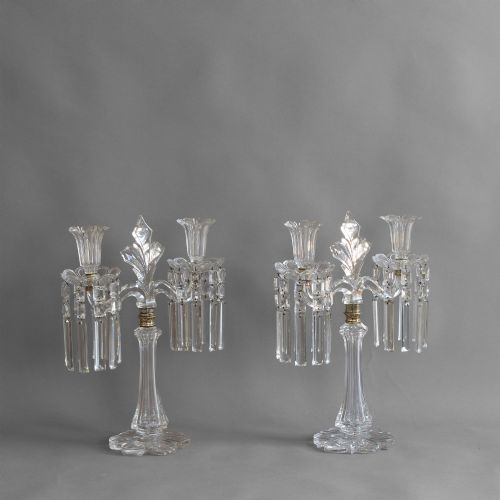
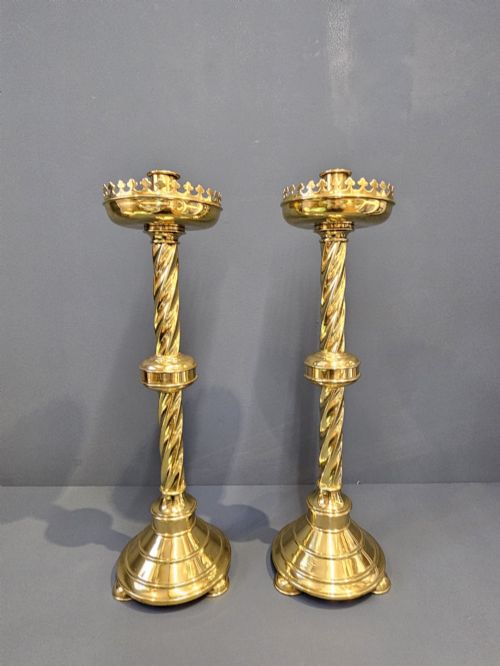
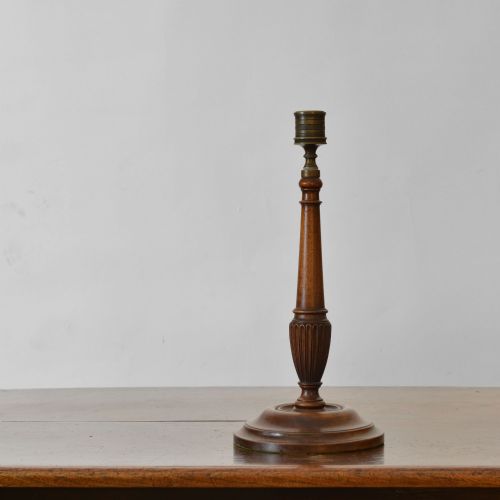
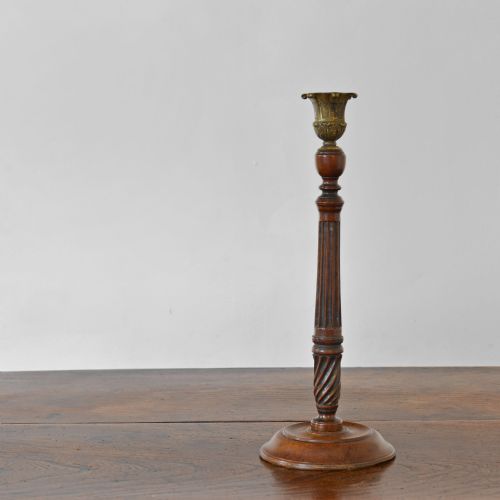
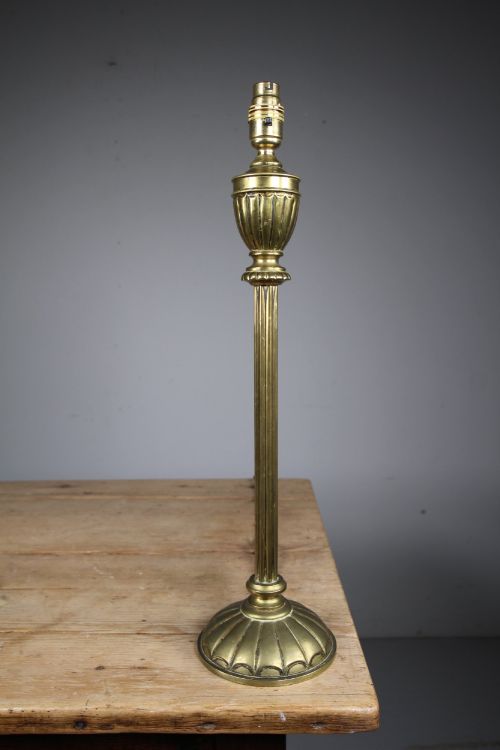
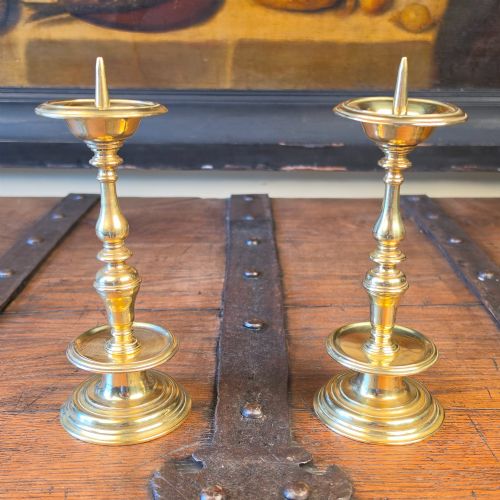
Brass candlestick lights span several centuries of domestic illumination, encompassing simple utilitarian forms and decorative showpieces alike. When exploring these listings, buyers encounter standard table candlesticks, larger church prickets, and variants converted to electrical table lamps.
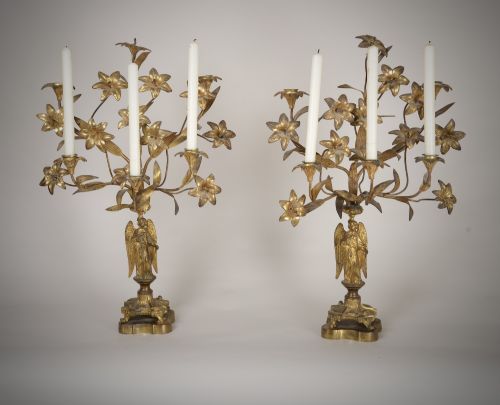
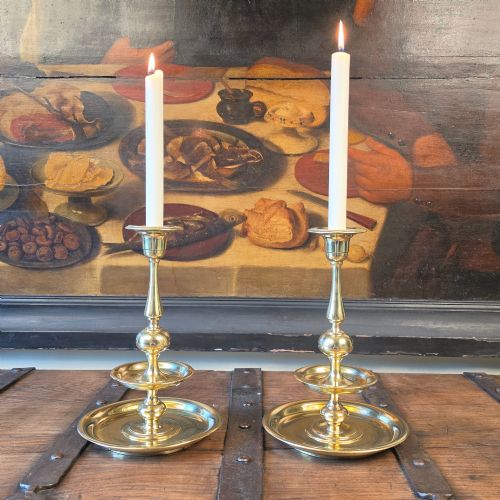
The selection ranges from George III petal-base designs and Georgian seamed examples to Victorian figural pieces and early twentieth-century Arts and Crafts work. Materials extend beyond standard brass to include gilt bronze, ormolu, and patinated bronze, often paired with mahogany or fabric components.
Stylistic influences repeat across the periods, incorporating Gothic revival, Neoclassical, French Rococo, and seventeenth-century revival motifs. Buyers frequently find matching pairs intended for mantelpieces or sideboards, alongside single examples and larger multi-light candelabra.
Materials and Construction
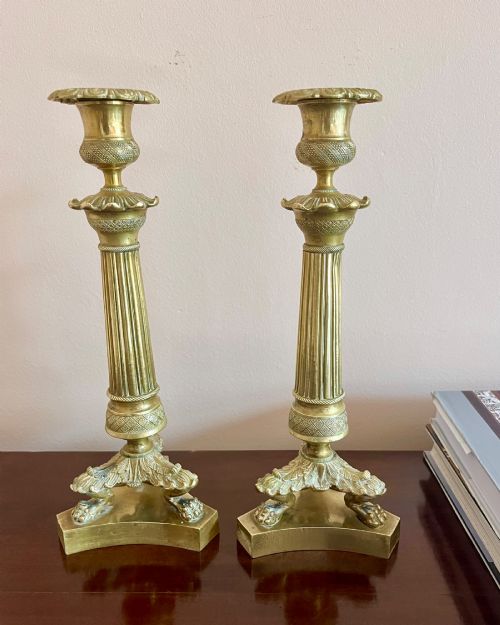
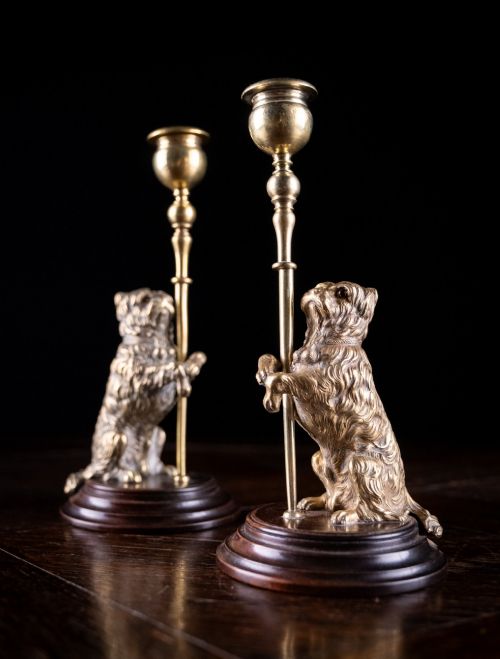
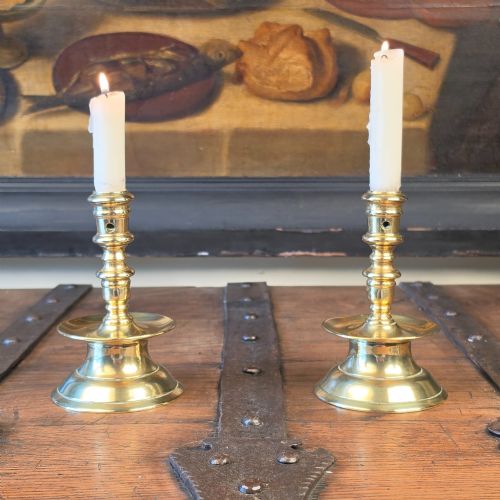
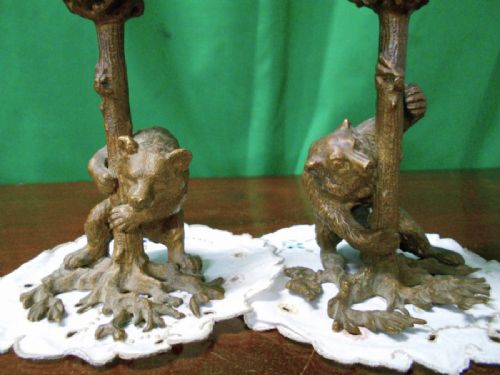
Many early examples utilise seamed brass construction, where sheet metal is shaped and joined along visible seams before finishing. Cast brass and cast bronze components appear frequently in heavier items, allowing for intricate sculptural details such as animal figures or architectural balusters.
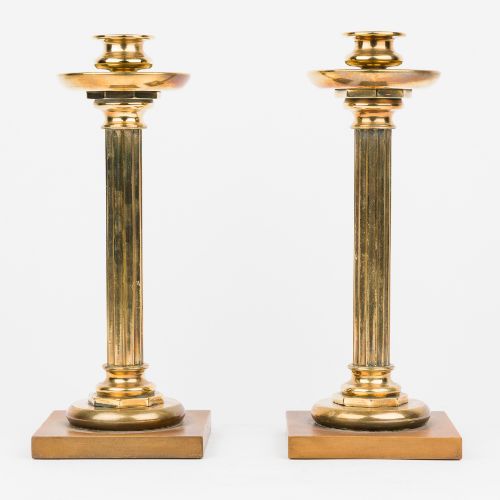
Gilt bronze, ormolu, and gilt brass items rely on applied metallic finishes that provide a bright, reflective surface. Combinations with other media, including mahogany wood bases or cut glass elements, demonstrate the diverse material pairings employed by makers.
Materials represented across the inventory include cast brass, gilt bronze, ormolu, copper, and mahogany combinations.
Quality and Distinction
The distinction between standard domestic brassware and finer decorative examples rests upon the crispness of the casting and the ambition of the design. Figural pieces depicting animals, human forms, or natural motifs require high sculptural skill to separate them from mass-produced items.
Surface patination and the integrity of original construction methods, such as visible seams or early ejector mechanisms, mark out superior pieces. Items retaining their original gilding, ormolu surfaces, or untouched period components command greater attention than heavily altered examples.
Barbedienne
The Brass Candlestick Lights Glossary
- Pricket candlestick
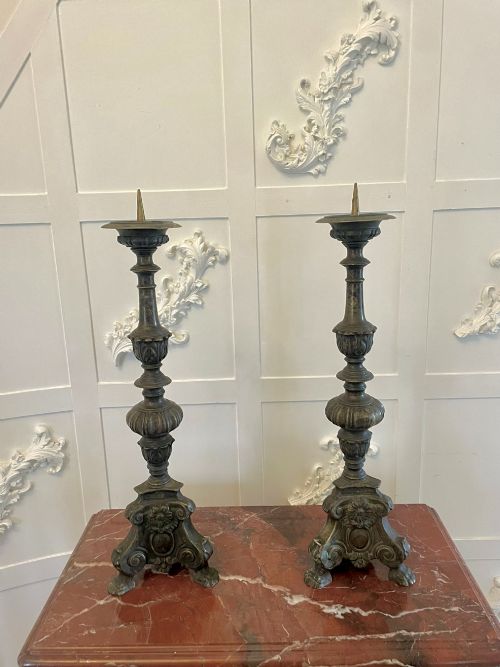
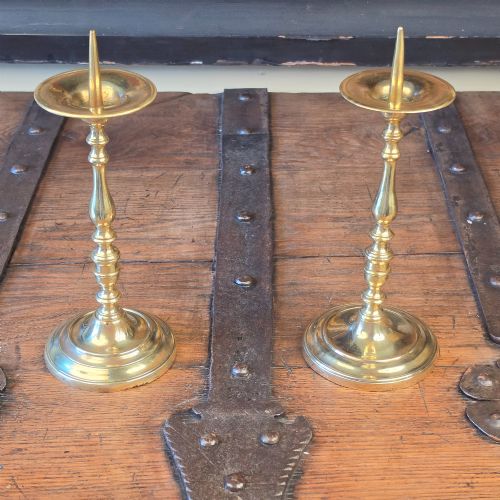
- A candlestick featuring a sharp central spike designed to impound the base of a candle rather than a socket to hold it. These appear often in ecclesiastical or revival contexts.
- Ejector candlestick
- A domestic candlestick containing an internal sliding mechanism operated by a thumbpiece to push out the remaining candle stump. Georgian and eighteenth-century examples frequently use this practical device.
- Ormolu
- Gilded bronze produced by applying a mercury and gold amalgam to a bronze base and heating it. This technique creates a rich, matte gold surface seen on French and English decorative pieces.
- Lustre
- A decorative glass or metal candlestick or candelabrum hung with cut glass pendants intended to catch and refract light. They became popular during the nineteenth and early twentieth centuries.
- Campana
- A vase-shaped candle socket resembling an inverted classical bell. This shape appears regularly on Neoclassical and Regency designs.
- Bidri ware
- Metalwork originating from India involving an alloy of zinc and copper inlaid with sheet silver or brass. Pieces from the early twentieth century occasionally feature this technique.
Brass Candlestick Lights: Frequently Asked Questions
How do I spot a converted candlestick lamp?
Converted candlestick lights often retain their original drip pans, central stems, and socket configurations while discreetly housing modern electrical wiring through the core. Look for tidy cord exits near the base that avoid disrupting the historic silhouette.
Many Victorian and Edwardian examples were adapted later in their lifespans to serve as table lamps while preserving the original brass or bronze bodywork intact.
How do I date an antique brass candlestick?
Dating relies heavily on observing base construction, manufacturing techniques, and stylistic markers such as Neoclassical urns or Gothic revival tracery. Early eighteenth-century pieces often display heavy casting with distinct seamed shafts and wide drip pans.
Later Victorian and Edwardian versions introduce varied patination, figural elements, and machine-threaded components that reflect industrial advancements of the period.
Where should I place brass candlestick lights at home?
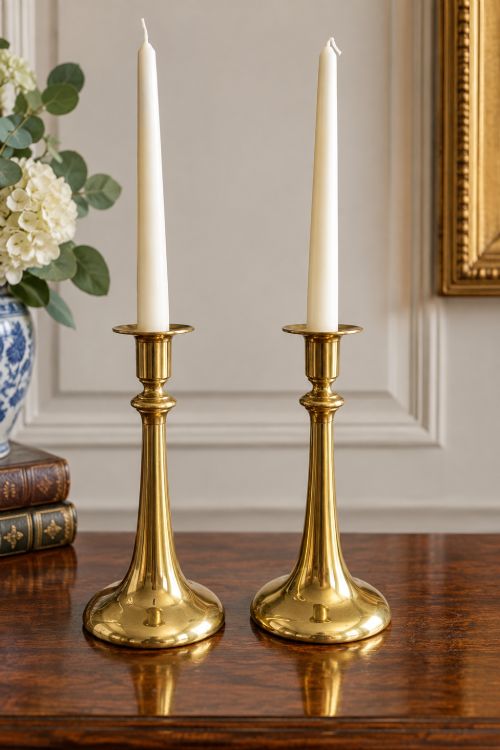
Brass candlestick lights suit placement on sideboards, mantelpieces, and entrance consoles where their reflective metal surfaces catch natural and artificial light. Pairs look balanced when flanking mirrors or large framed artworks.
Smaller single pieces fit comfortably on bookshelves or desks, adding a tactile historic element to everyday living spaces.