


Pair Victorian Table Lamps
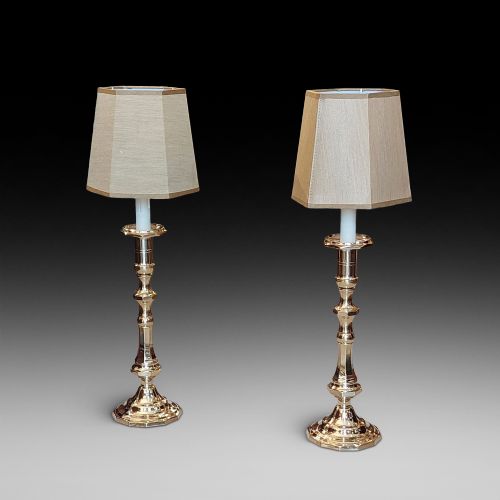
When undertaking a search for pair victorian table lamps, buyers discover lighting fashioned from converted brass candlesticks, columns, and porcelain figures originating in the nineteenth century.
Pair Victorian Table Lamps
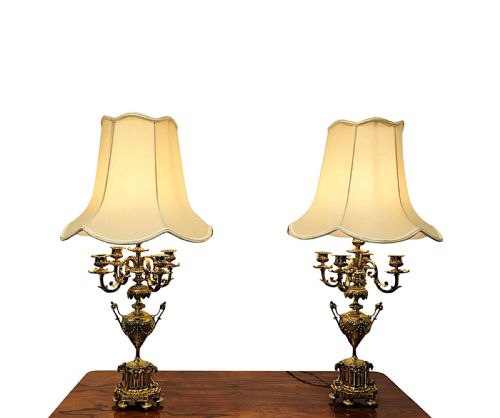
Pair victorian table lamps encompass heavy cast metal columns, porcelain vases, and church or desk candlesticks adapted for electric lighting from the nineteenth century. These items frequently derive from earlier oil or candle burning apparatus subsequently wired for modern domestic use.
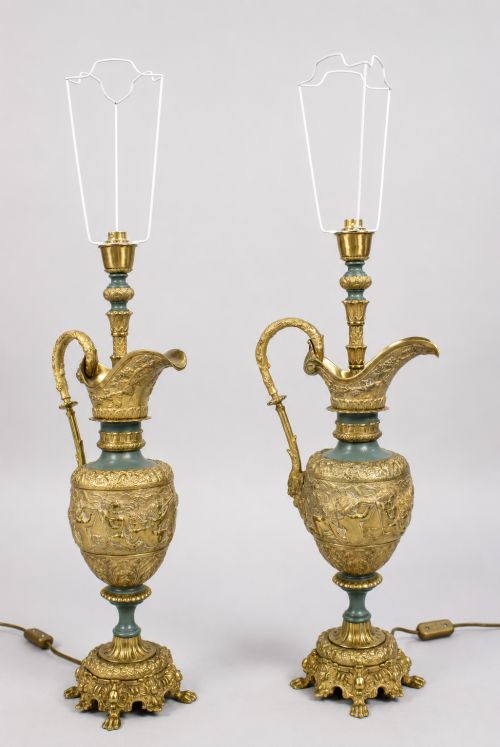
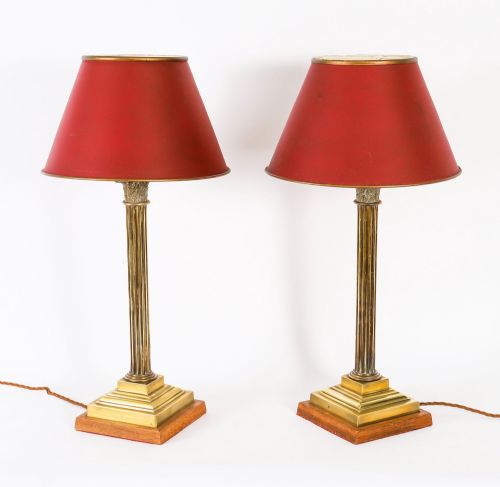
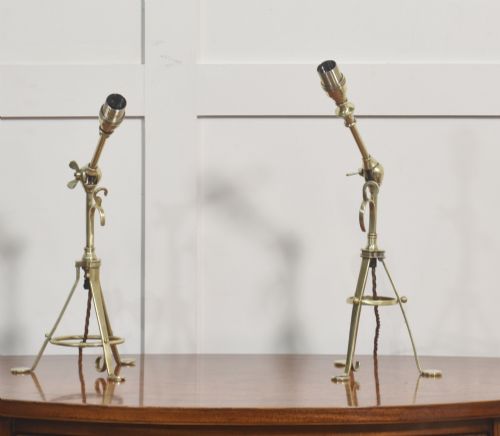
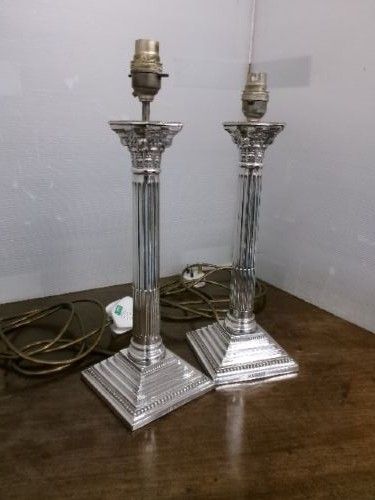
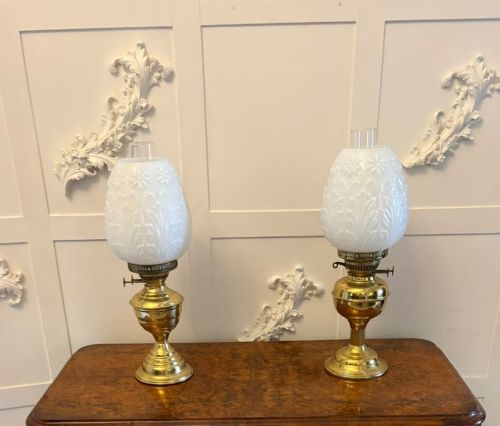
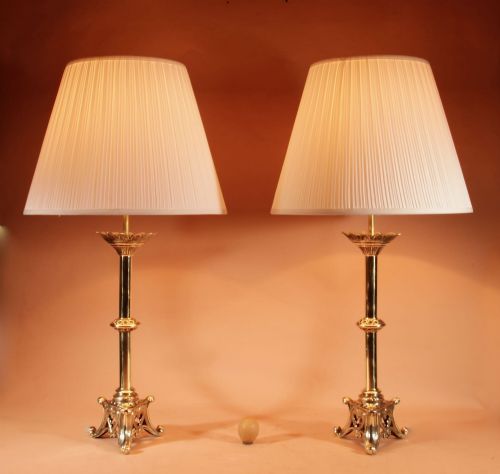
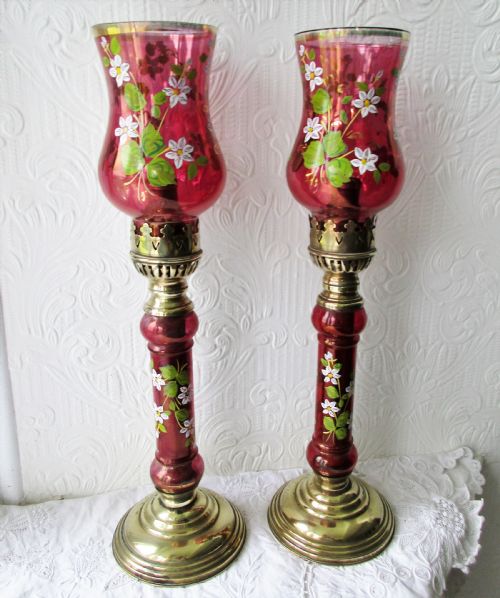
The prevailing form encountered across this category is the brass Corinthian column, alongside gilt metal ewers, porcelain figures, and adjustable student designs. Many examples retain historical glass shades, including opaline or ruby etched variants that complete the lighting silhouette.
Origins span English, French, and Asian manufacturing centres, capturing aesthetic revivals from Gothic to Neoclassical tastes. Buyers select these matching assemblies to anchor sideboards, desks, and console surfaces within period interiors.
How They Were Made
Construction relies heavily on cast brass, solid bronze, and silver-plated copper, often assembled from modular components threaded together securely. Metalwork displays crisp chasing, fluted column shafts, and applied ormolu mounts finished by hand.
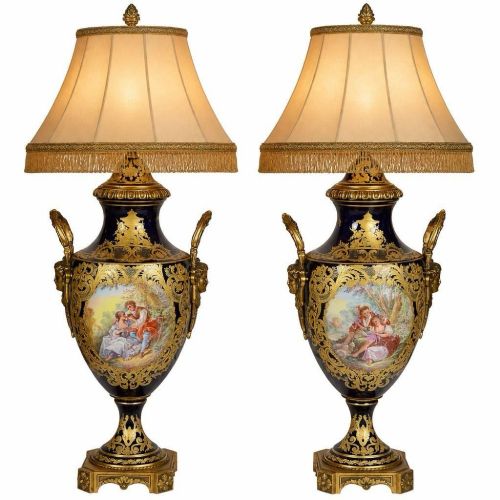
Ceramic components utilise hard-paste porcelain painted with floral motifs or hand-enamelled details, such as Sevres style or Sitzendorf bodies. Glass elements incorporate blown shades, sometimes etched or cased in contrasting colours before final mounting onto metal bases.
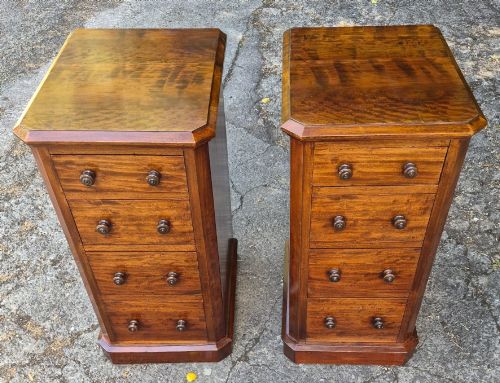
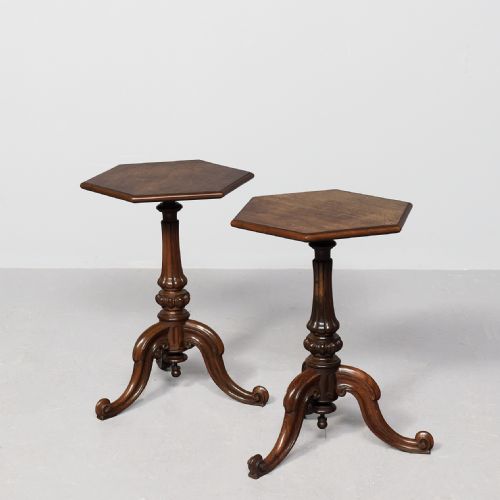
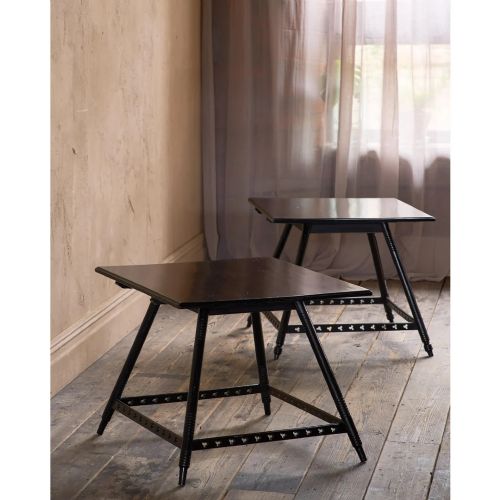
Listings demonstrate a heavy concentration of nineteenth-century brasswork, alongside porcelain figures and mahogany occasional furniture.
What Varies In Quality
Distinction in quality rests upon the weight and crispness of the metal casting, where heavy solid brass and detailed chasing outrank thin pressed plate. Superior examples exhibit precise proportions in architectural columns and secure, balanced joints in adjustable mechanisms.
Porcelain elements reveal quality through the fineness of hand-painted decoration and the crispness of underlying ceramic modeling. Original matching components, uniform gilding, and intact period glass shades elevate an assembly above mismatched or heavily altered counterparts.
W.A.S. Benson·Brocot·Sitzendorf
The Pair Victorian Table Lamps Glossary
- Corinthian column
- An architectural column form featuring an ornate capital decorated with acanthus leaves, frequently utilised for nineteenth-century metal lamp bases. This classical order provides a formal silhouette suited to domestic interiors.
- Ormolu
- Gilded bronze produced by applying a mixture of gold and mercury to a bronze object, creating a rich golden surface finish. This technique appears widely on decorative French desk lamps and candelabra.
- Candle lamp
- A lighting fixture originally designed to burn tallow or wax candles before later conversion to electricity. These pieces often retain drip pans and adjustable brackets.
- Ewer
- A large jug with a wide spout and looped handle, historically used for water but adapted in the nineteenth century into decorative lamp bodies. These vessels are typically rendered in metal or porcelain.
- Opaline glass
- An opaque, milky-white glass popular during the Victorian period for lamp shades and decorative objects. It diffuses light softly across a room.
Pair Victorian Table Lamps: Frequently Asked Questions
Are these lamps originally electric?
Most nineteenth-century examples began life as oil lamps, candle holders, or desk standards before receiving modern wiring.
Original factory electric models remain uncommon, as conversion work represents the standard path for period lighting.
Do matching shades come with them?
Certain examples retain period glass shades such as opaline or ruby etched bowls, while others consist solely of the decorative base.
Listings specify whether matching shades accompany the metal or ceramic bodies.
How do I identify a Victorian column?
Victorian Corinthian columns display heavy brass or bronze construction with detailed acanthus leaf capitals and stepped square bases.
They frequently show slight variations from hand-finishing characteristic of nineteenth-century foundry work.
Can adjustable lamps still move?
Many nineteenth-century student and desk models retain working mechanical joints designed to alter height or angle.
Careful handling ensures these historical brass hinges remain functional after decades of use.