

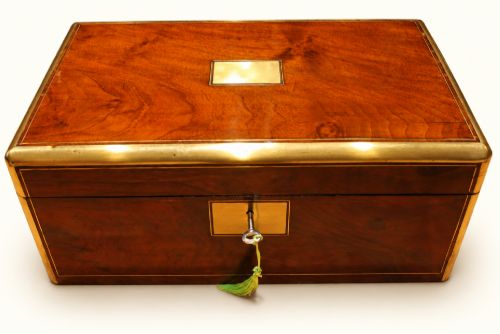

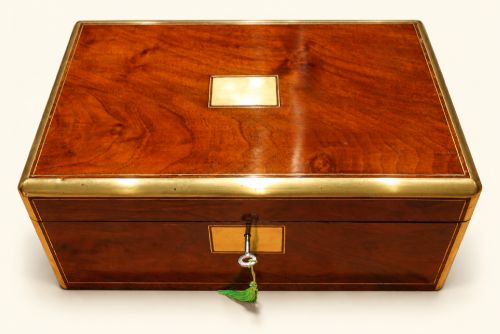
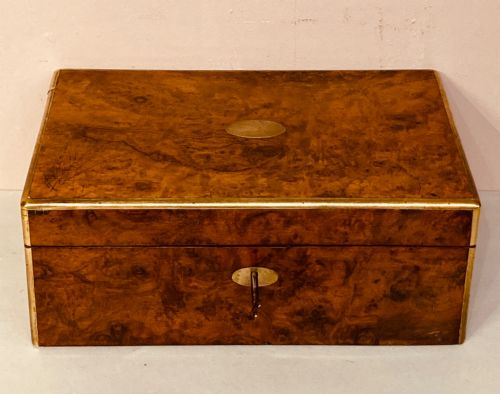
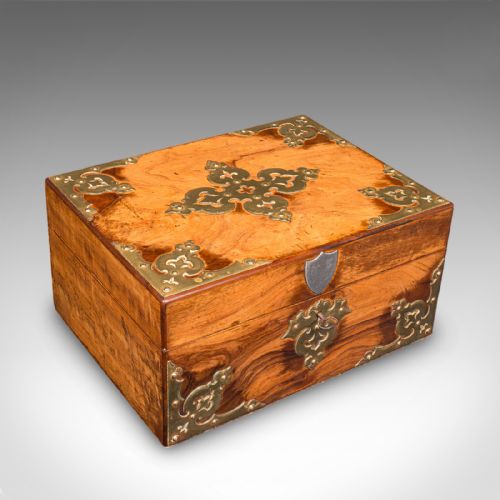

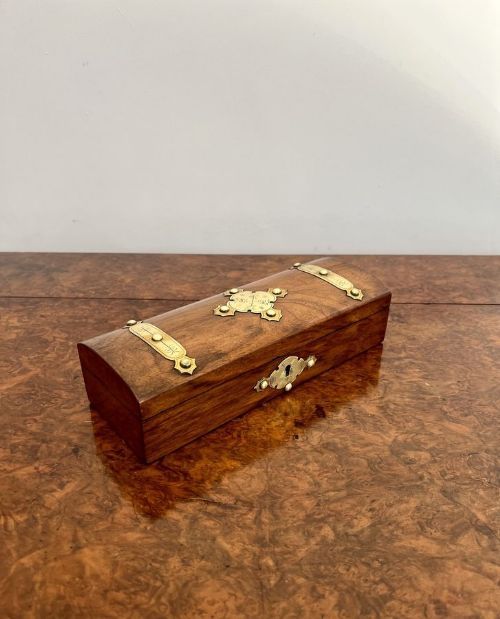
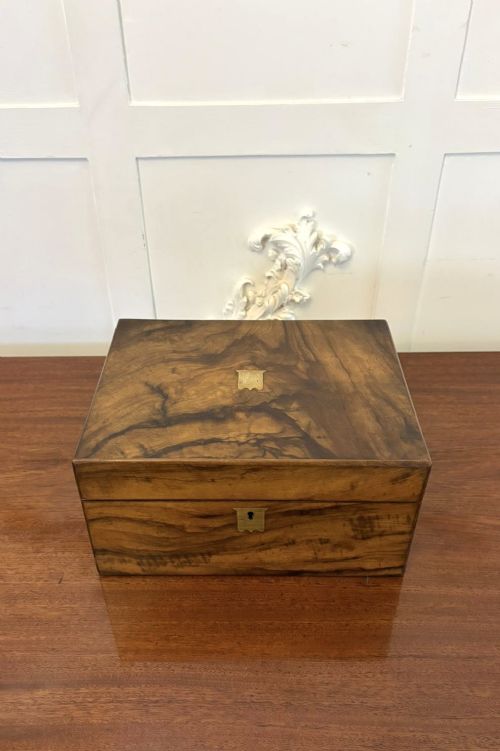


Brass Bound Walnut Box
When you search for a brass bound walnut box, you are looking at tactile pieces of travel furniture and desk storage made to endure.
Brass Bound Walnut Box
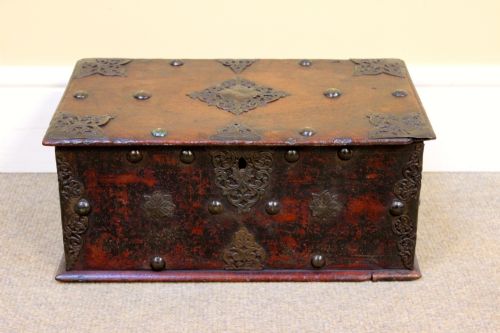
A brass bound walnut box combines timber cabinetry with metal reinforcement designed for transport and secure storage. The selection spans Victorian writing slopes, stationery boxes, and larger colonial chests.
Writing boxes and lap desks dominate the current offerings, alongside specialised receptacles for documents, jewellery, and decanters. Victorian burr walnut examples with fitted interiors appear most frequently.
Origins stretch from Georgian workshops to late nineteenth-century makers, incorporating campaign styles alongside domestic desk accessories.
How they were made
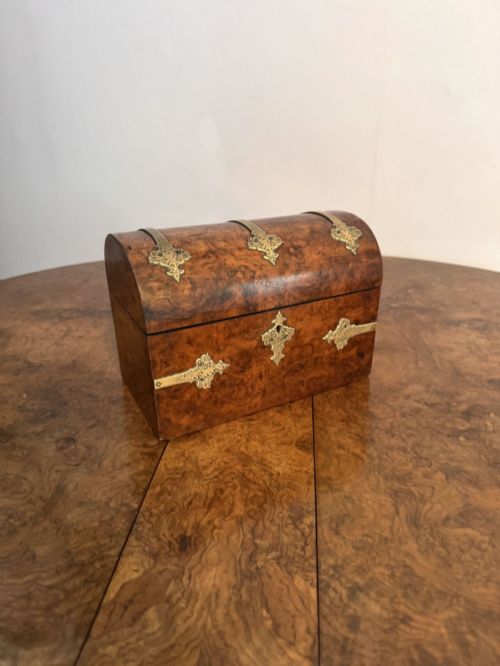
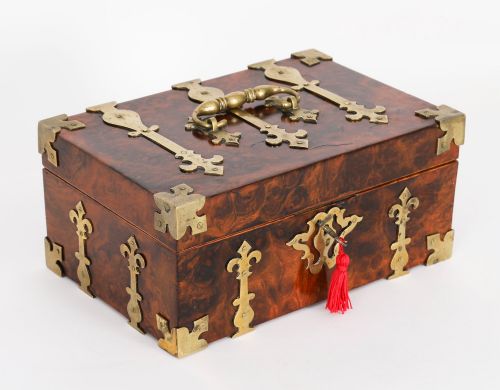
Carpenters utilised walnut and highly figured burr walnut veneers over solid secondary timbers, finished with polished surfaces to highlight the grain. Corner brackets, straps, and flush-fitting brass handles were countersunk and secured with screws to protect the edges during travel.
Interiors integrated secret drawers, velvet-lined writing surfaces, and glass inkwells, often secured by lever-action locks from makers such as Bramah.
Brass Bound Walnut Box Retail Price Guide 2026
Typical asking prices for brass bound walnut box among the pieces listed under this phrase on Sellingantiques today, from the lower quarter to the upper quarter. They describe what is for sale here now, not the wider market.
Several boxes retain their original keys, sparing future owners the pursuit of a working nineteenth-century lock.
What varies in quality
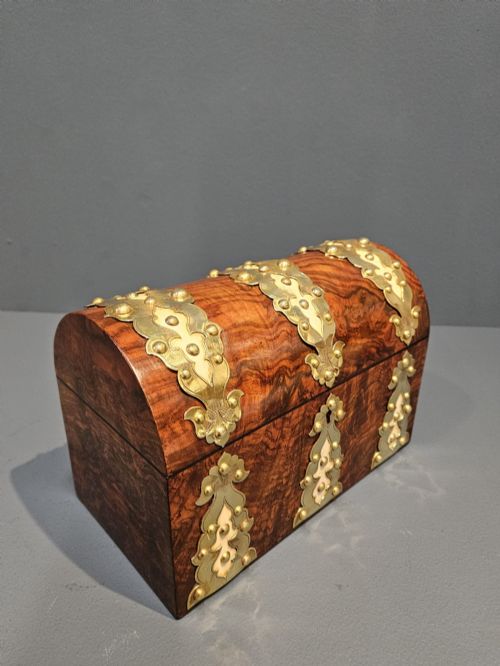
The standard of a brass bound walnut box depends on the selection of the timber veneers and the precision of the brass inlay. Uniform grain matching across the lid and sides separates superior pieces from standard production.
Internal complexity dictates value, with hidden compartments, spring-released mechanisms, and complete original fittings distinguishing more ambitious commissions from simpler containers.
George Austin·Mappin & Webb·George Betjemann·Halstaff & Hannaford
The Brass Bound Walnut Box Glossary
- Burr walnut
- A veneer sliced from walnut tree growths, producing swirling, intricate grain patterns prized for decorative cabinet work. It creates a highly textured surface on box lids.
- Writing slope
- A portable desk featuring a hinged, sloping lid that opens to reveal compartments for stationery and pens. Many include a leather or velvet writing surface.
- Campaign box
- Portable furniture constructed for military officers or travellers, featuring recessed brass corners and flush handles to prevent snagging. These pieces prioritize durability and compact organisation.
- Secret drawers
- Concealed compartments built behind removable panels or false bottoms within writing boxes. They store sensitive documents or valuables.
- Stationery box
- An upright desk accessory with tiered slots and compartments for holding envelopes, letters, and writing paper. They often feature domed or gabled lids.
Brass Bound Walnut Box: Frequently Asked Questions
What is a campaign box?
A campaign box is a portable piece of furniture built with recessed brass corners and flush handles for easy transport during travel.
These sturdy containers allowed officers and gentlemen to carry writing materials and valuables safely.
How do I find secret drawers?
Secret drawers are often hidden behind false partitions or released by pushing internal spring catches inside writing slopes.
Cabinetmakers designed these concealed spaces to secure private letters and small valuables.
Are these boxes waterproof?
These boxes are constructed from timber and brass rather than sealed for marine exposure, so they are not waterproof.
They were designed to protect contents from dust and impact during carriage rather than severe weather.
Can I use an antique writing box daily?
An antique writing box can serve as a functional desk tidy or letter storage on a modern table.
Care should be taken with historical velvet surfaces and original locking mechanisms during regular use.