

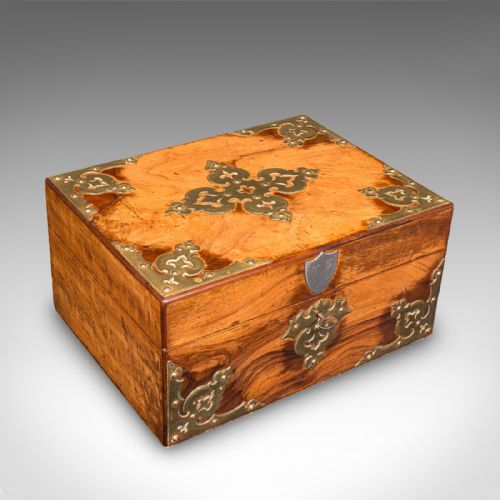


Brass Bound Vanity Case
A brass bound vanity case is a portable timber chest armoured with metal corners and straps to survive the rigours of 19th-century travel.
Brass Bound Vanity Case
A brass bound vanity case is a fitted travel box designed for grooming items, jewellery, and correspondence, frequently constructed from dense exotic hardwoods. These boxes appear primarily in Victorian forms, alongside occasional Regency and early 20th-century examples spanning 1820 to 1920.
The prevailing varieties on this page are rosewood and coromandel dressing boxes embellished with flush brass banding and corner plates. Interiors typically feature compartmented trays, velvet linings, and glass bottles with silver or metal tops.
How they were made
Cabinetmakers built these vanity cases using solid foundations of rosewood, walnut, or coromandel, often over a mahogany or pine carcass, and applied thick veneers of exotic timber. Brass corners, escutcheons, and strapping were let in flush to the wood surface and secured with tiny pins to protect edges from heavy travel impacts.
Interiors were lined with velvet or leather, incorporating secret drawers released by hidden latches and fitted glass jars with silver lids. Campaign styling influenced many boxes with recessed brass drop handles and robust locking mechanisms.
Listings feature brass bound vanity cases constructed from rosewood, coromandel, and walnut across the Victorian, Regency, and early 20th-century periods.
What varies in quality
Quality rests upon the selection of timber grain, the precision of the brass inlay work, and the complexity of the internal fitments. Superior boxes utilise richly figured coromandel or burr walnut paired with heavy gauge brass hardware rather than thin plated brass.
The sophistication of the internal mechanism dictates value, particularly secret drawer releases and complete sets of original glass bottles with matching silver mounts. Lesser examples display plain mahogany or simpler rosewood with basic velvet linings and missing compartments.
H Mitchell·Drew and Sons
The Brass Bound Vanity Case Glossary
- Coromandel
- A dense, heavy southeast Asian timber featuring dramatic dark brown striping and high natural lustre, prized for luxury Victorian boxes.
- Escutcheon
- A protective brass plate surrounding a keyhole that prevents the timber from splitting around the lock.
- Campaign style
- Furniture and travel accessories built with recessed hardware and folding elements designed for military officers on the move.
- Secret drawer
- A concealed compartment hidden behind removable panels or operated by a secret wooden spring catch within the box interior.
Brass Bound Vanity Case: Frequently Asked Questions
What is a brass bound vanity case?
A brass bound vanity case is a portable 19th-century timber box reinforced with metal corners and straps to protect cosmetics, jewellery, and grooming tools during travel.
These pieces combine decorative exterior hardwoods with complex internal compartments, removable trays, and glass bottles.
How were these boxes used originally?
Wealthy travellers used them as portable dressing tables on long journeys by carriage, train, or ship to keep personal effects organised and secure.
Travellers kept keys in their pockets while the brass strapping protected the timber edges from rough handling by luggage porters.
How do I spot a Regency vanity case?
Regency cases date from around 1820 and typically display cleaner architectural lines, simpler brass stringing, and lighter mahogany or rosewood timbers.
Later Victorian versions from the 1860s and 1880s often feature heavier coromandel wood, more elaborate brass banding, and gothic revival influences.
How should I care for a coromandel box?
Keep wooden travel boxes away from direct sunlight and household heat sources to prevent the exotic veneer from shrinking or cracking.
Feed the timber polish sparingly with high-quality beeswax and maintain stable room humidity to protect the delicate velvet linings and internal glass.