
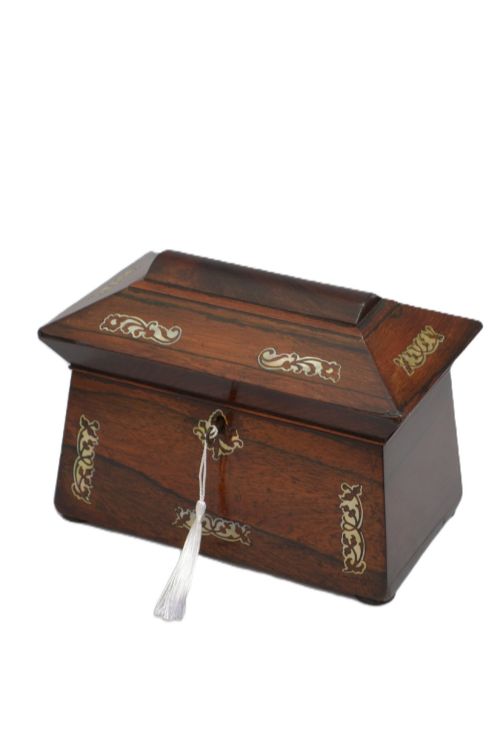
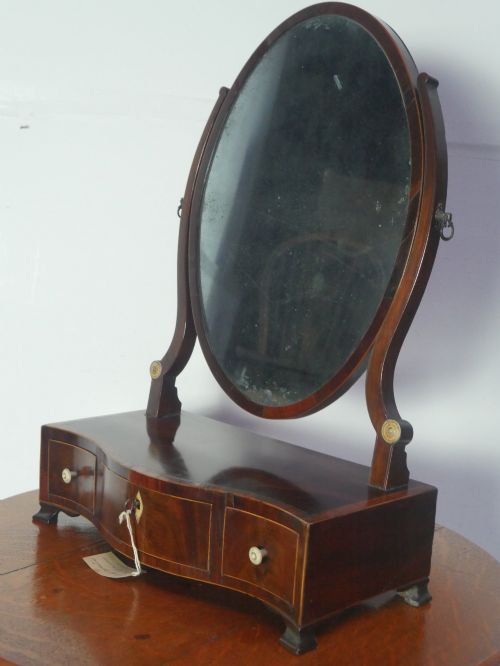
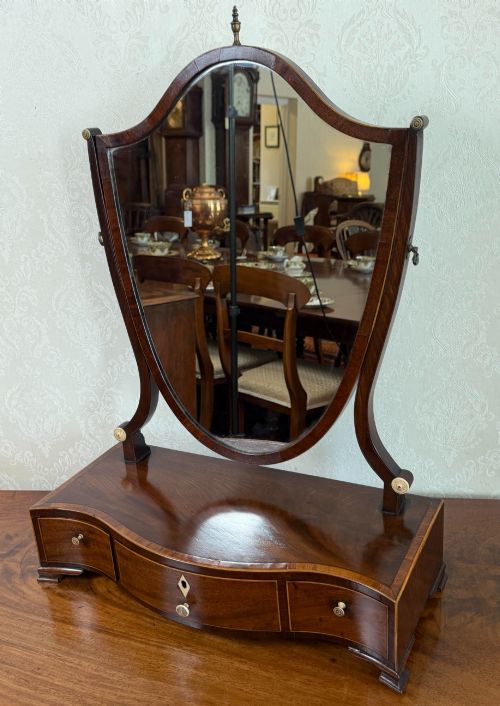


Regency Dressing Box
A regency dressing box is a compact fitted chest for personal ornaments and travel, prized for fine cabinet woods and precise brass work.
Regency Dressing Box
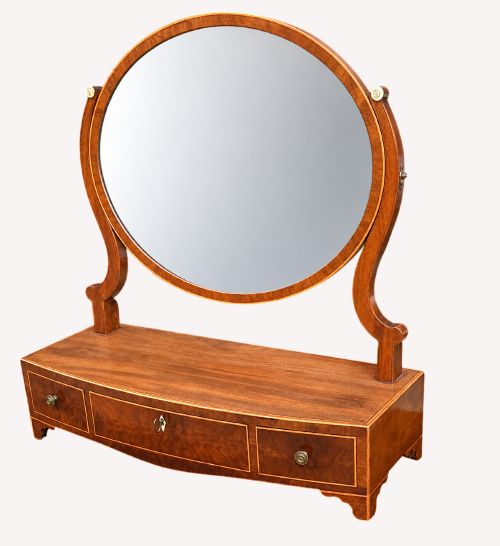
A regency dressing box sits on a dressing table or travels as a fitted chest for jewellery, trinkets, and writing materials. These pieces emerge primarily from the nineteenth century, encompassing Georgian, Regency, William IV, and Victorian periods.
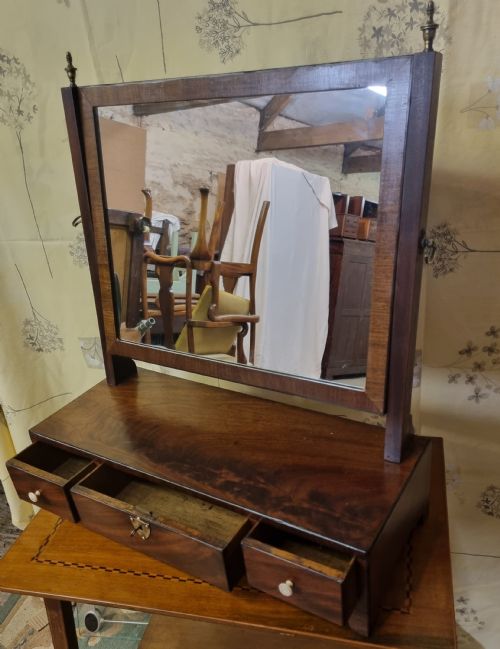
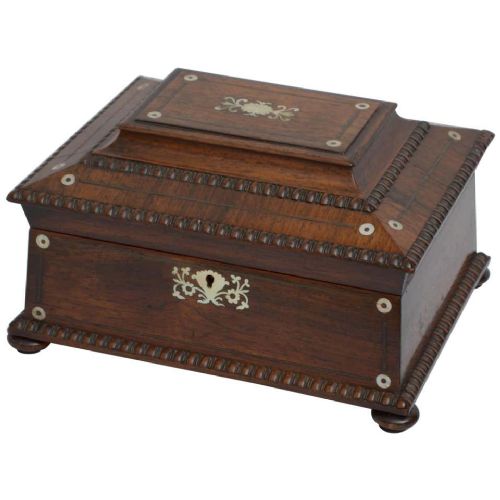
The form splits broadly between standing dressing table mirrors with storage drawers and portable table cabinets or vanity boxes. Mahogany and rosewood form the baseline of the inventory, often augmented by boxwood stringing, brass inlays, and mother of pearl.
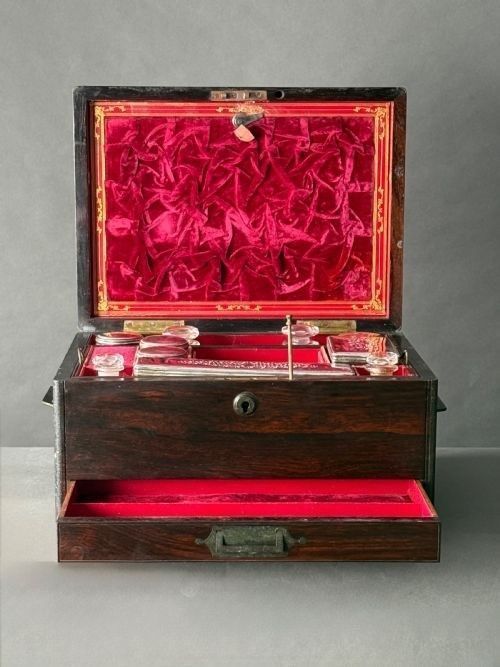
Buyers encounter everything from simple swivelling toilet mirrors to elaborate campaign-style leather-bound caskets and fitted lap desks. The selection includes specialised necessaires, lap cabinets, and tiered jewellery boxes equipped with original compartments.
Evaluating Quality and Detail
Quality rests on the selection of timber veneers and the precision of the cabinet joints, drawer linings, and internal partitions. Superior examples retain their original fitted trays, secret compartments, and functioning locks with matching keys.
The refinement of decorative elements sets individual pieces apart, seen in crisp boxwood stringing, intricate brass scrollwork, and intact mother of pearl inlays. The survival of original glass mirrors, silver fittings, and tooled leather bindings elevates the stature of the box.
The Regency Dressing Box Glossary
- Stringing
- A narrow inlay of contrasting wood, such as boxwood, used to edge drawer fronts and panel borders. It creates a crisp linear definition against darker timbers like mahogany.
- Necessaire
- A small fitted case containing miniature implements for sewing, writing, or grooming. These portable compartments often feature gold or bone fittings.
- Tooled leather
- Leather decorated with heated metal tools to press gilt patterns or borders into the surface. It frequently lines the writing slopes and interior decks of vanity boxes.
- Toleware
- Painted or japanned metalware utilised for small storage containers and trays. It provides a durable, decorative alternative to wooden boxes.
- Campaign type
- Portable furniture built for travel, featuring recessed brass handles and reinforced corners. These sturdy constructions allowed officers and travellers to transport personal valuables safely.
Regency Dressing Box: Frequently Asked Questions
What is the difference between a dressing mirror and a vanity box?
A dressing mirror combines a swivelling glass plate with a small tabletop chest containing one or more drawers for storage. These pieces remain stationary on a dressing table to aid with grooming.
A vanity box or table cabinet is a portable lidded chest designed to house jewellery, cosmetics, and writing equipment. They feature internal trays, compartments, and folding desks for travel or bedside use.
How do I identify the period of a dressing box?
Dating relies on timber selection, structural hardware, and decorative motifs characteristic of Georgian, Regency, and early Victorian cabinetmaking. Regency examples frequently employ rosewood, cut brass inlays, and sweeping serpentine outlines.
Later Victorian pieces often incorporate mother of pearl detailing and heavier brass mounts. Examining construction techniques inside the drawers provides further confirmation of the manufacturing era.
Are the internal fittings usually original?
Many boxes retain their original lift-out trays, velvet linings, and compartmentalized dividers designed for specific grooming tools. Complete sets of glass bottles or silver hallmarked items occasionally survive intact.
Later replacements of mirror glass, lining fabrics, or internal partitions occur frequently due to wear over the decades. Inspecting the fit and age of the materials helps determine what has been preserved.
How should I care for a rosewood or mahogany box?
These wooden surfaces require protection from direct sunlight and extreme humidity fluctuations to prevent veneer cracking or fading. Dusting with a soft, dry cloth maintains the polish without damaging the antique finish.
Leather interiors and brass mounts benefit from gentle handling and occasional inspection for moisture. Natural wax feeds the timber and preserves the depth of the grain over time.