


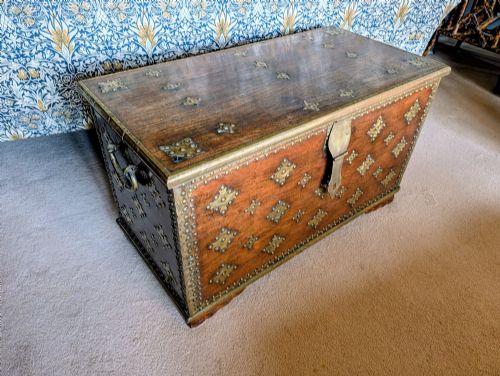
Brass Blanket Box
A brass blanket box brings heavy metal binding and exotic timber into a room, serving as a robust chest built for travel or storage.
Brass Blanket Box
When you search for a brass blanket box, you encounter sturdy storage chests designed for travel and domestic use, often originating from military campaigns or colonial trade routes. The pieces on this page span from the eighteenth century through to the early twentieth century, taking the form of camphor wood trunks, teak chests, and leather-bound coffers.
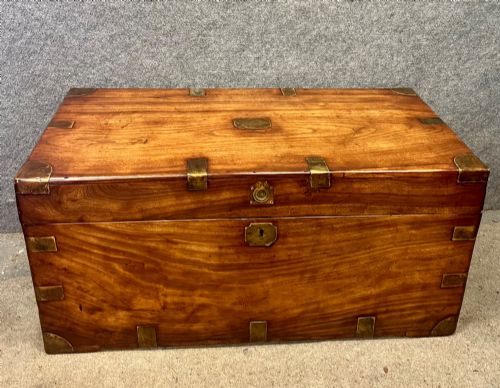
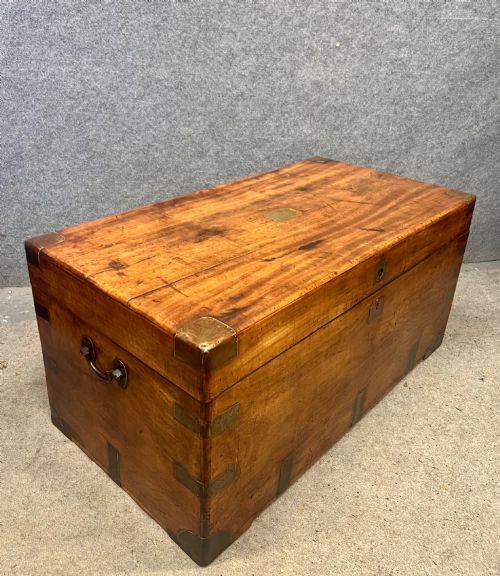
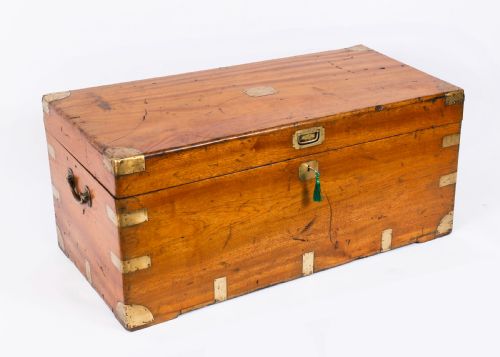
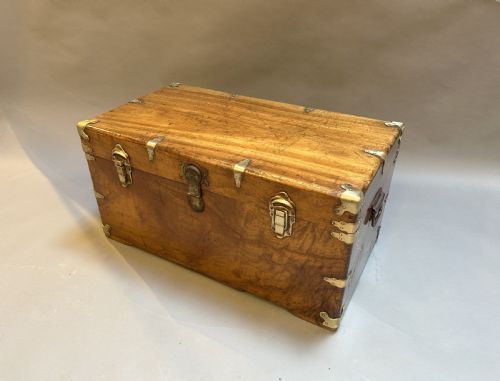
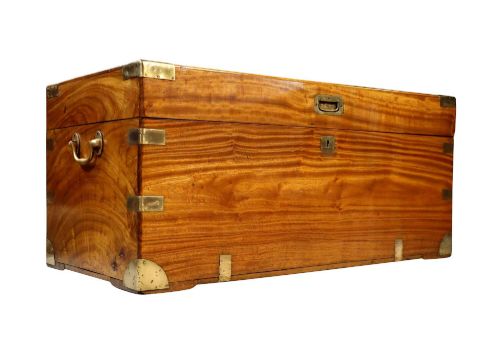
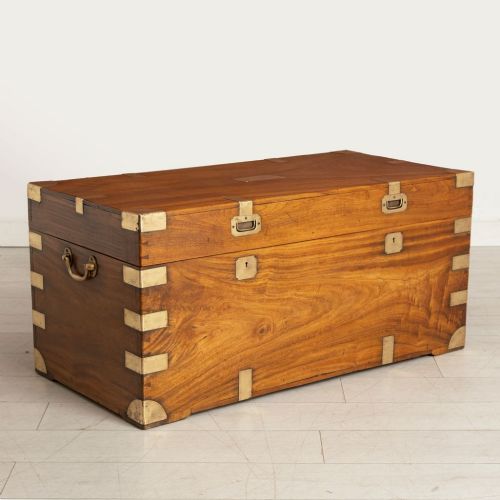
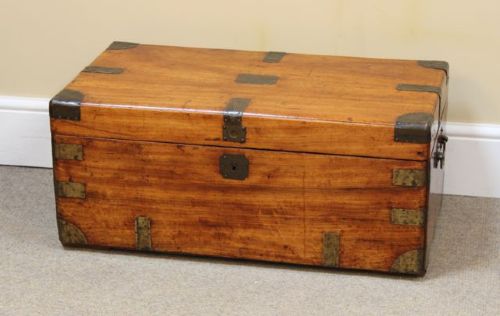
The version most likely to meet you here is a nineteenth-century campaign chest constructed from camphor wood or teak, secured with brass banding, corner brackets, and flush carrying handles. These trunk forms reflect a utilitarian heritage where durability during transit mattered above all else.
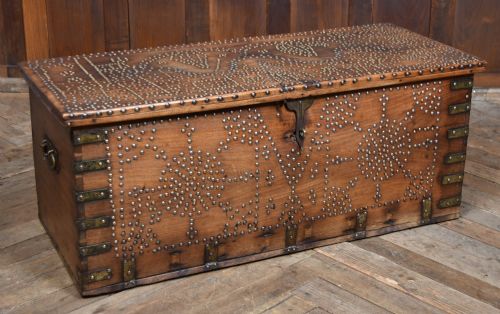
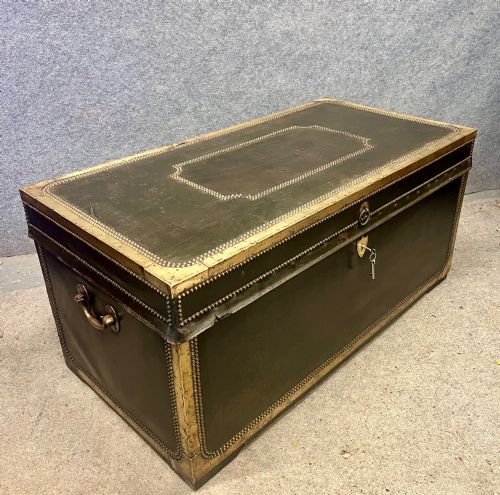
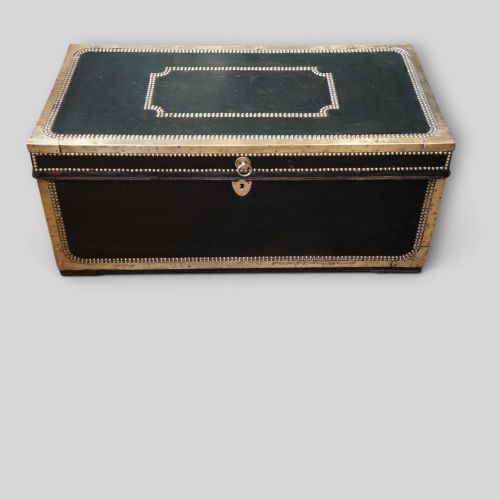
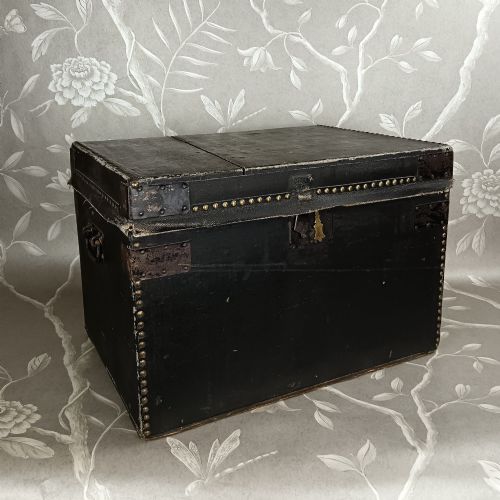
Other variations appearing in the selection include oak mule chests, Dutch leather-studded dome-top trunks, and intricately decorated Zanzibar traders chests. Each type retains the primary function of holding textiles while displaying the distinct material preferences of its period of origin.
How They Were Made
Cabinet makers built these chests using dense timbers such as camphor wood, teak, padouk, and mahogany, chosen for their resistance to humidity and insects during long sea voyages. Carpenters joined the box bodies with dovetail or rebate joints, reinforcing the structure to withstand the rigours of military transport and maritime trade.
Brass sheet, strap work, and corner plates were hand-cut and affixed to the timber using numerous small brass tacks or screws to protect vulnerable edges from impact. Flush-fitting drop handles and recessed lock plates were integrated so that the sides remained flat for stacking inside ships and carriages.
Camphor wood chests retain their distinct medicinal scent after centuries, continuing to protect blankets long after their military days ended.
What Varies in Quality
Quality rests upon the integrity of the timber selection and the precision of the metalwork assembly. Superior examples employ solid tropical hardwoods with finely fitted brass corners and dovetailed joints that remain tight after centuries of use, whereas lesser items rely on thinner secondary timbers or simpler butt joints.
The intricacy of the brass studwork and the survival of original recessed hardware heavily influence the distinction between standard utility boxes and fine diplomatic or officer pieces. Retaining working locks, original keys, and untouched patination on both the timber and metal elevates the standing of any chest.
Samuel Pratt·Wm. Insall of Bristol·Arthur Wannop
The Brass Blanket Box Glossary
- Campaign chest
- A modular chest of drawers or a trunk designed to dismantle or travel easily on military expeditions. These pieces typically feature recessed brass handles and corner brackets to prevent snagging.
- Camphor wood
- An aromatic timber native to Asia, frequently utilised for campaign trunks due to its natural insect-repelling properties. It protects stored blankets and garments from moths.
- Mule chest
- An English storage chest from the seventeenth or eighteenth centuries featuring one or more drawers at the base beneath the main compartment. It bridges the transition between simple coffers and proper drawer chests.
- Studwork
- The decorative or reinforcing application of small brass tacks or nails across leather and wood surfaces. It forms geometric patterns on domestic and travel trunks.
- Zanzibar chest
- A heavy hardwood storage chest decorated with brass studs, strapwork, and central motifs, produced for the East African and Indian trade. They reflect a blend of Indian craftsmanship and local Swahili design.
Brass Blanket Box: Frequently Asked Questions
What is a brass blanket box?
A brass blanket box is a heavy timber chest reinforced with brass corners, straps, and banding, originally utilised for travel or domestic storage. Many survive from the campaign and colonial periods.
These pieces combine functional hardware with durable woods like teak, oak, and camphor wood to protect textiles from wear, moisture, and pests during transit.
How were campaign trunks used?
Officers and travellers used campaign trunks to pack uniforms, books, and personal belongings aboard ships and carriages during the eighteenth and nineteenth centuries. Their flush brass handles allowed them to pack tightly into cargo holds.
Today, they serve as coffee tables or bedroom storage chests while retaining their original travel hardware.
How do I care for camphor wood?
Camphor wood requires minimal maintenance due to its natural oils, which keep the timber nourished and repel insects. Keep the chest away from direct heat sources to prevent the wood from drying out or splitting.
Applying a traditional beeswax polish helps maintain the natural lustre of the timber and protects the brass fittings from tarnishing too quickly.
How do I date an old chest?
Dating relies on observing the construction methods, timber types, and style of the brass hardware. Hand-cut dovetails, recessed flush handles, and specific wood choices like padouk or camphor point towards eighteenth and nineteenth-century origins.
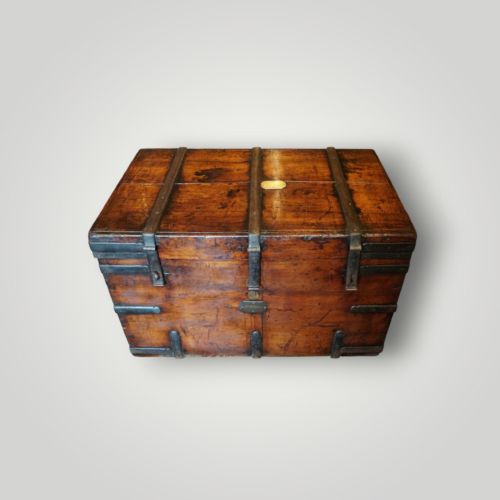
Maker plates, inscribed brass plaques, and specific stud patterns also help narrow down the period of manufacture.