



Brass Fireside Log Store
A brass fireside log store keeps hearth fuel close at hand while bringing a warm, metallic shine to the fireplace.
Brass Fireside Log Store
A brass fireside log store is a functional hearth container designed to hold firewood, kindling, or coal neatly beside the fireplace. You will most frequently encounter Victorian examples on this page, alongside Edwardian and Regency pieces.
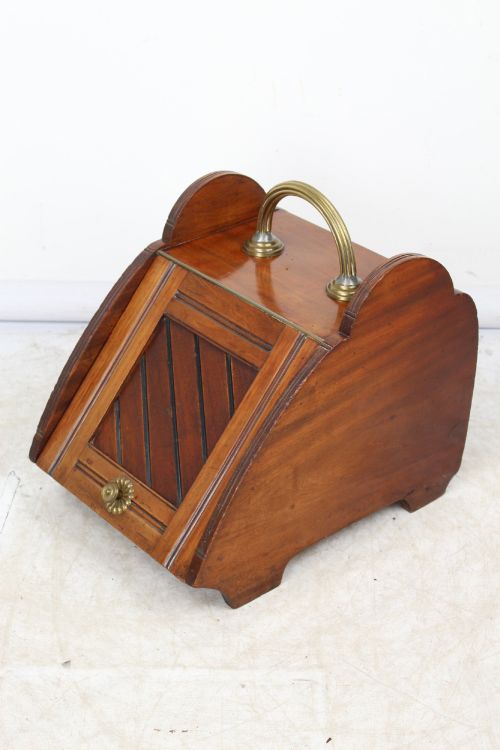
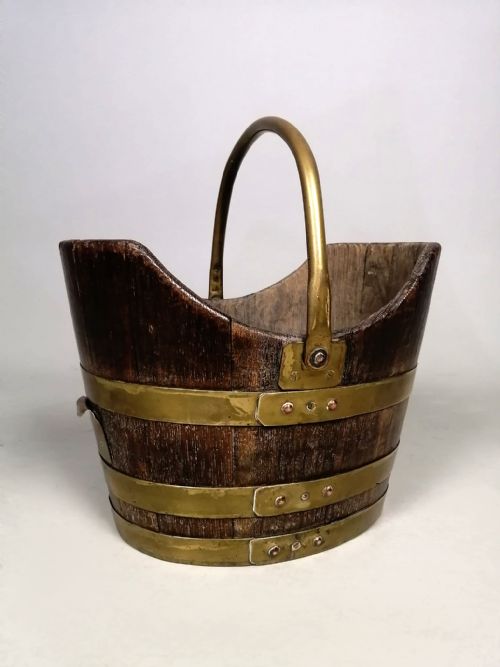
These items appear in various forms, including lidded coal scuttles, helmet buckets, purdoniums, and open bins. Many double as coal boxes and log baskets depending on their size and internal capacity.
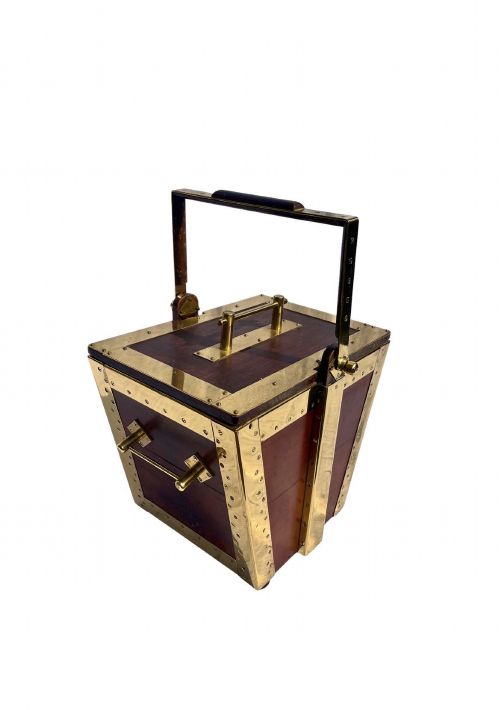
Origins stretch from English traditional workshops to French provincial and Belgian makers. The forms range from simple cylindrical buckets to elaborate inlaid cabinets and carved wooden boxes fitted with metal linings.
Materials and construction methods
Makers combined polished brass with solid woods such as oak, walnut, mahogany, and pine. Copper and iron also appear frequently, often used for body panels or riveted straps.
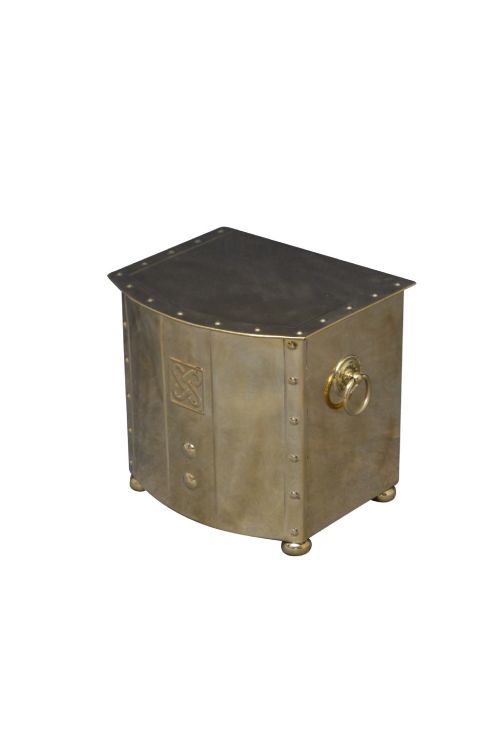
Construction techniques involve traditional coopering, hand-beating, embossing, and dovetailing. Metal components are secured with visible rivets or brass mounts, while wooden boxes feature carved details and marquetry inlays.
Listings feature pieces spanning from the 18th century through the Edwardian era, constructed in brass, copper, oak, walnut, and mahogany.
Assessing quality and craftsmanship
Quality reveals itself in the weight of the metal and the integrity of the joinery. Superior pieces utilise heavy-gauge brass and thick, stable timber that withstands daily handling near the heat of a fire.
Finishing details set finer examples apart from standard utility items. Hand-beaten texturing, crisp brass embossing, original handles, and intact interior liners demonstrate superior workshop standards.
William Soutter & Sons
The Brass Fireside Log Store Glossary
- Purdonium
- A specialised coal box or cabinet, often featuring a sloping drop-front door and a shovel stored in a compartment at the side.
- Coal Scuttle
- A deep bucket or container designed for carrying and storing solid fuel, traditionally fitted with a swing handle and a flat base.
- Coopered
- Built from vertical wooden staves bound together with metal bands, a method commonly used for watertight buckets and tubs.
- Embossed
- Decorated with a raised design pressed or hammered into the surface of the sheet metal.
Brass Fireside Log Store: Frequently Asked Questions
What is a brass fireside log store?
A brass fireside log store is a rigid hearth container built to hold firewood or coal cleanly beside an active fireplace. They combine metal bodies with wooden accents to keep fuel organised.
Most surviving examples date from the Victorian and Edwardian periods, reflecting traditional domestic heating methods. They serve both a practical storage role and a decorative function in the room.
How do you clean brass and copper?
Cleaning requires a soft cloth and a gentle metal polish formulated for brass or copper. Avoid harsh abrasive pads that scratch the antique surface.
Many collectors prefer to leave a natural aged patina rather than polishing the metal to a bright shine. Regular dusting with a dry cloth keeps the surface maintained.
Can these stores hold actual logs?
These containers handle logs, kindling, and coal depending on their physical dimensions and internal depth. Sturdier metal buckets take heavy logs easily.
Wooden coal boxes with metal liners protect the outer timber from damp bark and dirt. Checking the interior condition ensures safe daily use for fuel storage.
How do I date a coal bucket?
Dating relies on stylistic clues, construction methods, and materials associated with specific eras like the Victorian or Regency periods. Hand-beaten copper points towards Arts and Crafts influence.
Inlaid mahogany cabinets often indicate Edwardian manufacture, while heavy brass banding frequently suggests earlier Georgian or Regency origins. Comparing the fixings and wood joints clarifies the age.