
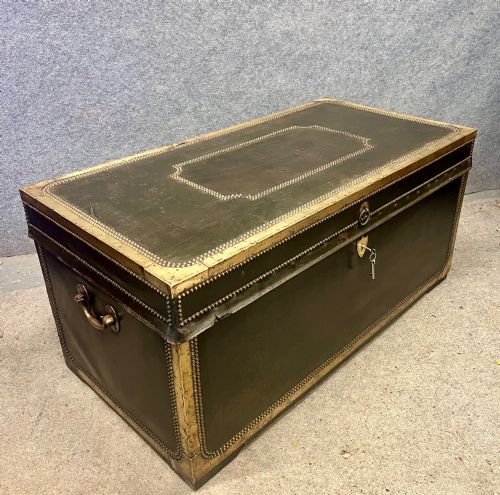
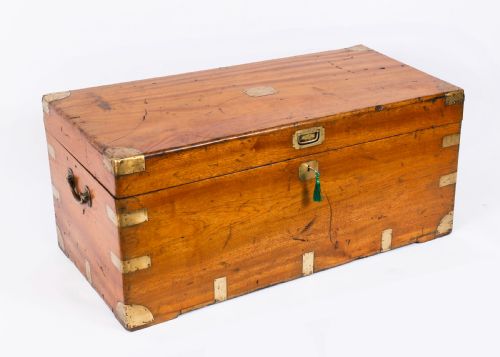


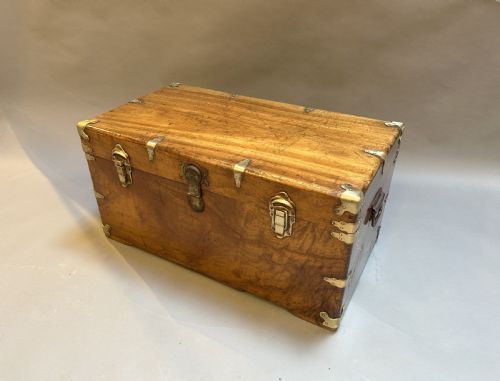
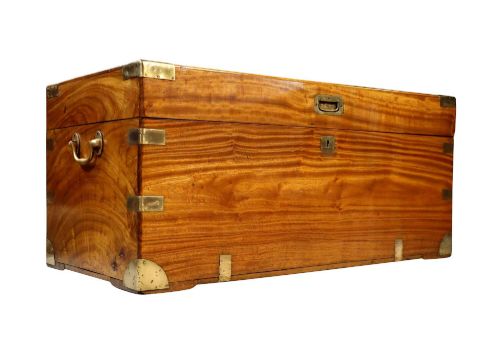
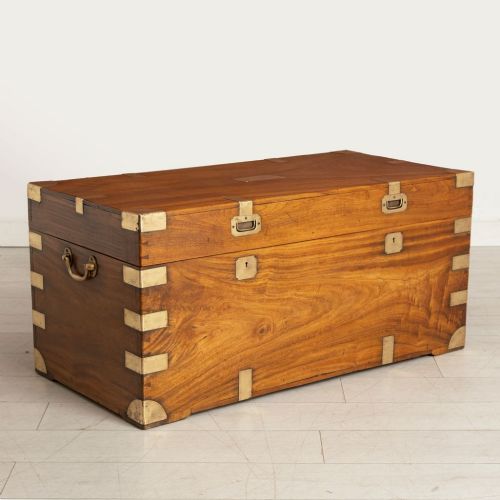
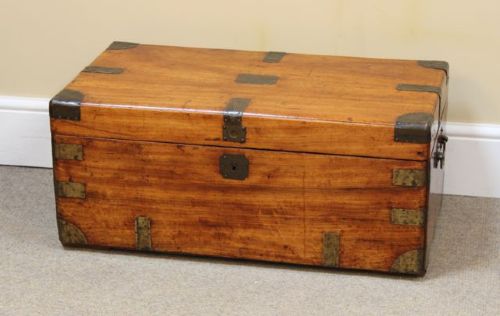
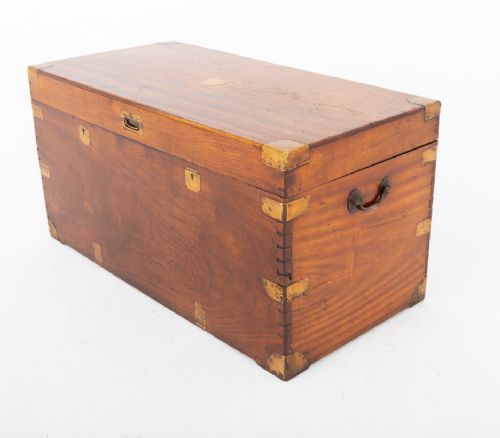
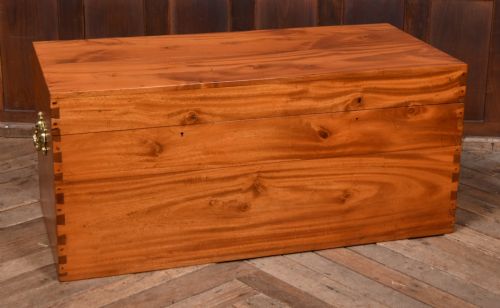


Brass Camphor Chest
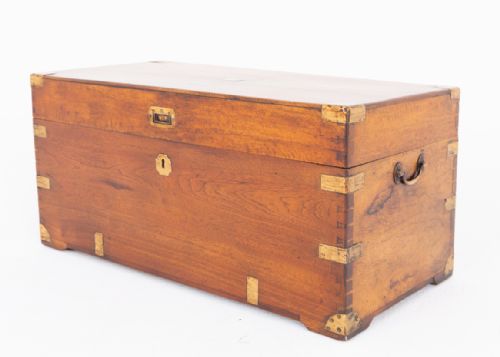
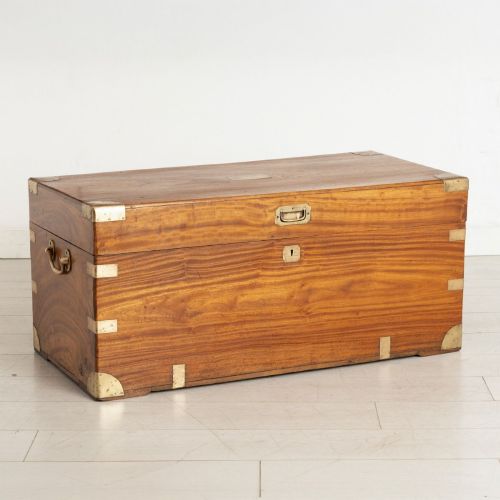
A brass camphor chest is a sturdy travelling trunk built to withstand tropical humidity and ocean journeys.
Brass Camphor Chest
A brass camphor chest is a portable storage container originally designed for officers, merchants and travellers navigating long maritime routes during the nineteenth century. These trunks were valued for their aromatic timber, which naturally repelled insects and protected clothing and documents in damp climates.
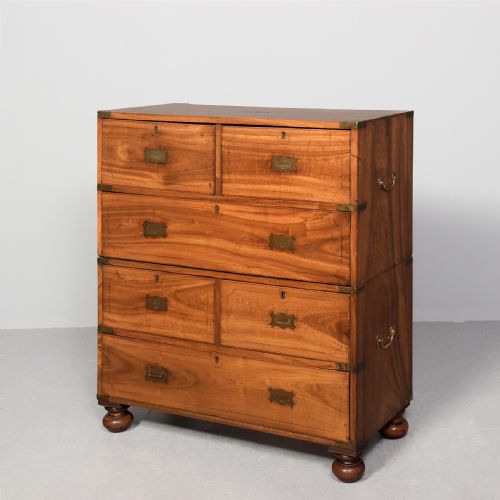
The most common examples encountered on this page date from the Victorian period and the nineteenth century, reflecting British military expansion and China Trade commerce. Forms range from simple lift-lid blanket boxes and steamer trunks to sophisticated two-part military campaign chests fitted with drawers and writing desks.
Origins span across China, Ceylon and colonial workshops producing goods for export, often identified by specific construction details and regional brass mount designs. Buyers frequently select these pieces for domestic storage in bedrooms or hallways, where the timber aroma and metallic hardware serve both practical and decorative purposes.
How they were made
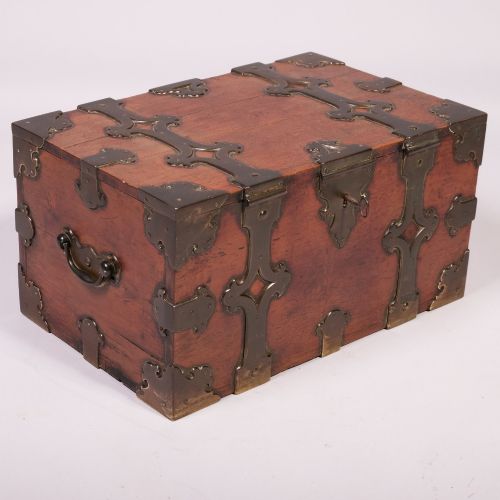
Makers constructed these pieces primarily from solid camphor wood or camphorwood, chosen for its durability and scent, occasionally pairing it with contrasting timber such as ebony. Iron and leather elements reinforced the structures for transit, while distinctive brass bindings, corners and flush-fitting carrying handles protected the edges from heavy impacts.
Campaign furniture required sectional construction, such as two-part modular chests that separated easily for packing into luggage crates or ship holds. Corner brackets and strapwork were secured through the timber with numerous screws or pins, reinforcing the joints against the strains of military travel and fluctuating humidity.
A good camphor chest smells faintly of a medicine cabinet crossed with a spice market, keeping moths at bay for centuries.
What varies in quality
The standard of a brass camphor chest depends heavily on the robustness of its timber and the integrity of its original hardware. Heavy gauge brass mounts and intact internal fittings indicate a higher grade of production, whereas replaced straps or generic hinges alter the original character.
Proportion and execution distinguish standard utilitarian boxes from superior export or military pieces. Finely dovetailed joints, well-fitted secretaire drawers, well-preserved leather coverings and minimal warping in the lid separate ordinary storage trunks from finer examples of period craftsmanship.
The Brass Camphor Chest Glossary
- Campaign chest
- A portable piece of furniture designed to dismantle or separate into sections for military transport during campaigns. These items typically feature recessed brass handles and corner brackets to prevent snagging.
- China Trade
- Commerce conducted between European nations and Qing dynasty China, primarily through designated ports. This trade produced bespoke items such as camphor chests tailored for Western buyers.
- Secretaire
- A cabinet or chest incorporating a writing drawer with a drop-front panel and internal small compartments. Such items combined storage with a fold-down desk surface for correspondence.
- Casket
- A small, decorative box or chest used for holding valuables, letters or jewellery. These containers often feature fine brass mountings and fitted interiors.
- Ceylonese
- Pertaining to Ceylon, now Sri Lanka, known historically for distinct regional woodworking styles. Pieces from this origin occasionally integrate native timbers like ebony alongside camphor wood.
Brass Camphor Chest: Frequently Asked Questions
What is a camphor chest used for?
These chests were originally utilised by military officers and merchants travelling abroad to protect uniforms and textiles from moths and damp conditions. Today, owners typically repurpose them as blanket boxes, coffee tables or hallway storage.
The natural scent of the camphor wood continues to deter insects, making the interior suitable for woollens, linens and winter clothing storage.
How do you date a campaign chest?
Dating relies on examining the construction methods, the style of the brass hardware, and the type of secondary timbers used in the drawers. Nineteenth-century examples often feature hand-cut dovetails and heavy cast brass mounts.
Later Victorian pieces display machine-made screws and standardised fittings, while early examples from the Regency period or eighteenth century show simpler, heavier framing.
Are camphor chests waterproof?
Camphor chests were built to withstand sea spray and heavy rain during maritime transit, but they are not entirely waterproof. The tight-fitting lids and metal bindings kept moisture and dust out of the contents during travel.
Modern owners should avoid exposing antique wood to excessive dampness or direct standing water to prevent warping the panels.
How do you maintain camphor wood?
Maintenance requires keeping the timber away from direct heat sources and extreme humidity fluctuations to prevent the wood from splitting. Occasional gentle dusting preserves the surface without stripping the aged finish.
If the characteristic scent fades over decades, lightly sanding the interior can release the aromatic oils trapped within the grain.