
Brass Bedside Tables
Brass bedside tables combine metal framing with timber and marble, offering functional surface space and period character beside a bed.
Brass Bedside Tables
Brass bedside tables and related small furniture items bring practical surfaces and decorative metalwork into the bedroom or sitting room. The selection spans compact tables, cabinets, and chests originating from the nineteenth and early twentieth centuries.
Buyers meet pieces reflecting periods from the Victorian and Edwardian eras up to the Art Deco years. French influences appear frequently, alongside English domestic designs executed in mahogany, walnut, and oak.
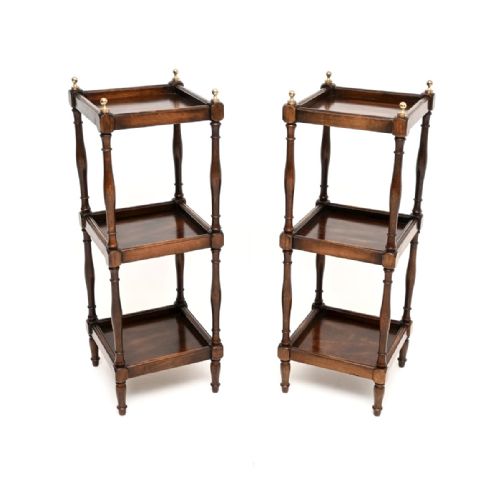
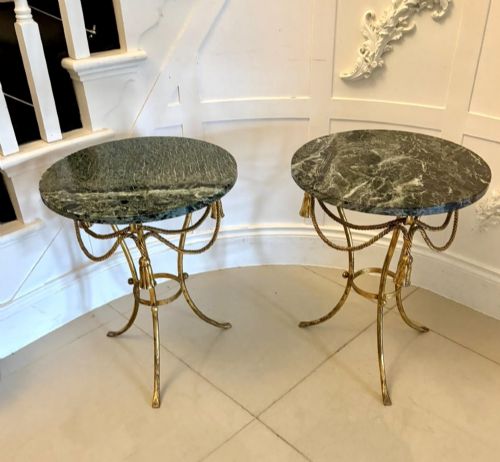
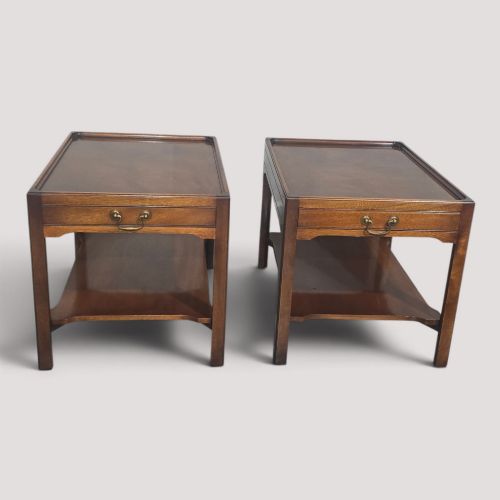
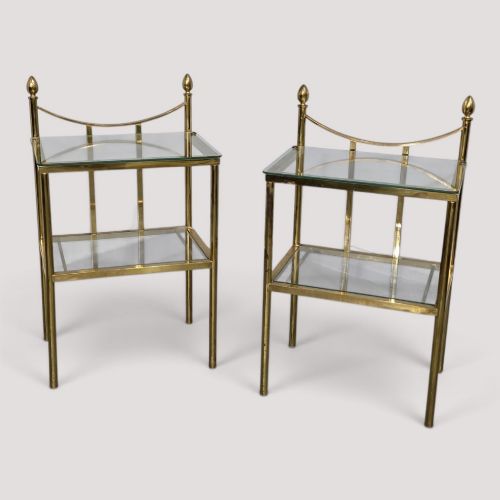
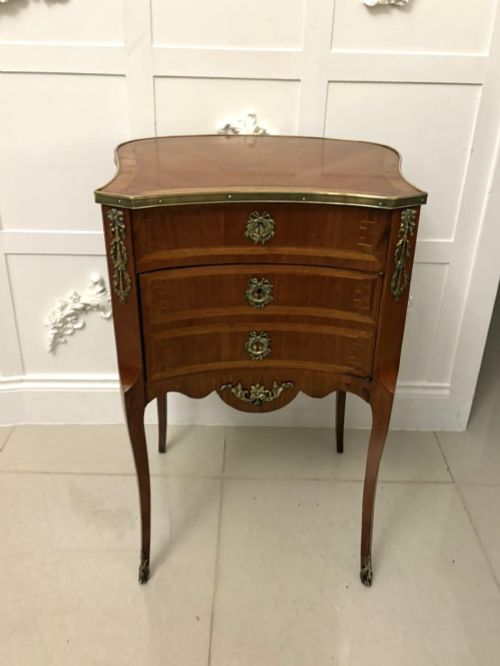
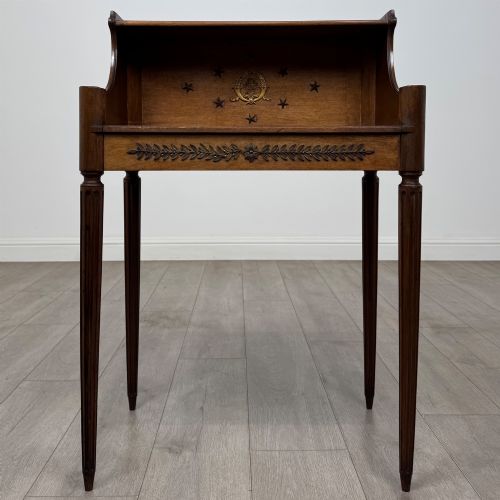
Forms include dedicated bedside cabinets with drawers, open side tables with brass mounts, and small chests that serve the same domestic purpose. Many examples incorporate glass, marble, or inlaid woods alongside metal elements.
How they were made
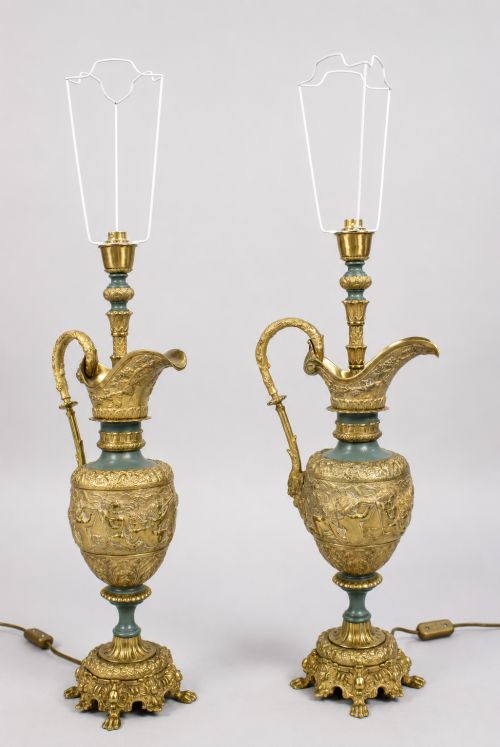
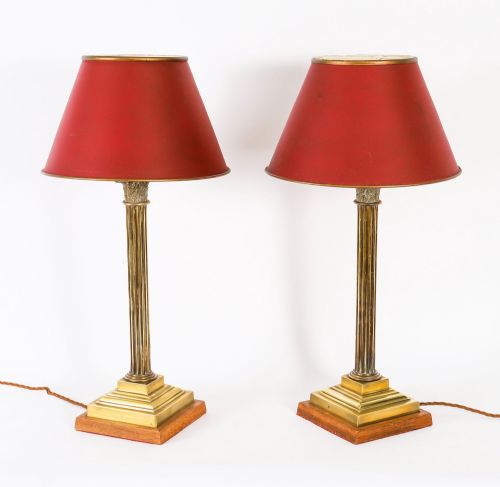
Maker construction combines solid and veneered timbers such as mahogany, walnut, and oak with cast or sheet brass elements. Metal components often take the form of mounts, reeded columns, inlaid stringing, or gallery rails.
Secondary materials include marble tops, porcelain inserts, and glass panels fitted into wooden or bronze frameworks. Joinery methods reflect traditional cabinet-making practices appropriate to the Victorian, Edwardian, and Art Deco periods.
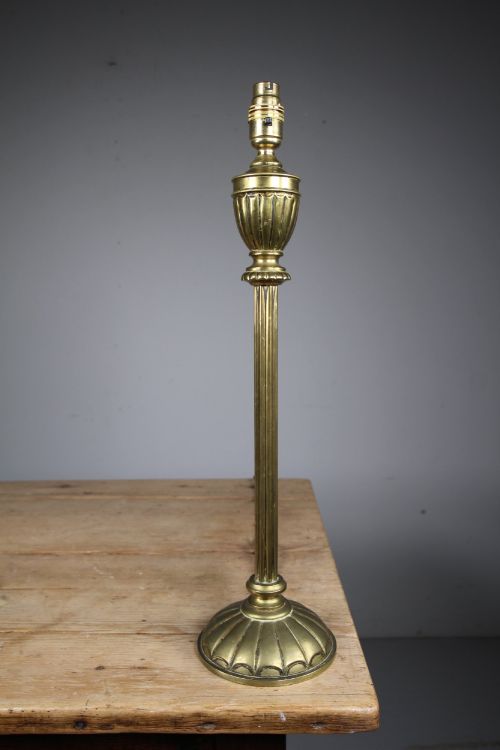
A solitary brass table lamp in the collection draws direct design inspiration from Fritz Lang's dystopian silent film Metropolis.
What varies in quality
The standard of a piece rests upon the crispness of brass casting, the precision of wood inlays, and the integrity of structural joints. Heavier gauge metal and refined chasing on bronze or brass indicate superior execution.
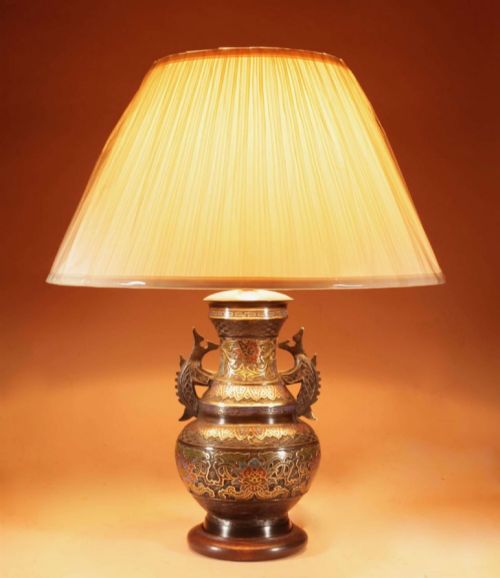
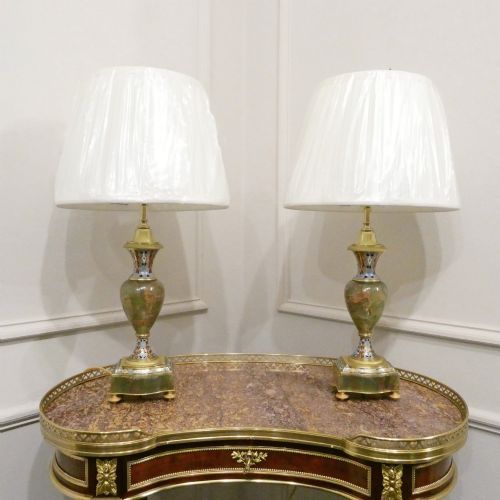
Material selection divides standard production from finer examples, particularly where marble tops, champlevé enamelling, or figured timbers like burr yew and kingwood are employed. Proportion and the harmony between metal mounts and wooden carcasses determine overall distinction.
The Brass Bedside Tables Glossary
- Champlevé
- An enamelling technique where troughs are dug into a metal surface and filled with vitreous enamel before firing. This method appears on decorative nineteenth and twentieth-century metalwork.
- Ormolu
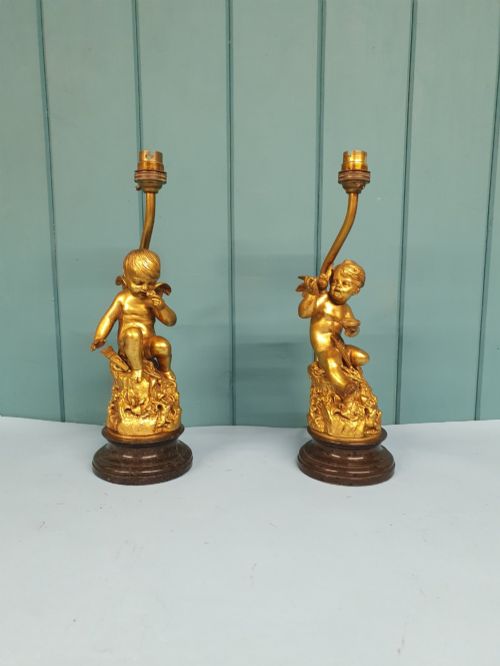
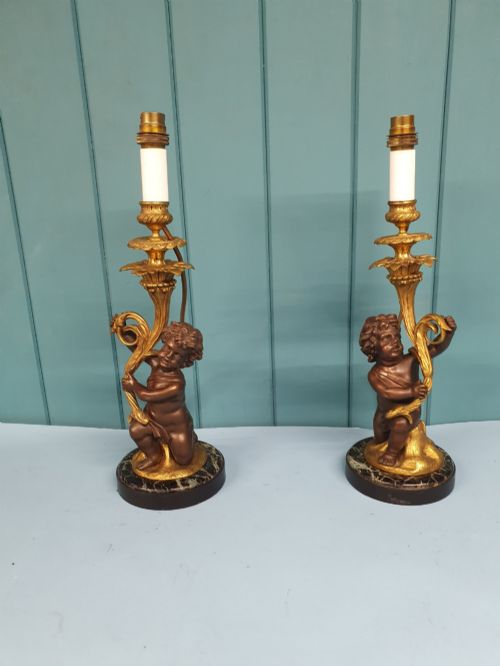
- Gilt bronze ornamentation applied to furniture and lighting fixtures during the eighteenth, nineteenth, and early twentieth centuries. The technique involves coating bronze with a mercury and gold amalgam.
- Marquetry
- The art of applying small pieces of veneer to a structure to form decorative patterns or pictures. Makers utilised contrasting timbers to achieve intricate surface designs.
- Reeded column
- A vertical decorative feature carved with parallel convex mouldings resembling bundled plant stems. This classical detail appears on nineteenth-century supports and lamp standards.
Brass Bedside Tables: Frequently Asked Questions
What periods do these tables come from?
The available pieces originate primarily from the Victorian and Edwardian eras, extending through the nineteenth century and into the 1920s and 1930s. Art Deco designs also appear alongside earlier revival styles.
Construction methods and material choices align with these specific decades, showing shifts from heavy Victorian timberwork to lighter twentieth-century forms.
How do I clean brass and wood?
Dust wooden surfaces regularly with a soft, dry cloth and avoid excessive moisture or chemical polishes that might damage antique finishes. Brass elements benefit from gentle cleaning to preserve their natural patina.
Aggressive metal cleaners can strip historical surface appearance, so mild soap solutions applied sparingly work best for upkeep.
Are these tables suitable for modern bedrooms?
Their compact dimensions make them practical for contemporary sleeping quarters while adding distinct period character. Side cabinets and small chests provide enclosed storage, while open tables offer display space.
Mixing antique brass furniture with modern interiors creates a layered look that highlights the craftsmanship of earlier decades.
What materials are used alongside brass?
Makers combined brass with various timbers including mahogany, walnut, oak, and kingwood. Marble tops and glass inserts frequently appear on French and English cabinets.
Surfaces often feature inlaid veneers, porcelain plaques, or bronze mounts that complement the primary metal framework.