




Vintage Brass Trolley
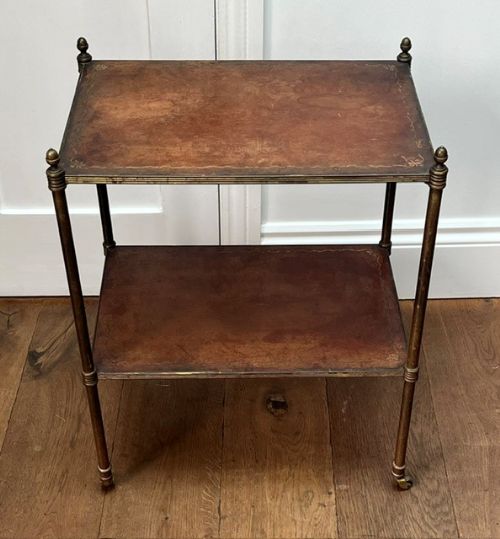
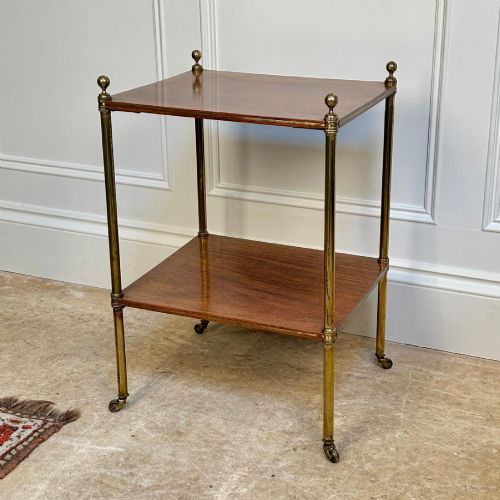
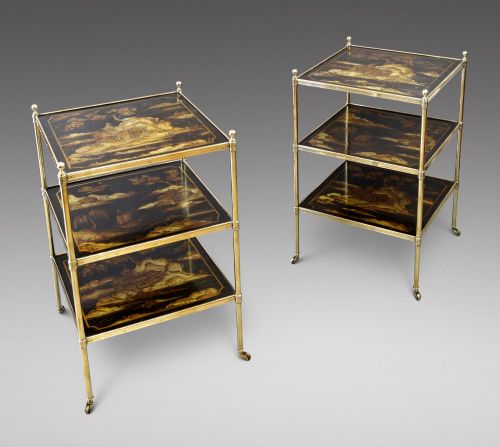
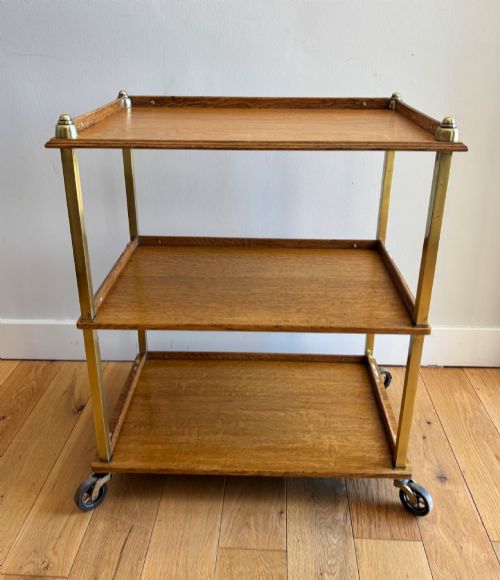
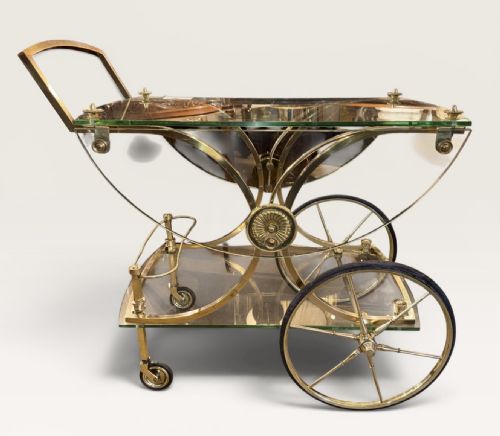
These vintage brass trolley examples are mobile serving pieces built to move drinks and glassware across the floor with ease.
Vintage Brass Trolley
A vintage brass trolley is a mobile serving piece designed for entertaining, taking the form of a drinks trolley, bar cart, or tiered etagere. Buyers searching for a vintage brass trolley encounter varied iterations spanning Edwardian, Victorian, and mid-century periods.
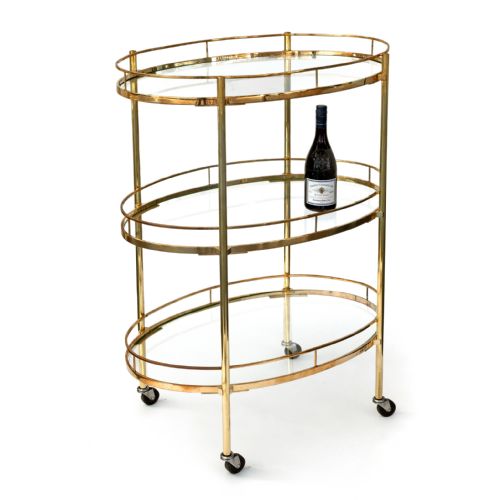
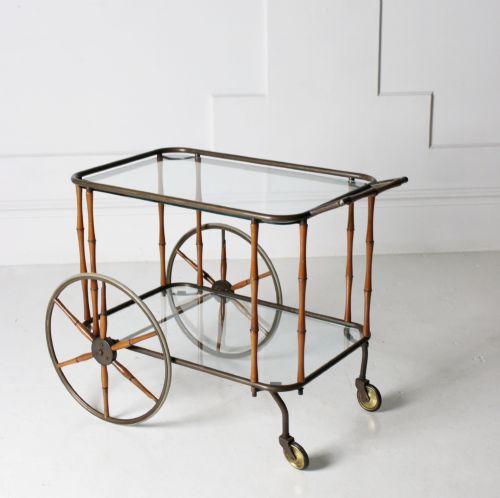
The most common formats on this page are two-tier and three-tier wheeled tables, often fitted with glass shelves or wooden inserts. These pieces originate from British, French, and Scandinavian workshops, reflecting styles from French Neoclassical to Art Deco.
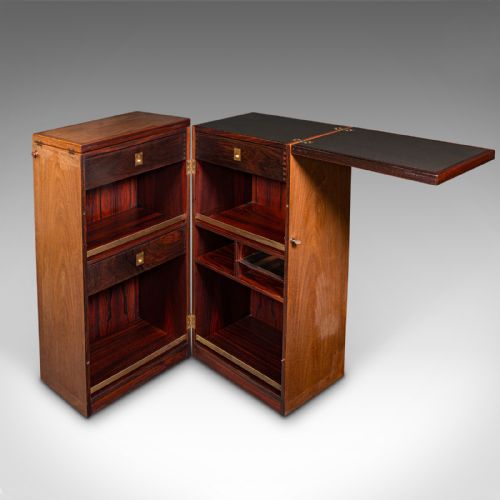
Makers and designers span traditional cabinet makers to twentieth-century design houses, producing everything from simple occasional tables to metamorphic cocktail cabinets.
Materials and construction methods
Construction relies on a metal framework of brass, gilt brass, or nickel-plated metal combined with timber elements such as rosewood, walnut, oak, and burr amboyna. Surface textures include tooled leather, lacquer, and goatskin panels.
Shelving incorporates inset glass plates or galleried wooden trays designed to secure bottles and glasses during movement. Castors fitted to the base allow the furniture to roll smoothly across carpets and floors.
Some trolleys come with hidden expanding leaves, proving that even tea carts enjoy a good magic trick.
Judging quality in construction
Quality rests in the weight of the metal frame, the precision of the joints, and the selection of secondary materials like burr amboyna or rosewood. Heavier brass castings and solid timber indicate superior craftsmanship.
The refinement of details such as gallery rails, inlaid surfaces, and original castors distinguishes standard production items from pieces produced by notable design houses.
Mallett of London·Maison Bagues·Aldo Tura·Reno Wahl Iversen·Dyrlund·Maison Jansen
The Vintage Brass Trolley Glossary
- Etagere
- An open piece of furniture with multiple tiers for displaying objects or serving drinks. These shelves provide visible storage from all angles.
- Gallery
- A raised raised rim or railing around the edge of a shelf to prevent items from sliding off. This feature is common on serving trolleys.
- Metamorphic
- Furniture designed to change shape or configuration for different uses. These pieces often unfold or expand to reveal internal compartments.
- Burr Amboyna
- A highly figured wood veneer taken from the burl growth of the amboyna tree. It provides a rich, mottled pattern on cabinet surfaces.
Vintage Brass Trolley: Frequently Asked Questions
How were these trolleys used originally?
These trolleys served as mobile bars and tea stations in domestic drawing rooms and dining rooms. Hosts used them to wheel decanters, glassware, and afternoon tea to seated guests.
The mobility allowed hosts to manage hospitality without constantly leaving the room to fetch fresh supplies.
Where do these pieces fit at home?
A trolley sits well beside seating areas as an occasional table or functions as a dedicated home bar in a living room or dining space. The tiers hold bottles, glassware, and bar accessories.
They also work in hallways or bedrooms as display surfaces for lamps and decorative objects.
How do I care for brass and glass?
Brass frames benefit from gentle dusting and occasional cleaning with a non-abrasive metal polish to maintain the finish. Avoid harsh chemical cleaners that can strip lacquered surfaces.
Glass shelves lift out easily for washing with standard window cleaner and a soft cloth.
How do I identify the period?
Dating relies on stylistic markers such as Edwardian inlays, Art Deco geometric lines, or mid-century minimalism. Materials like burr amboyna and rosewood often point to specific decades of manufacture.
Maker marks or stamps on the metal framework provide definitive confirmation of origin and date.