


Three Tier End Tables
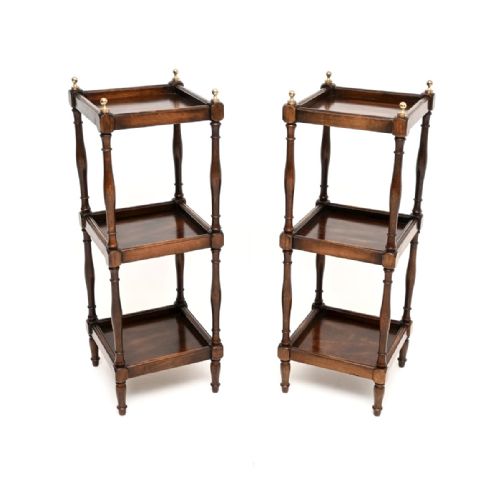
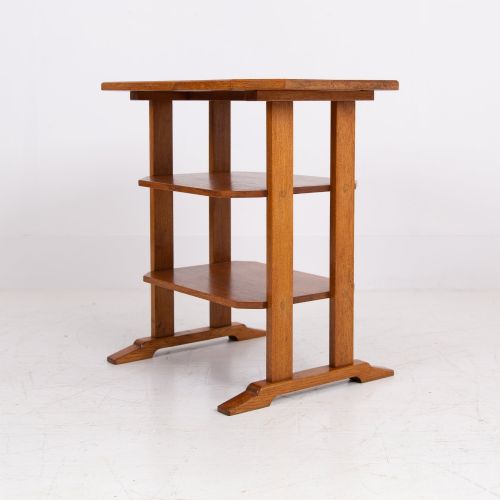
These three tier end tables stack surface area neatly into corners, giving you three levels to display lamps and books without crowding the room.
Three Tier End Tables
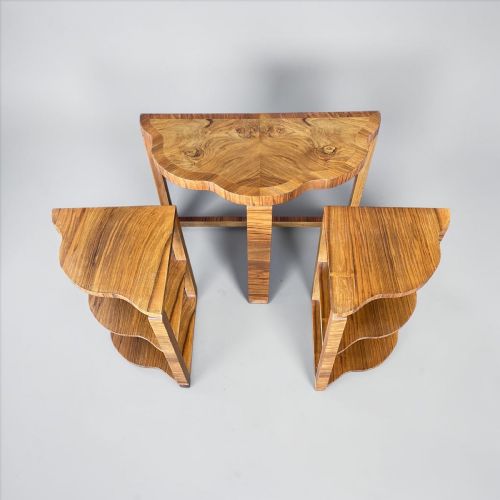
When you search for three tier end tables, you are looking at multi-surface furniture designed to maximise display and storage space in compact footprints. The pieces you encounter span side tables, nests of tables, occasional tables, and whatnots.
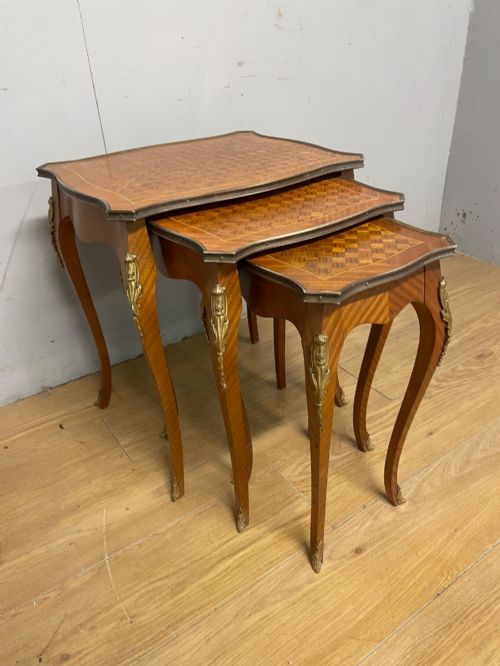
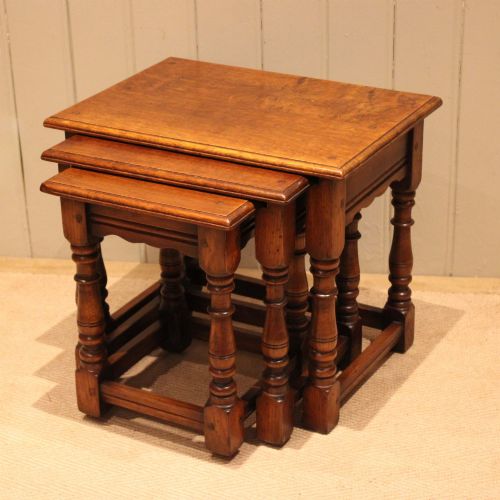
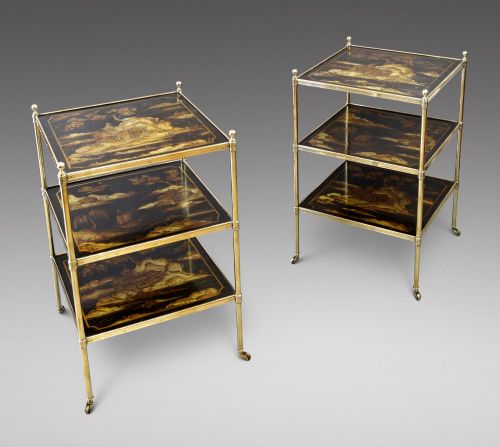
The selections on this page reach from the nineteenth century through the Regency period and into the Art Deco era of the 1930s. You will find forms ranging from French kingwood nests to Cotswold School oak designs and brass etageres.
Makers such as Gillows and Hille appear in these listings alongside English country pieces and French chateau styles. Buyers typically choose these tiers to bring vertical interest and practical surfaces to sitting rooms and libraries.
Materials and Construction
Construction relies heavily on timbers such as walnut, mahogany, oak, and ebonised wood, often enhanced by walnut veneer and kingwood. Artisans shaped these woods into layered tiers supported by turned or straight uprights.
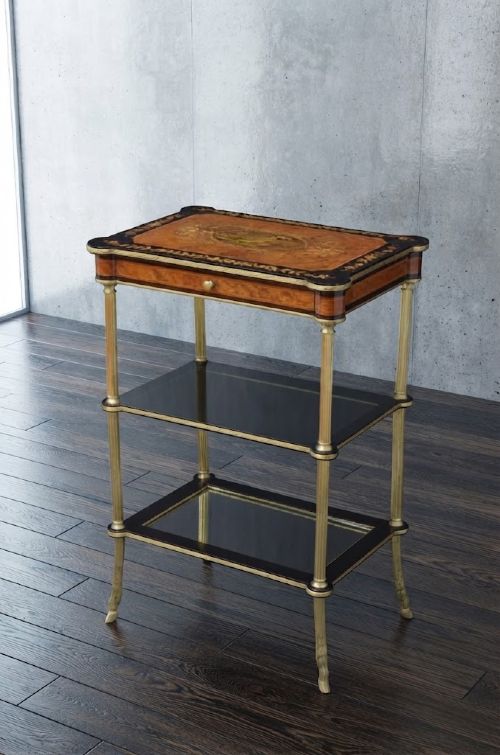
Metal and glass elements appear through brass mounts, ormolu, and mirrored tiers that reflect light upwards through the stacked levels. Painted finishes and delicate inlays add decorative detail to surfaces across the historical range.
One pair of tables comes painted with cheerful decoration, proving that even a serious antique likes to wear a bit of colour.
Assessing Quality and Craftsmanship
Quality shows in the selection of figured veneers and the precision of the joinery connecting each tier to its supports. Superior examples display balanced proportions where the graduating or uniform levels feel stable and intentionally balanced.
The refinement of decorative additions, such as cast ormolu mounts, brass details, and fine wood inlay, separates standard production from exceptional cabinet work. Attribution to known workshops like Gillows or Hille also elevates the standing of a piece.
Gillows·Hille
The Three Tier End Tables Glossary
- Whatnot
- A piece of furniture with multiple open shelves or tiers for displaying small objects or books. It usually stands in a corner or beside a seating area.
- Ormolu
- Gilded bronze or brass mounts applied to furniture for decoration. It is characteristic of French revival styles.
- Etagere
- A set of open shelves or tiers designed for displaying ornaments. The term comes from the French word for a shelf.
- Ebonised
- Wood treated to imitate ebony, producing a dark, smooth black finish. This technique was popular in nineteenth-century decorative pieces.
Three Tier End Tables: Frequently Asked Questions
What are three tier end tables used for?
These tables provide multiple stacked surfaces for holding lamps, drinks, and books in sitting rooms or studies. Their tiered design allows them to fit into tight spaces while offering more display area than a standard single-surface table.
Buyers often place them beside armchairs or in empty corners where vertical storage and display are needed without taking up additional floor area.
How do I identify an Art Deco tier table?
Art Deco pieces from the 1930s typically feature clean geometric lines, figured walnut veneers, and smooth polished surfaces. They embrace modernist simplicity while retaining rich wood grains.
Look for symmetrical tiered structures and streamlined silhouettes that distinguish them from more ornate nineteenth-century or revival styles.
Are nests of tables considered three tier tables?
Nests of tables consist of multiple smaller tables that slide underneath one another for compact storage. When grouped or stacked, they provide multiple tiers of surface space.
They share the multi-level functionality sought in three tier end tables while offering the versatility of separate portable surfaces.
How do I style a three tier end table?
Distribute items across the levels by placing heavier books or a small lamp on the top tier and lighter decorative objects below. Keeping the styling uncluttered lets the wood grain and tier structure remain visible.
Mirrored tiers look best with minimal items placed upon them to allow the reflective surface to catch the light.
What is a whatnot table?
A whatnot is a traditional open-shelved piece designed specifically for the display of ornaments, bric-a-brac, and volumes. Regency and nineteenth-century examples often use delicate turned supports between the tiers.
They function as decorative end tables that bring height and layered display space to period interiors.