





Brass Balance Scales
When you examine brass balance scales, you are looking at precision instruments that served trade, postal services, and laboratories across the nineteenth and twentieth centuries.
Brass Balance Scales
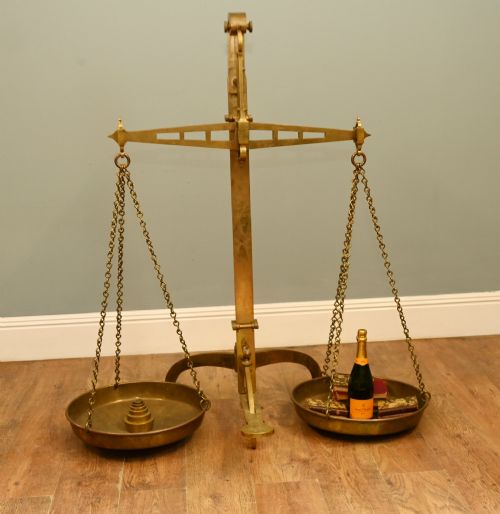
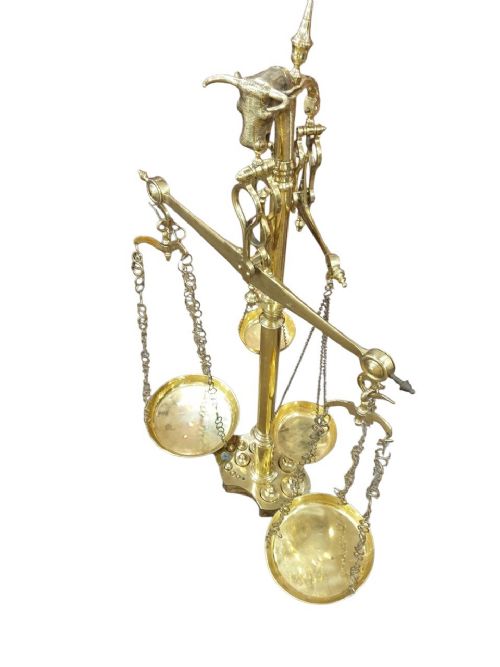
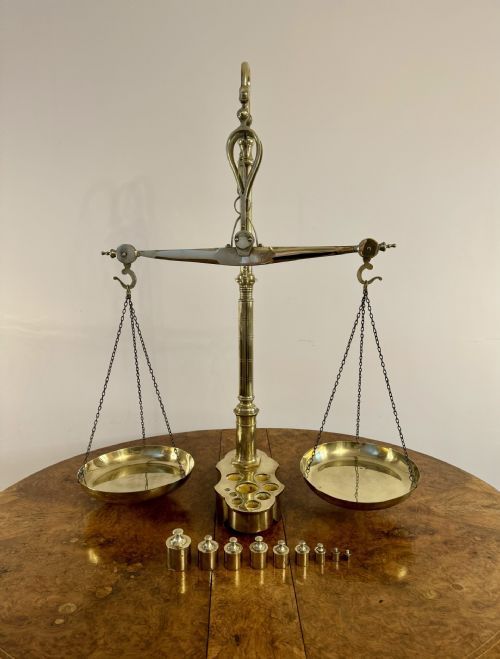
Brass balance scales encompass a wide variety of utilitarian and scientific objects designed for weighing goods, letters, and commodities. When searching for brass balance scales, buyers encounter everything from small domestic postal sets to massive commercial butcher and grocer beams.
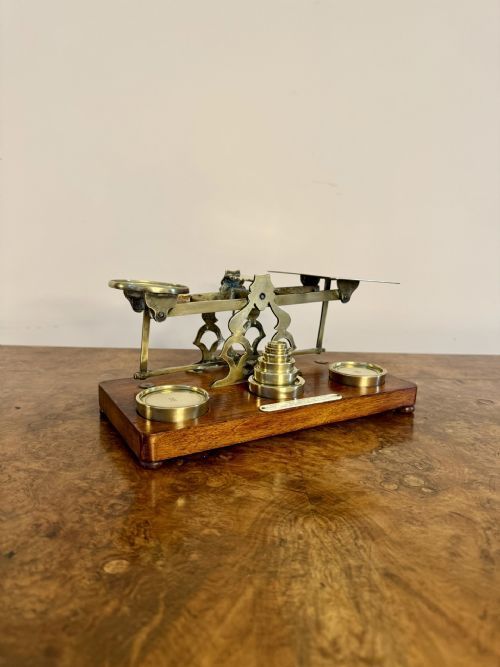
The pieces appearing on this page span the Victorian and Edwardian eras, alongside Georgian and later twentieth-century examples. Domestic postal scales mounted on mahogany or walnut bases are among the most frequent discoveries in this selection.
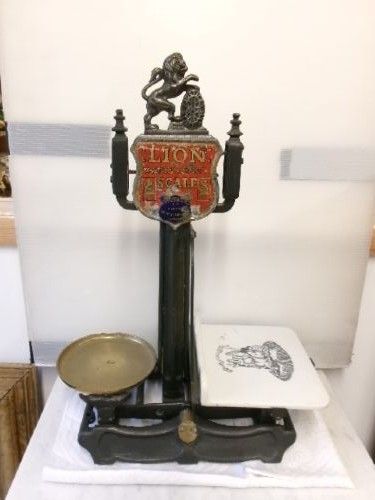
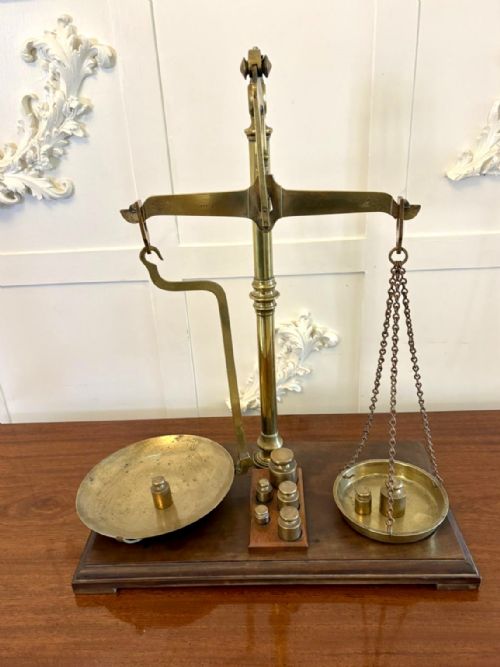
Commercial and trade varieties, including dairy, sweetie, and butcher scales, often incorporate heavy iron or cast iron components alongside their brass beams. Specialised scientific and apothecary balances complete the spectrum, frequently accompanied by original weight sets.
How They Were Made
Makers constructed these instruments using cast and turned brass for the beams, pans, and indicator pointers, ensuring durability and resistance to corrosion. Bases were frequently fashioned from dense timbers such as mahogany, oak, walnut, or other hardwoods to provide a stable foundation.
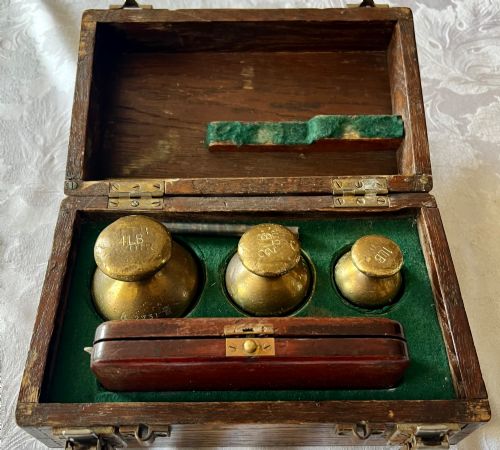
Many commercial and industrial iterations integrated cast iron and wrought iron frames to support heavier capacities, sometimes paired with marble or glass elements. Fine apothecary and postal instruments demanded meticulous calibration, often housed within fitted mahogany cases.
Brass Balance Scales Retail Price Guide 2026
Typical asking prices for brass balance scales among the pieces listed under this phrase on Sellingantiques today, from the lower quarter to the upper quarter. They describe what is for sale here now, not the wider market.
Listings feature brass balance scales paired with mahogany, oak, walnut, iron, and marble bases across the Victorian and Edwardian periods.
What Varies in Quality
Quality in these instruments rests upon the precision of the beam movement and the integrity of the original components. Superior examples retain matching serial numbers or maker marks across both the beam and the associated weights.
The refinement of the timber base and the crispness of the brass casting distinguish workshop standards. Retaining original graduation marks, maker signatures, and verification stamps elevates the standing of an individual piece.
De Grave Short And Co·Robert Brettell Bate·Day And Millward·S Mordan And Co·Parnall And Sons·Ratcliff Birmingham·Avery·Oertling·Stephen Houghton And Son·Bartlett And Sons·Hunt And Co
The Brass Balance Scales Glossary
- Beam
- The horizontal bar of a balance scale that pivots on a central fulcrum. It carries a pan at each end and must remain perfectly balanced for accurate measurement.
- Chondrometer
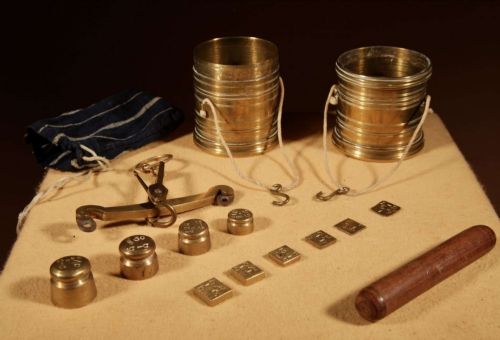
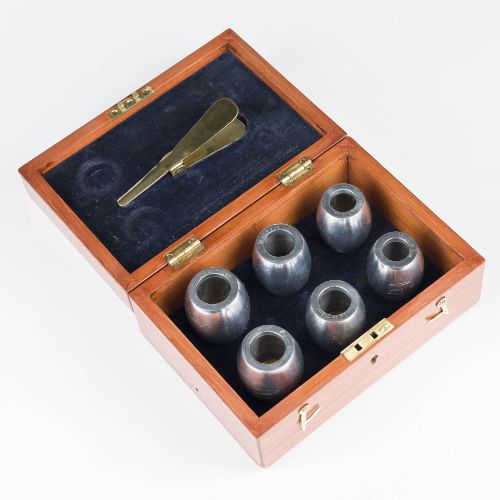
- A specialised scientific instrument used to measure the weight of a specific volume of grain. These devices often include precision brass cylinders and sliding weights housed in fitted wooden cases.
- Avoirdupois
- The system of weights commonly used for everyday goods and retail commodities. Sets of these weights frequently accompany commercial shop scales.
- Verification balance
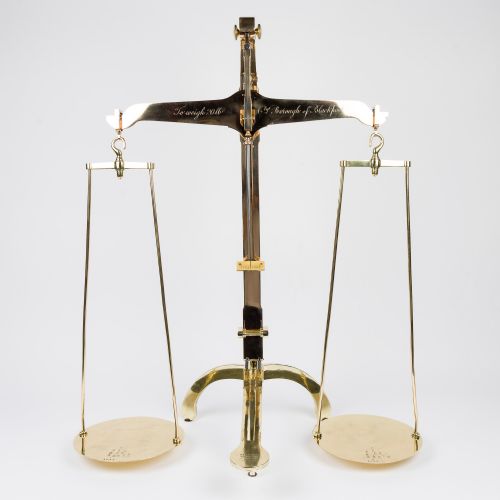
- A heavy-duty scale utilised by local authorities and inspectors to check commercial weights and measures. These units often bear regional city or borough inscriptions.
- Bell weight
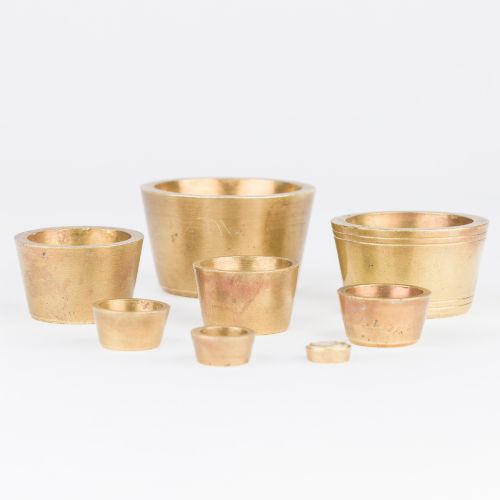
- A traditional nested trade weight shaped like a small bell with a loop handle. They are frequently encountered alongside nineteenth-century grocery and dairy balances.
Brass Balance Scales: Frequently Asked Questions
How do I date antique brass scales?
Dating relies on stylistic clues in the wooden bases, the shape of the brass casting, and any stamped maker details or verification marks. Victorian and Edwardian examples often feature distinct decorative brasswork and specific timber choices.
Makers frequently inscribed their company name and address directly onto the beam or the wooden platform. Comparing these details against known operational dates helps narrow down the period of manufacture.
Were postal scales used in homes?
Postal scales became common household items during the nineteenth century as postal rates were standardised and letter writing increased. Families used compact brass and mahogany letter scales to weigh correspondence before posting.
These domestic versions typically featured small platforms and matching brass weights stored directly on the wooden base. Larger commercial variants remained restricted to post offices and business counting houses.
What are apothecary scales used for?
Apothecary scales were precision instruments designed to weigh medicinal ingredients in grains and drams. Pharmacists relied on their high sensitivity to compound exact medical prescriptions.
These delicate balances often featured enclosed glass cases to prevent air currents from disrupting the measurement. Complete sets frequently retain their original miniature brass weights in velvet-lined slots.
How should I clean antique brass?
Antique brass benefits most from gentle dusting and occasional cleaning with a soft cloth to preserve its historic patina. Aggressive polishes should be avoided because they strip away the aged surface that collectors value.
Maintaining the original unpolished appearance preserves the character acquired over a century of use. Wooden bases require simple wax nourishment suited to period furniture.