




Antique Letter Scales
These antique letter scales weigh correspondence with nineteenth-century precision, offering practical desktop utility and handsome period materials for the collector.
Understanding antique letter scales
When you search antique letter scales, you encounter desktop measuring devices designed to calculate postage rates for correspondence during the Victorian and Edwardian eras. These instruments served offices and writing desks before digital measurement took over, ensuring the correct number of postage stamps was affixed to each envelope.
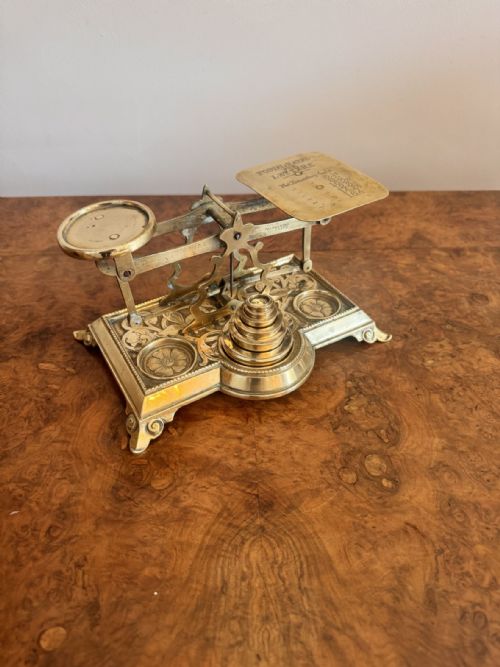
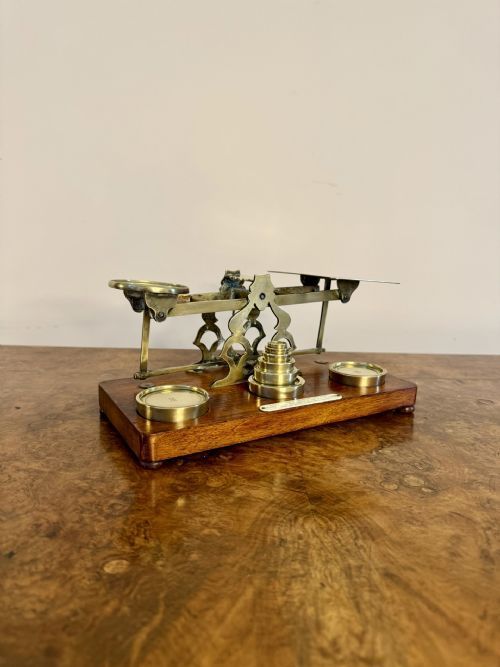
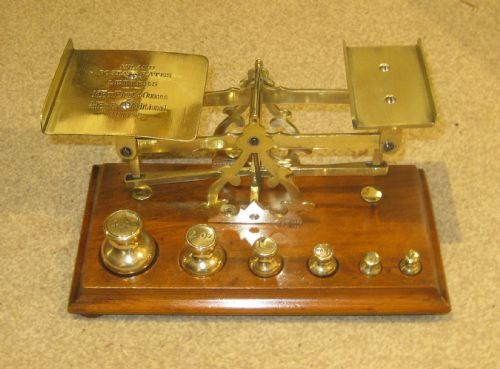
The versions most frequently met on this page combine a brass balance mechanism with a wooden or decorative base, spanning the mid-nineteenth century through the early twentieth century. Makers mounted these mechanisms on rectangular or shaped plinths, often including fitted compartments or matched sets of brass weights.
Surviving examples range from utilitarian brass constructions to decorative pieces incorporating exotic woods, boullework, or ceramic plaques. Collectors select them for their mechanical precision, period character, and the way they reflect nineteenth-century postal administration.
Materials and construction
Makers constructed the bases of these scales using solid hardwoods such as mahogany, walnut, oak, and coromandel, alongside polished brass for the balance arms, pans, and upright supports. Certain decorative variants incorporated boullework, malachite, or inset Wedgwood ceramic plaques into the wooden plinths.
The mechanical components relied on cast and turned brass, assembled to allow a pivoting beam to register accurate weights when letters were placed upon the brass pans. Makers frequently stamped their names, registration numbers, or retailer details directly onto the brass work or incorporated them into the accompanying weight sets.
Retail Price Guide 2026
Typical UK retail prices for letter scales, calculated from the Sellingantiques database of over a million retail prices indexed since 2003. This retail price guide relies exclusively on Sellingantiques data; no external sources or auction records are used, so the figures do not describe the wider market.
Some nineteenth-century letter writers relied on ceramic plaques to check if their mail weighed too heavily for a single stamp.
Assessing quality and craftsmanship
The distinction between standard examples and superior pieces rests largely on the refinement of the materials and the prestige of the maker. Master makers such as Sampson Mordan, Leuchars, or T.J. Smith, Son & Downes applied greater sculptural detail to the brass casting and selected highly figured timbers for the bases.
Quality also shows in the completeness of the original matched weights and the retention of signed inscriptions or registration numbers. Finer pieces demonstrate tighter joinery in the wooden plinths and crisper engraving on the metal components, distinguishing bespoke workshop production from mass-market output.
Sampson Mordan·Leuchars of London·T. J. Smith, Son & Downes·John Heath·Perry and Co
The Antique Letter Scales Glossary
- Postal Scales
- A weighing device specifically calibrated for determining the postage required for letters and small parcels. These instruments were essential tools in nineteenth-century offices and homes.
- Mahogany
- A durable, reddish-brown tropical hardwood frequently utilised for the bases of Victorian and Edwardian desktop items. It provides a stable and decorative plinth for brass weighing mechanisms.
- Boulle
- A form of marquetry employing brass and tortoiseshell inlaid into wood, seen on luxury nineteenth-century desk accessories. This decorative technique elevates utilitarian objects into ornamental pieces.
- Malachite
- A green copper carbonate mineral used in decorative arts for ornamental inlays and plaques. Its distinctive banded patterns appeared on select high-end nineteenth-century desk objects.
- Wedgwood
- A famous British pottery firm that supplied ceramic plaques used to decorate the bases of certain Victorian desk accessories. These jasperware inserts added neoclassical relief designs to functional items.
Frequently Asked Questions
What are antique letter scales?
These devices are mechanical weighing instruments used in the nineteenth and early twentieth centuries to calculate postal rates for letters. They feature a balanced beam with pans that indicate whether correspondence required additional stamps.
They reflect the administrative routines of past offices and writing desks, combining utilitarian engineering with decorative cabinetmaking.
How were letter scales used?
A letter was placed upon the brass pan, causing the pivoted metal arm to tilt and register the weight against matched brass weights stored on the base. This measurement determined the correct postage fee before dispatch.
Users kept them on writing tables and desks for daily correspondence management.
How do I date antique letter scales?
Dating relies on stylistic clues, timber choices, and any stamped maker marks, registration numbers, or retailer signatures found on the brass work. Victorian examples often feature heavy mahogany or walnut bases, while Edwardian versions frequently showcase simplified oak or brass designs.
Archival records and registration numbers can further narrow down the decade of production.
How should I clean brass scales?
Brass components benefit from gentle dusting with a soft cloth to preserve their historical patina rather than aggressive polishing. Wooden bases require occasional treatment with suitable wax to maintain the condition of the timber.
Harsh chemical cleaners should be avoided to protect original patination and maker stamps.