






Vintage Letter Balance
These vintage letter balance pieces combine precision engineering with period desk charm, offering a practical antique for your workspace.
Vintage Letter Balance
When you search for a vintage letter balance, you are looking at functional desktop devices designed to weigh mail accurately before postage rates became standardised. These items span the Victorian and Edwardian eras, reflecting the domestic and office requirements of the nineteenth and early twentieth centuries.
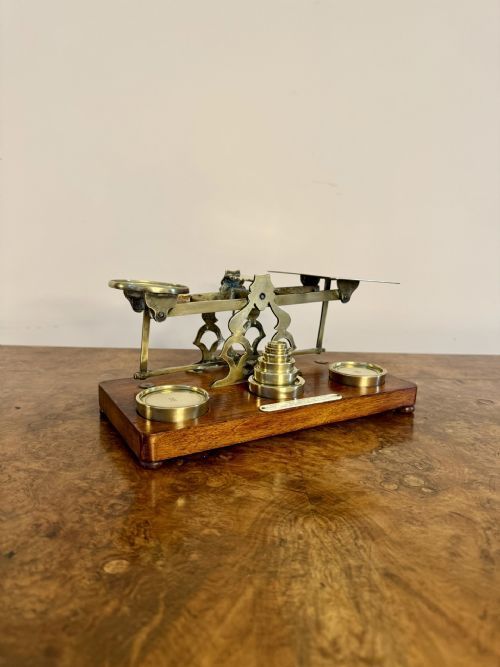
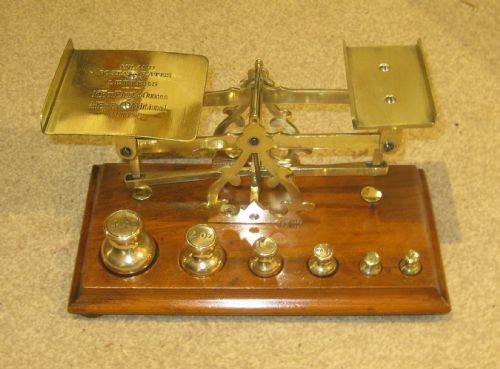
The versions you are most likely to meet on this page are constructed from polished brass mounted on wooden bases, often accompanied by their original matching weights. They appear in forms ranging from simple brass lever mechanisms to elaborate configurations set on mahogany, oak, walnut, or marble plinths.
How they were made
Makers constructed these postal scales using heavy cast and turned brass for the balance arms, pans, and weight sets. This metalwork was combined with dense timber bases such as mahogany, oak, walnut, and hardwood to provide a stable foundation.
Detailing often included fitted compartments to house the graduated brass weights securely within the wooden base. More decorative examples incorporated panels of exotic materials like malachite or utilised specialised forms such as the candlestick design.
Vintage Letter Balance Retail Price Guide 2026
Typical asking prices for vintage letter balance among the pieces listed under this phrase on Sellingantiques today, from the lower quarter to the upper quarter. They describe what is for sale here now, not the wider market.
Some nineteenth-century makers cleverly disguised functional postal scales as household candlesticks to save valuable desk space.
What varies in quality
The distinction between standard examples and the top of the range rests on the substance of the materials and the prestige of the maker. Solid oak, walnut, and heavy mahogany bases paired with complete, original brass weight sets elevate an object above simpler pieces.
Execution and scale also determine distinction, with very large formats and items bearing signatures from notable London makers commanding greater attention. The inclusion of decorative insets like malachite indicates a higher tier of desk accessory production.
S Mordan·S Mordan Co London·Ratcliff Birmingham
The Vintage Letter Balance Glossary
- Letter balance
- A weighing device specifically calibrated for measuring the mass of letters and small packages to determine postal rates.
- Postal scales
- Alternative terminology for letter balances, frequently encountered in nineteenth and early twentieth century office equipment.
- Victorian
- The period spanning the reign of Queen Victoria, providing the earliest examples of these desk scales seen here.
- Edwardian
- The stylistic and historical period following the Victorian era, producing refined oak and brass weighing instruments.
Vintage Letter Balance: Frequently Asked Questions
What is a vintage letter balance?
A vintage letter balance is a mechanical weighing instrument designed for domestic and office desks during the nineteenth and early twentieth centuries. They allowed users to determine the exact weight of correspondence before affixing postage.
These pieces typically consist of a brass beam and pan supported by a wooden base made from mahogany, oak, or walnut. Many include their original sets of graduated brass weights stored within the platform.
How do you use postal scales?
To use postal scales, you place a letter or small parcel onto the brass weighing pan. The balance arm moves to indicate whether the item exceeds standard weight thresholds for mailing.
While largely decorative today, the mechanical lever action remains fully operational on well-preserved examples. They make functional desk accessories for measuring modern post or small items.
How do I date an antique letter balance?
Dating these objects relies on identifying the prevailing Victorian or Edwardian stylistic traits and timber choices. Earlier pieces from the mid-nineteenth century often feature distinct utilitarian forms or candlestick designs.
Maker marks stamped into the brass or wood provide the most precise chronological indicators. Design shifts from heavy mahogany blocks to lighter oak frames also help narrow down the period of manufacture.
What materials were used for letter balances?
Manufacturers built these desk instruments using heavy cast brass for the working balance mechanisms and weighing pans. The foundational platforms were turned and polished from dense hardwoods including mahogany, walnut, and oak.
Some exceptional examples incorporated decorative luxury elements such as green malachite panels or marble bases. Matching brass weight sets completed the construction, often housed in fitted recesses within the timber.