


Antique Postal Weights
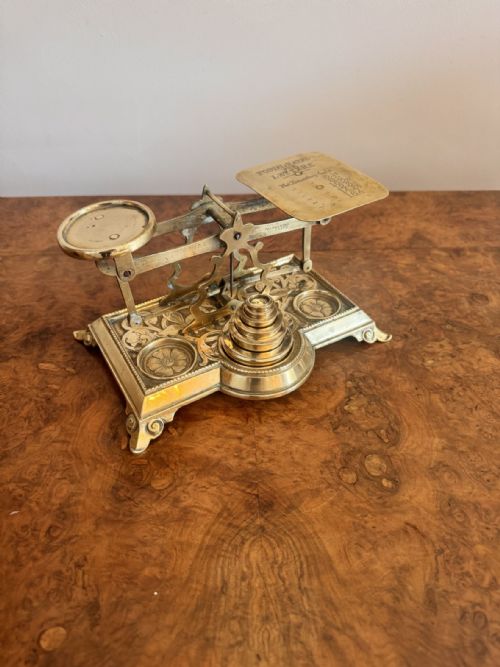
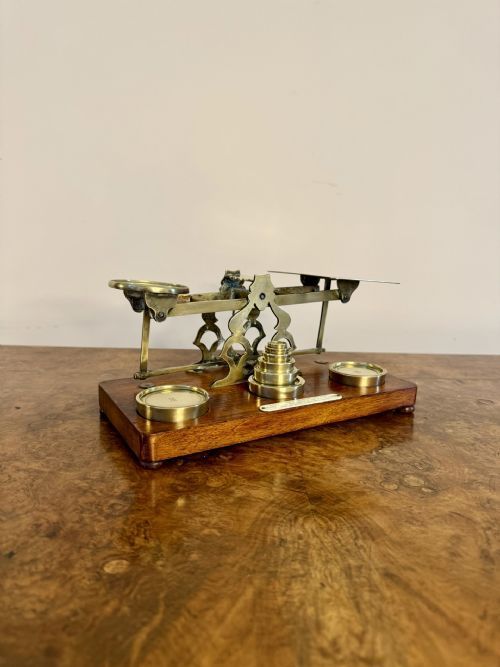
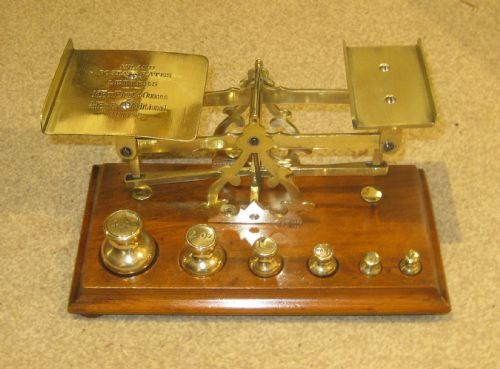
Antique postal weights are precise instruments designed to measure letter tariffs, combining utilitarian brass with finely turned wooden bases to grace any desk.
Antique Postal Weights
When you search for antique postal weights, you encounter practical desk accessories that determined postage costs during the Victorian and Edwardian eras. These pieces typically take the form of postal scales fitted with matching brass weights to handle correspondence accurately.
The versions most frequently met on this page date from the mid-nineteenth century up to the early twentieth century. They range from simple brass platforms to substantial wooden bases holding graduated sets of weights.
Makers such as S. Mordan, Perry & Co., and Youngs produced many of the finest examples seen in these collections. Buyers find both standalone weights and complete scale sets mounted on mahogany, oak, walnut, or other hardwoods.
How they were made
Makers constructed these instruments using solid brass for the balance arms, pans, and individual weights. The metal components were often cast, polished, and stamped to indicate weight denominations and maker details.
Wooden bases were fashioned from sturdy timbers including mahogany, oak, and walnut, frequently shaped with sculpted edges or recessed compartments to hold the matching brass weights securely. Some examples feature waisted dump weights designed for easy handling.
Some scales travelled so little they retained their original apothecary boxes, ready to weigh tiny letters or medicinal powders all over again.
What varies in quality
The distinction between ordinary and superior pieces rests on the presence of original matched weights and maker signatures. Sets bearing stamps from known firms like S. Mordan or Perry & Co. command greater interest among collectors.
Quality also shows in the timber selection and the precision of the brass casting. Finer pieces display carefully fitted wooden bases and well-balanced mechanisms that have survived decades of use without losing their calibration.
S.Mordan London·Perry & Co. London·Youngs
The Antique Postal Weights Glossary
- Postal scales
- Weighing devices calibrated specifically to determine the correct postage rates for letters and small parcels. They usually feature a brass beam balance mounted on a wooden plinth.
- Dump weight
- A short, thick cylindrical brass weight, often with a waisted profile for a secure grip. These are frequently found accompanying nineteenth-century letter scales.
- Balance arm
- The central pivoting metal bar of a scale that holds the letter pan on one side and the weight pan on the other. Its accurate pivot point ensures correct measurement.
- Hardwood
- Dense timber such as mahogany, oak, or walnut used to form the stable base of the scale. These woods provided durability and a polished appearance suitable for office desks.
Antique Postal Weights: Frequently Asked Questions
What are antique postal weights used for?
These pieces were originally utilised in homes and offices to weigh letters and parcels to ensure the correct postage stamps were applied before mailing.
Today, they serve as decorative desk accessories and collectable items that reflect the administrative history of the Victorian and Edwardian periods.
How do I identify a Victorian postal scale?
Victorian examples often feature heavy brass construction mounted on mahogany or walnut bases, sometimes accompanied by waisted dump weights.
Many of these earlier pieces display maker stamps from prominent firms like S. Mordan, distinguishing them from later twentieth-century productions.
Are original weights usually included?
Many surviving sets retain their original matched brass weights, which fit neatly into recessed slots or onto designated platforms on the wooden base.
Finding a complete set with corresponding stamps adds significantly to the historical integrity of the piece.
How should I clean antique brass and wood?
Brass components can be maintained with a gentle polish to remove tarnish while preserving the underlying metal texture and any stamped maker marks.
Wooden bases require only a soft cloth and occasional wax to nourish the grain of the mahogany, oak, or walnut without altering the finish.