




Brass Postal Balance
These brass postal balances are precise Victorian and Edwardian weighing instruments that bring desk-top utility and handsome metalwork to a collector's study.
Brass Postal Balance
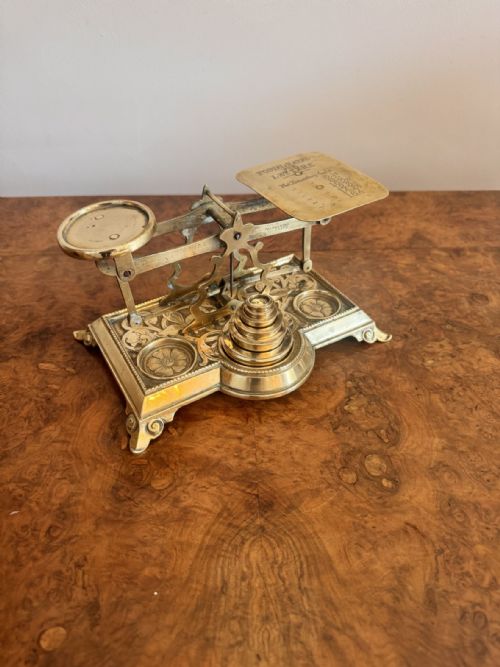
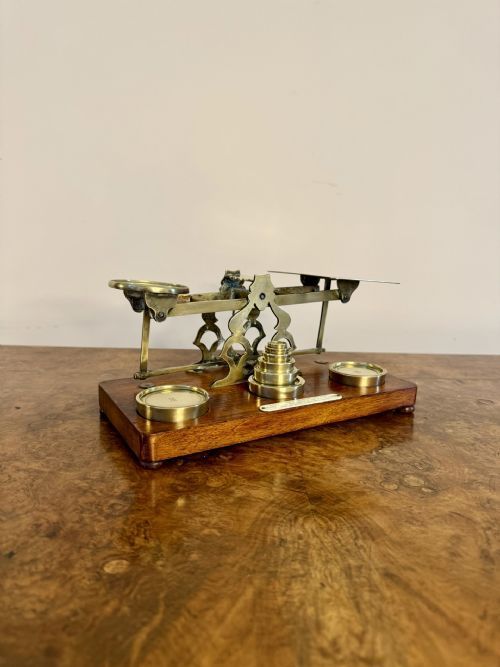
A brass postal balance is a dedicated device designed to weigh letters and parcels for correct postage, appearing frequently in Victorian and Edwardian incarnations. Buyers searching for a brass postal balance will encounter sets mounted on wooden bases alongside standalone metal designs.
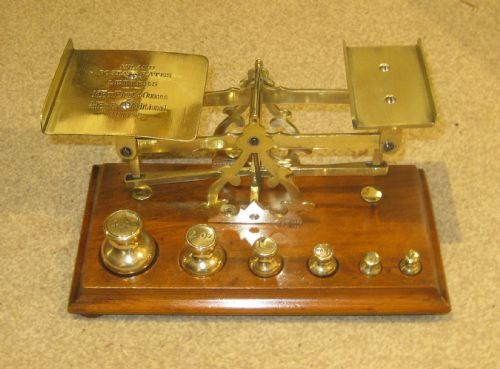
The prevailing examples on this page date from the mid-nineteenth century up to the early twentieth century, spanning the Victorian and Edwardian eras. These domestic and office tools often arrive complete with their original graduated brass weights or matched weight boxes.
Formations range from standard platform scales to candlestick postal scales and large mahogany or oak mounted boards. Regional variations such as Irish brass postal scales also appear within the selection.
Materials and construction
Makers constructed these balances primarily from polished brass, often combining the metal with hardwood bases made from mahogany, walnut, oak, or general hardwood. Certain decorative examples incorporate marble or malachite panels into the base design.
Metal components involve cast and turned brass assemblies, sometimes featuring rococo detailing or engraved maker details on the beam. Wooden plinths are typically polished and shaped with recessed compartments to house matching sets of square or cylindrical brass weights.
Some Victorian Victorians clearly fancied writing letters by candlelight, combining letter-weighing with fire hazard in one tidy desk accessory.
Judging quality and merit
Quality in a brass postal balance rests upon the crispness of the brass casting, the richness of the timber base, and the presence of a full complement of matching weights. Superior pieces exhibit refined mechanical balance and clear maker signatures from notable firms.
The inclusion of unusual decorative materials like malachite or specialised forms such as candlestick scales elevates a piece above standard utilitarian office equipment. Finer examples retain their original surface patination and precise calibration.
S Mordan & Co London·Ratcliff Birmingham·S.P & Sons
The Brass Postal Balance Glossary
- Postal scale
- A weighing device specifically calibrated for measuring letter and parcel weights under postal regulations. These instruments ensure correct postage is applied to correspondence.
- Candlestick postal scale
- A dual-purpose desk accessory combining a functional brass letter balance with a candlestick holder. This form is particularly sought after by collectors of desk curios.
- Steelyard
- A type of weighing balance utilising a pivoted lever with unequal arms. It allows a small weight to balance a much heavier load on the opposite side.
- Malachite
- A green copper carbonate mineral used occasionally as a decorative inlay or base material for high-end Victorian desk items. Its distinctive banded patterns provide visual contrast to polished brass.
Brass Postal Balance: Frequently Asked Questions
What is a brass postal balance?
A brass postal balance is a mechanical weighing device used during the nineteenth and early twentieth centuries to determine correct letter postage. They combine metal balance beams and pans with supportive bases.
Most examples sit upon wooden plinths and operate using gravity and calibrated counterweights to measure ounces and grams.
How do I date a postal scale?
Dating relies on stylistic clues, timber choices, and any stamped maker marks or registration numbers found on the brass components. Victorian pieces often feature heavier mahogany bases, while Edwardian versions frequently use lighter oak.
Patent marks and maker signatures can further narrow the manufacturing window to specific decades within the nineteenth and twentieth centuries.
Did these scales come with weights?
Many surviving sets include their original matching brass weights, often housed in dedicated slots carved directly into the wooden base. These weights typically match the exact denomination system used for postal tariffs of the period.
Complete sets featuring all original corresponding weights command greater interest among collectors than bare balance mechanisms.
What woods were used for the bases?
Makers utilised a variety of hardwoods including mahogany, walnut, and oak to mount the brass balancing mechanisms. Selection depended on contemporary furniture fashions and the intended market tier of the item.
More decorative models occasionally integrated stone elements such as marble or malachite alongside the standard timber and brass construction.
Where were these scales manufactured?
Production was centred largely in major British industrial and metalworking hubs such as London and Birmingham. Prominent makers established workshops that supplied these essential office instruments throughout the British Empire.
Regional variations, including Irish-made pieces, also emerge within the broader category of domestic postal measuring devices.