






Desk Postal Scales
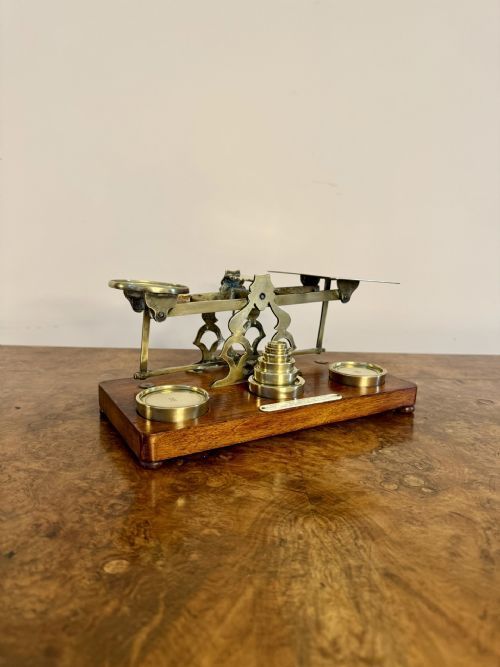
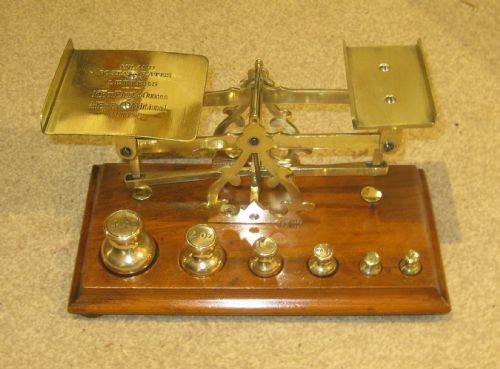
These desk postal scales measure letters and parcels with brass mechanisms mounted on hardwood bases, offering practical function and period desk charm.
Desk Postal Scales
Desk postal scales comprise functional weighing devices designed for correspondence and small parcels, appearing frequently in Victorian and Edwardian iterations. Buyers find practical brass balancing mechanisms mounted on wooden or decorative plinths intended for home or office writing desks.
Most examples on this page date from the mid-nineteenth century through the early twentieth century, spanning the Victorian and Edwardian eras. These pieces demonstrate the period requirement for accurate letter weighing following postal reforms.
How they were made
Maker workshops constructed the primary platforms and boxes using dense hardwoods including mahogany, oak, walnut, and general hardwood, finished to complement nineteenth-century interior joinery. These wooden bases frequently incorporate fitted compartments or recessed slots specifically designed to store matched sets of brass weights.
Working mechanisms rely on cast and polished brass shaped into balance arms, fulcrums, and pans, utilising precise weighting for accurate postal measurement. Certain decorative examples integrate alternative materials such as carved marble or inlaid malachite into the plinth design.
Desk Postal Scales Retail Price Guide 2026
Typical asking prices for desk postal scales among the pieces listed under this phrase on Sellingantiques today, from the lower quarter to the upper quarter. They describe what is for sale here now, not the wider market.
Current listings feature postal scales spanning the Victorian and Edwardian periods, utilising brass paired with mahogany, oak, walnut, marble, and malachite.
What varies in quality
Quality differences emerge in the precision of the brass mechanism and the grade of materials chosen for the base, distinguishing standard utility items from luxury pieces. Superior examples feature robust cast brass components, heavy hardwood or decorative stone plinths, and complete, matching sets of original weights.
The presence of identifiable maker stamps, such as S. Mordan or Ratcliff Birmingham, elevates the standing of an individual set. Finer manufacture shows in crisp detailing, superior timber grain, and balanced proportion between the weighing arm and the supporting base.
S Mordan London·S Mordan & Co London·Ratcliff Birmingham
The Desk Postal Scales Glossary
- Victorian
- The period of British history spanning the reign of Queen Victoria from 1837 to 1901. Many surviving postal scales date from this era of expanding postal networks.
- Edwardian
- The period covering the reign of King Edward VII from 1901 to 1910. Items from this time often reflect refined turn-of-the-century desk accessories.
- Malachite
- A green copper carbonate mineral used for ornamental surfaces. On specific desk scales, this stone forms the decorative base or panel.
- Candlestick scale
- A combination desk accessory integrating a candle holder with a postal weighing balance. This dual-purpose form was popular in the mid-nineteenth century.
Desk Postal Scales: Frequently Asked Questions
How do desk postal scales work?
Desk postal scales operate using a lever balance mechanism where letters or parcels are placed on one platform while matching brass weights sit on the other. The pointer indicates when the balance arm reaches equilibrium.
Most surviving examples retain their original brass pans and hanging chains. Users add or remove weights from the fitted base until the indicator rests at the centre mark.
Are original weights usually included?
Many sets retain their corresponding brass weights, which often nest neatly into dedicated slots within the wooden base. These weights were calibrated in ounces and drams to match historical postal tariffs.
Finding a set with a complete, matching complement of weights enhances both the visual symmetry and the historical completeness of the piece. Replacement weights do occur and differ in finish from original components.
How do I clean brass and wood?
Brass components benefit from gentle dusting and occasional cleaning with a non-abrasive metal polish if tarnishing obscures the original surface. Preservation of patination is generally preferred by collectors over bright, mirror finishes.
Wooden bases require simple maintenance using traditional beeswax applied with a soft cloth to nourish the hardwood. Harsh chemical cleaners should be avoided on both the metal mechanisms and the polished timber surfaces.
Where were these scales used?
These scales served primarily in domestic studies, estate offices, and commercial counting houses throughout the nineteenth and early twentieth centuries. They sat atop writing desks alongside inkwells and stationery boxes.
The increasing volume of daily post made accurate home weighing essential before letters were dropped into pillar boxes or taken to the local post office.