




Brass and Iron Andirons
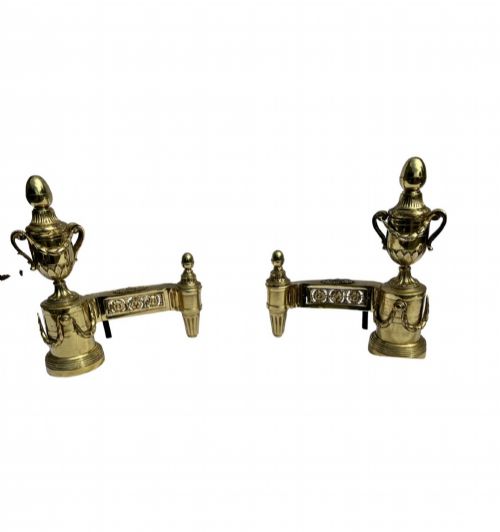
Brass and iron andirons are sturdy hearth supports designed to hold logs above the hearth floor for better airflow.
Brass and Iron Andirons
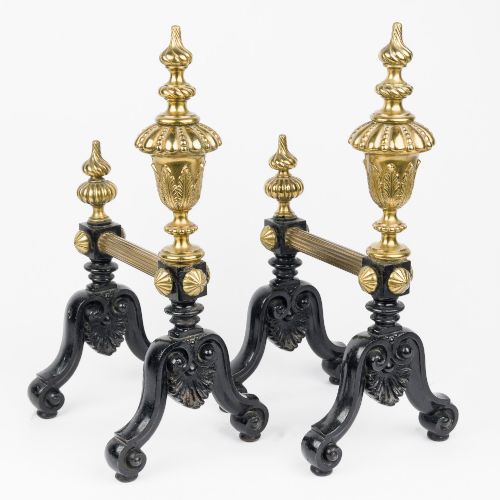
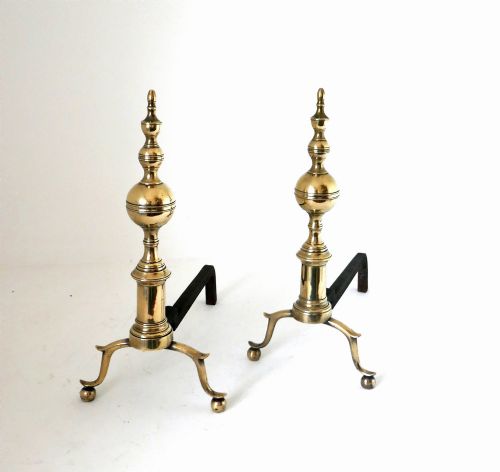
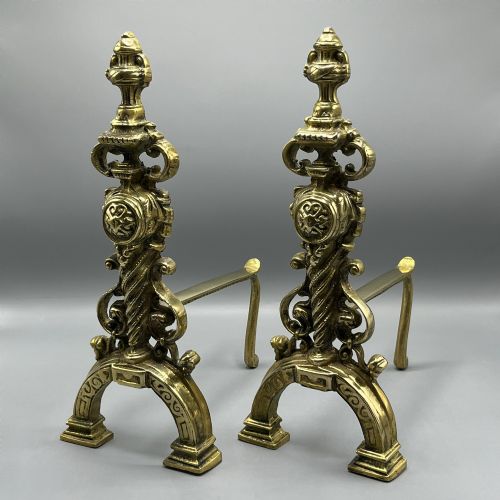
Brass and iron andirons serve as essential hearth furniture, supporting firewood within open fireplaces while adding decorative presence to the room. The selection spans domestic English and American hearth equipment alongside ornamental continental examples.
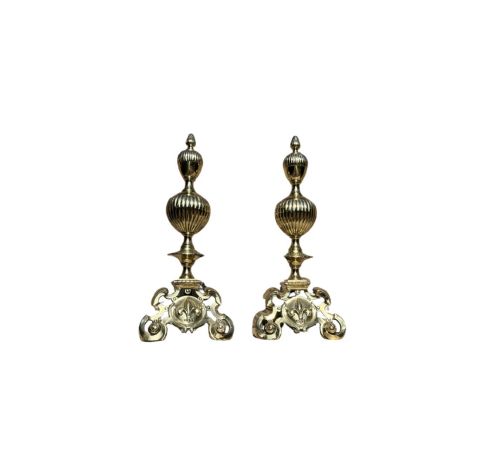
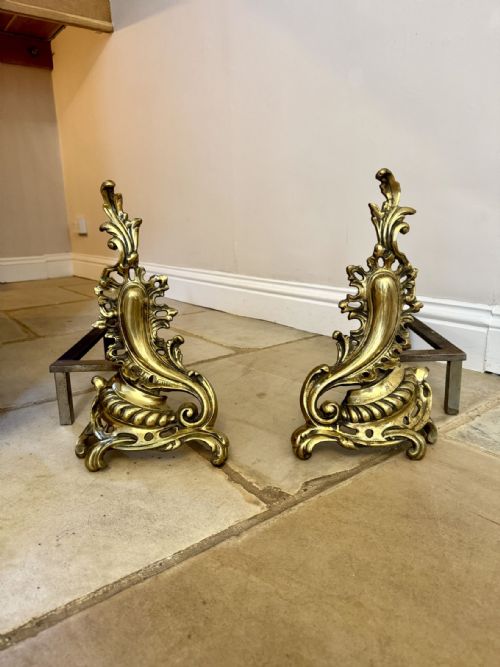
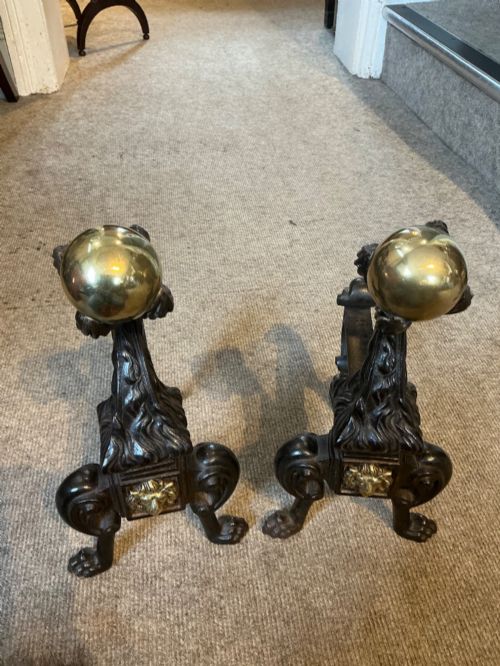
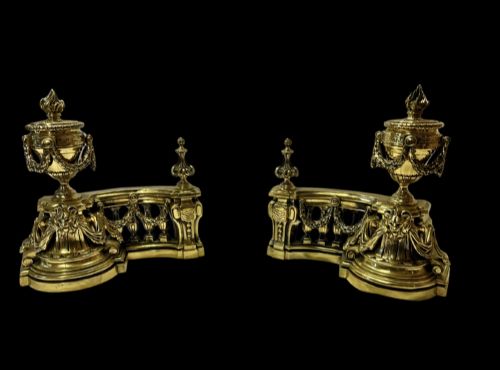
Most pieces date from the nineteenth century, ranging from utilitarian Victorian designs to decorative French rococo creations. Buyers commonly encounter pairs featuring heavy cast iron bodies paired with polished brass fronts or finials.
Beyond standalone fire dogs, the selection frequently includes matching companion sets, fenders, and grates. These configurations provide a unified fireside arrangement typical of period drawing rooms.
How They Were Made
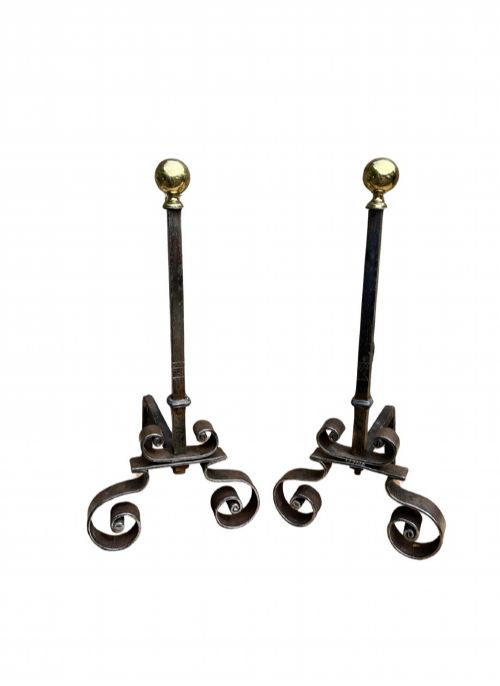
Foundry work combined structural iron with decorative brass casting to create balanced hearth supports. Blacksmiths forged wrought iron bars for strength, while brass components were cast and polished to a bright finish.
French pieces often utilised bronze, ormolu, and parcel gilt techniques for elaborate surface ornamentation. Details like cherubs and scrolling acanthus leaves were cast separately before being mounted to the primary iron frame.
Several pairs feature steadfast brass sphinxes keeping a watchful eye over the hearth fire.
What Varies in Quality
Substantial weight and material thickness distinguish high-grade examples from lighter commercial production. Solid brass components and heavy cast iron bases indicate superior durability and stability on the hearth.
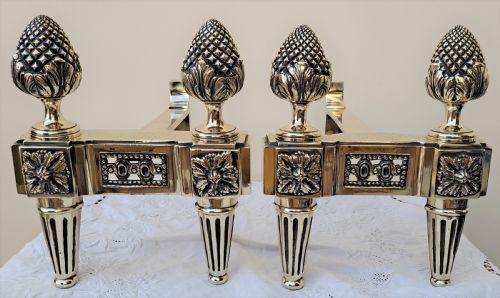
The crispness of the casting defines the artistic merit of ornamental pairs. Finer items feature sharply detailed chasing and secure mounting of decorative elements rather than plain, simplified surfaces.
James Cartland and Sons·Christopher Dresser
The Brass and Iron Andirons Glossary
- Chenet
- Alternative French term for an andiron or fire dog. These decorative front supports often display sculptural brass or bronze mounts.
- Fire Dog
- A heavy metal support placed in pairs inside a fireplace to hold logs. They allow air to circulate beneath the burning wood.
- Ormolu
- Finely ground high-carat gold applied to a bronze base using mercury amalgamation. This technique creates a rich golden finish on decorative nineteenth-century mounts.
- Fender
- A low metal guard placed around the hearth opening. They frequently match the design and metalwork of the accompanying andirons.
Brass and Iron Andirons: Frequently Asked Questions
How do I use andirons in a modern fireplace?
Place the pair evenly inside the hearth opening with the long iron billets extending backward. Logs rest horizontally across the horizontal bars to encourage proper combustion.
Ensure the hearth space accommodates the total depth of the iron shafts. Many pairs work equally well in active wood-burning fireplaces or purely decorative hearth settings.
Can I polish vintage brass fire dogs safely?
Use a mild metal polish and a soft cloth to maintain the bright finish on brass surfaces. Avoid abrasive pads that scratch the metal or remove historical patination.
Iron components require a different approach, often benefiting from a light application of oil or grate polish to prevent rust. Regular dusting keeps both metals in stable condition.
How do I identify French andirons from English ones?
French examples often display ornate rococo, baroque, or neoclassical motifs rendered in ormolu and bronze. They lean toward elaborate scrollwork and sculptural figures like cherubs.
English variants tend to show geometric restraint, featuring ball and claw feet, sturdy brass finials, and simpler iron shafts suited to domestic hearths.
What is the purpose of the iron billets?
The rear iron bars support the heavy weight of burning logs while enduring intense heat. Iron provides the structural strength required for daily hearth use.
While the front brass portions deliver visual ornament, the iron components bear the practical burden of holding the firewood safely off the hearth floor.