


French Style Chenets
French style chenets bring the weight and theatre of continental hearths into your room.
French Style Chenets
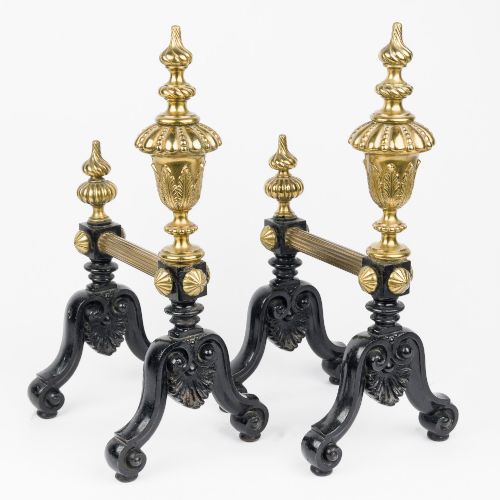
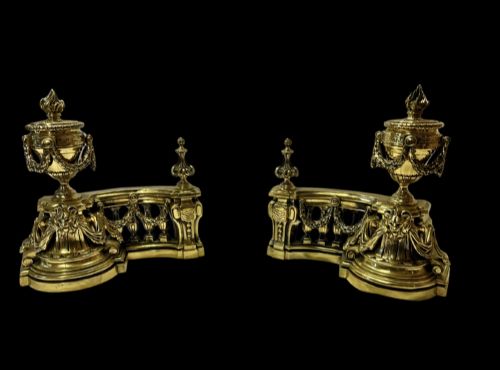
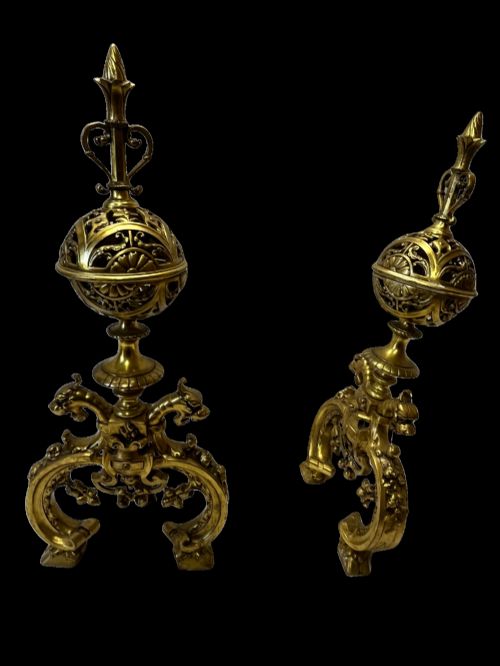
French style chenets are decorative fireplace accessories designed to support logs above the hearth for better airflow, appearing here primarily as pairs from the nineteenth century. These heavy metal supports take the form of andirons or fire dogs, standing guard at the front of the hearth while serving both practical and ornamental purposes.
The pieces you meet most often on this page date from the eighteen-seventies and eighteen-eighties, reflecting Victorian interpretations of earlier continental designs. They arrive in heavy metals and cast forms, showing the enduring British appetite for grand French interior decoration during the latter half of the nineteenth century.
How they were made
Foundry work relies heavily on cast iron, cast brass, and bronze, providing the robust structural core needed to withstand intense hearth heat. These foundational metals are frequently combined with finer surface treatments.
Gilt bronze, ormolu, and patinated bronze finishes provide the rich decorative contrast characteristic of these revival pieces. Surface gilding and dark patination highlight the intricate figural and scrollwork casting details.
Listings feature nineteenth-century pieces spanning the eighteen-seventies and eighteen-eighties alongside general Victorian examples.
What varies in quality
The refinement of the casting work dictates the distinction between standard production and exceptional examples. Crisp details in figural elements and ornament separate superior pairs from simpler cast iron and brass designs.
The choice of surface treatment marks the upper tier of the range, particularly the depth and application of ormolu or gilt bronze. Heavier bronze foundations and adjustable width mechanics also signal more ambitious manufacturing.
The French Style Chenets Glossary
- Chenet
- An alternative term for an andiron or fire dog, used specifically for ornamental metal hearth supports. These pieces sit at the front of the fireplace.
- Ormolu
- Gilt bronze created by applying a finely ground high-carat gold mercury amalgam to a bronze object. The technique produces a rich golden surface finish.
- Andiron
- A horizontal metal support raised on legs, designed to hold logs in an open fireplace. They typically feature an ornate vertical front plate.
- Patinated bronze
- Bronze treated chemically or naturally to produce a darkened or coloured surface layer. This finish adds visual depth to figural castings.
French Style Chenets: Frequently Asked Questions
What are french style chenets?
These metal fireplace accessories function as decorative andirons that elevate logs within an open hearth. They originated as practical hearth equipment before evolving into highly ornamental sculptural statements.
Nineteenth-century makers produced them in heavy metals like bronze, brass, and iron to replicate grand continental styles. They remain decorative focal points even when the fireplace is not in use.
How were they used?
Pairs of chenets stood at the front of the hearth to keep firewood raised off the floor for improved airflow. Their decorative fronts shielded the brickwork and framed the fire.
Beyond burning logs, they acted as prominent indicators of status and taste within nineteenth-century reception rooms. Their substantial weight kept them firmly positioned against rolling timber.
How do I live with them?
Place a pair inside a disused fireplace opening to bring architectural structure and historical character to a room. Their reflective gilt and bronze surfaces catch ambient light effectively.
Keep them away from excessive moisture and clean them only with a soft dry cloth to preserve delicate gilding and patination. They anchor a room with distinct nineteenth-century presence.
How do I tell styles apart?
Rococo revival pieces display asymmetrical scrollwork, flowing curves, and organic motifs derived from mid-eighteenth-century French design. Louis XIV style examples instead favour heavier symmetry, classical foliage, and grand Baroque architectural elements.
Nineteenth-century copies often blend these historical idioms with Victorian manufacturing methods. Examining the weight, casting crispness, and metal combinations helps identify the period approach.