

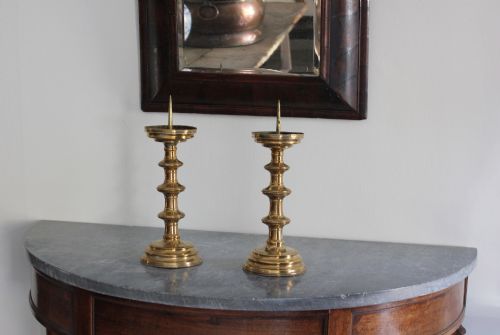


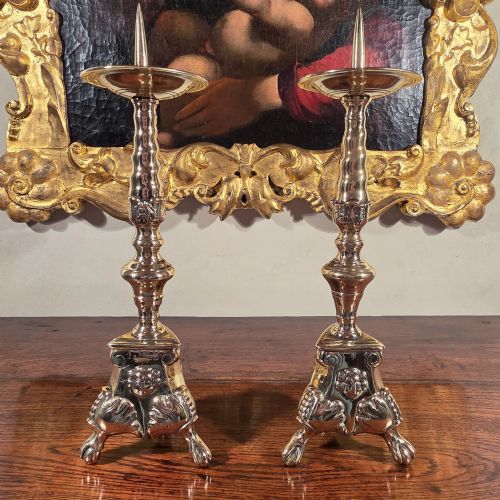


Brass Altar Holders
These brass altar holders span centuries of ecclesiastical craft, offering heavy cast metal and architectural presence for the home.
Brass Altar Holders
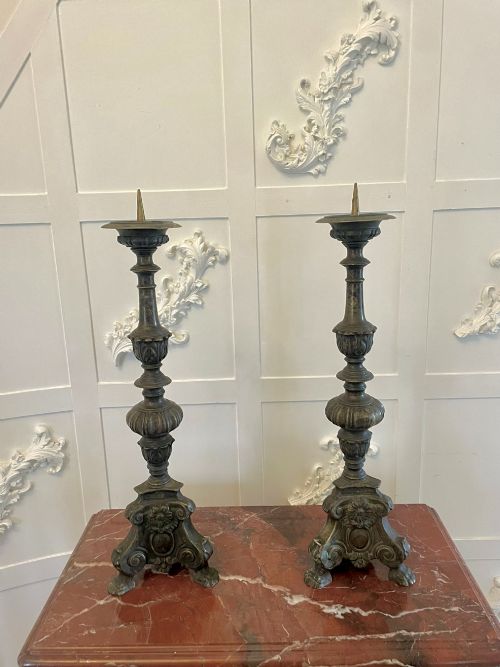
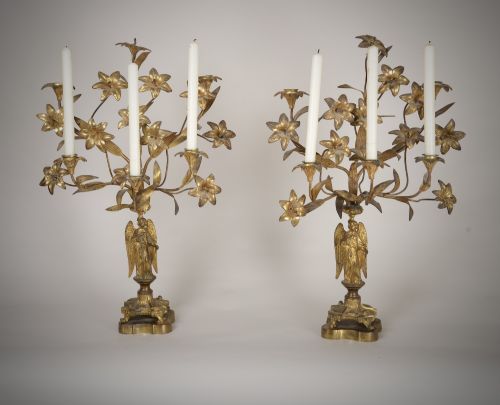
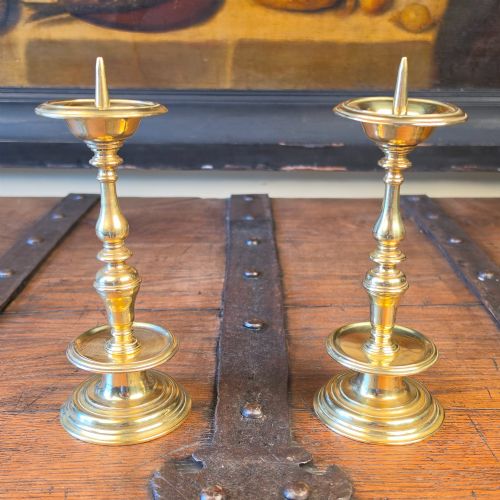
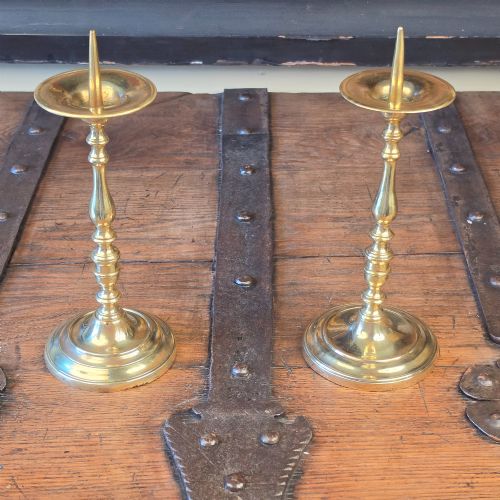
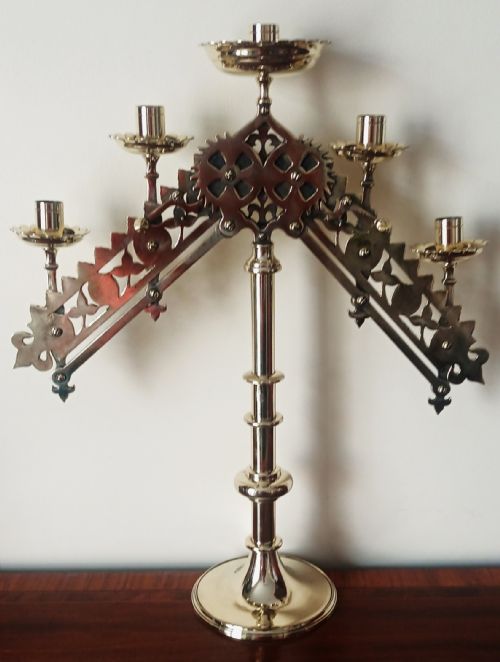
When you search for brass altar holders, you encounter heavy ecclesiastical furnishings designed to support candles or censers in religious spaces. The selection includes tall pricket candlesticks with spike terminals, multi-branch candelabra, and standard socket candlesticks spanning several centuries.
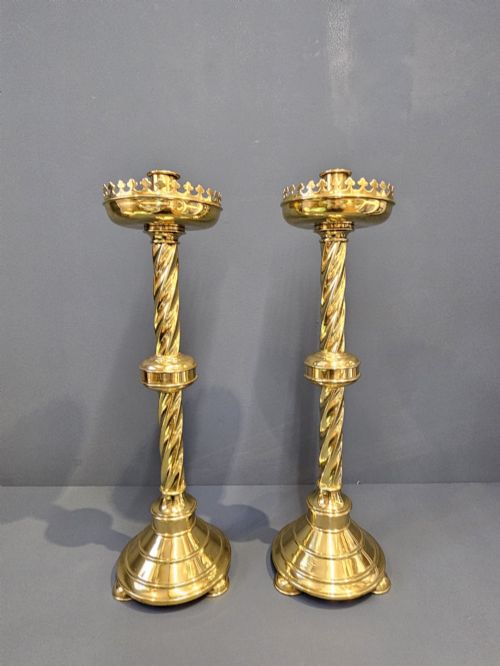
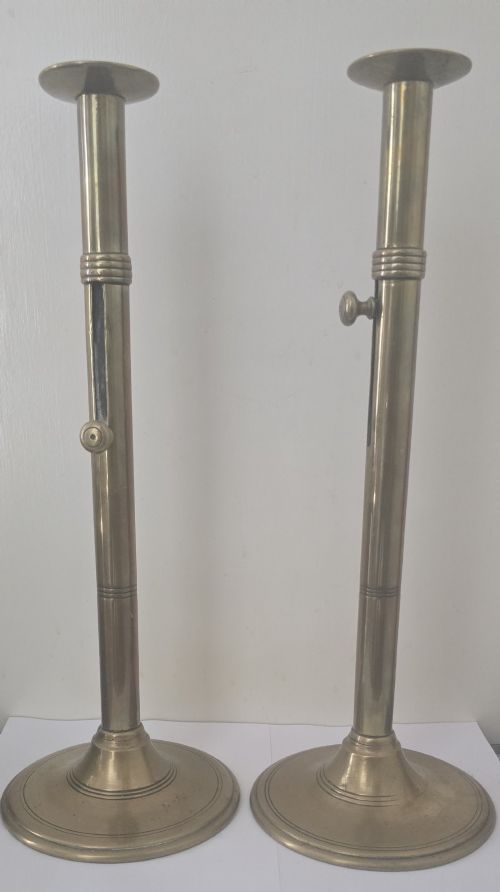
Victorian church candlesticks dominate the available forms, often displaying Gothic Revival motifs or classic Corinthian columns. Pieces range from modest nineteenth-century table items to massive heavy church furnishings standing over a metre in height.
Origin and period vary widely, taking in English workshops, French ecclesiastical foundries, and Flemish designs alongside later Amsterdam School interpretations. Buyers frequently select matched pairs or graduated sets intended originally for church altars.
Materials and construction methods
Foundries utilised cast brass and bronze, often working the metal into substantial weights to support tall tapers safely. Many examples combine cast components with turned sections, while gilt finishes and applied ormolu provide decorative surface contrast.
Secondary materials appear in specific designs, incorporating wrought iron supports, carved oak stems, and wooden bases that anchor the heavy metal tops. Construction techniques rely on threaded central rods, heavy rivets, and socket joints to unite the multi-part assemblies.
The inventory includes nineteenth-century church candlesticks alongside seventeenth-century style pieces and twentieth-century Arts and Crafts items.
Assessing quality and proportion
Quality rests in the crispness of the casting detail, the weight of the metal, and the integrity of the proportions across tall stems and broad bases. Superior examples maintain balance and clean architectural lines without excessive surface clutter.
The distinction between standard production items and finer pieces lies in hand-finishing, such as chased surface decoration, substantial gauge brass, and original patination earned through decades of ecclesiastical use.
The Brass Altar Holders Glossary
- Pricket candlestick
- A candle holder featuring a vertical metal spike that impales the base of the candle rather than sliding into a socket.
- Candelabra
- A branched lighting fixture designed to hold multiple candles simultaneously from a single central stem.
- Censer
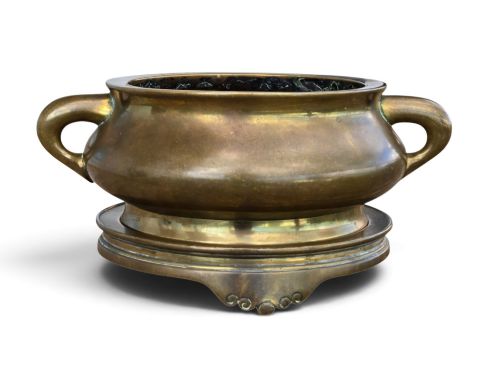
- A suspended or freestanding metal vessel used for burning incense during religious rituals and ecclesiastical ceremonies.
- Ormolu
- Gilded bronze applied to furniture or decorative metalwork to provide a bright, gold-coloured finish.
- Corinthian column
- An architectural column style featuring an ornate capital decorated with acanthus leaves, frequently emulated on tall candlesticks.
Brass Altar Holders: Frequently Asked Questions
What is the difference between a socket and a pricket?
A socket holds a standard cylindrical candle inside a cup or tube. A pricket relies on an upward-pointing spike that pushes directly into the base of the candle.
Pricket holders appear more frequently on historical church pieces because ecclesiastical candles lacked standard base widths.
How do I clean antique brass holders?
Dust the metal gently with a soft dry cloth to preserve the dark patination accumulated over generations. Avoid abrasive chemical polishes that strip away the aged surface character.
Gentle wiping maintains the stability of any original gilt or bronze finishes without altering the historic appearance.
Can these altar pieces hold normal candles?
Pricket holders require candles with soft bases that accept the metal spike without splitting. Socket versions accommodate standard tapers provided the diameter matches the opening.
Adapters or careful trimming may be necessary when using modern candles in antique ecclesiastical sockets.
How can I date a brass candlestick?
Dating relies on stylistic clues like Gothic Revival motifs, construction seams, and the weight of the cast metal. Nineteenth-century examples often feature machine tooling or heavier standardised components compared to earlier hand-finished work.
Comparing base designs, casting methods, and known period proportions helps establish the approximate decade of manufacture.