
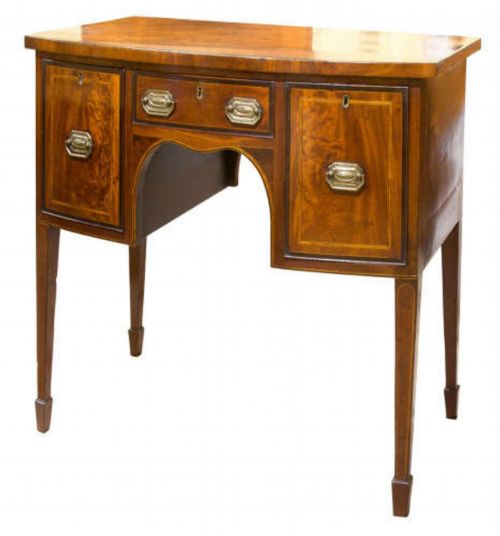
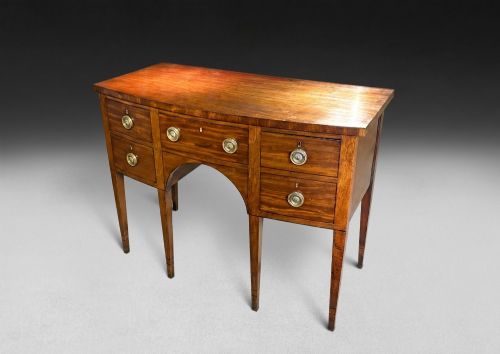
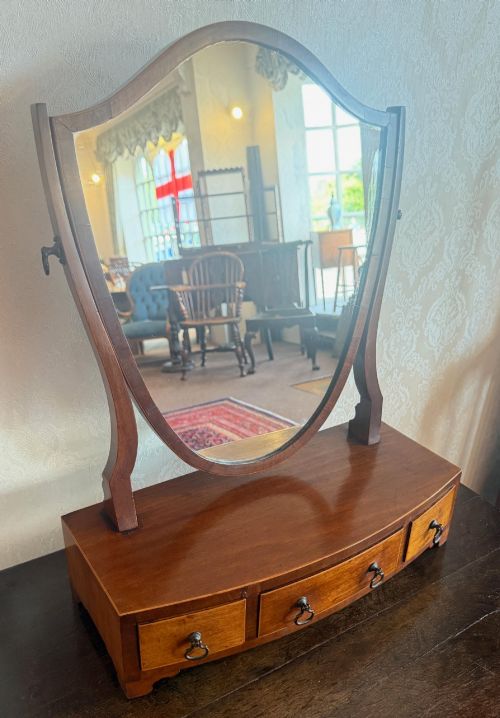
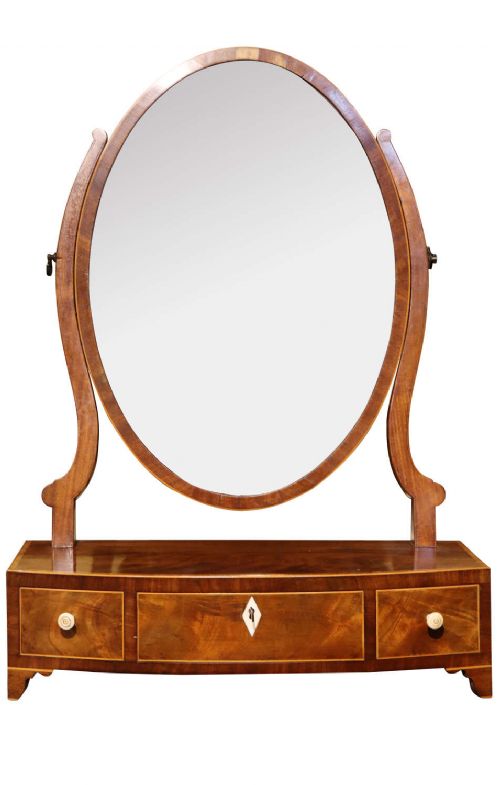

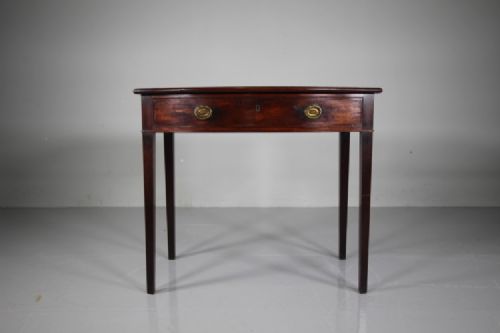


Bowfront Dressing Table
A bowfront dressing table brings a curved, elegant silhouette to a room, offering surface space and drawers shaped to the distinctive sweeping front.
Bowfront Dressing Table
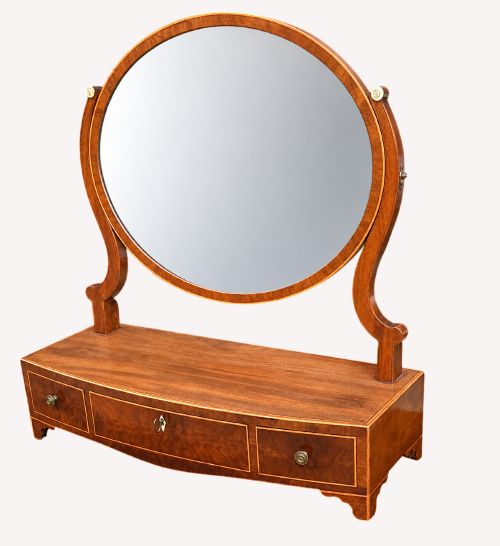
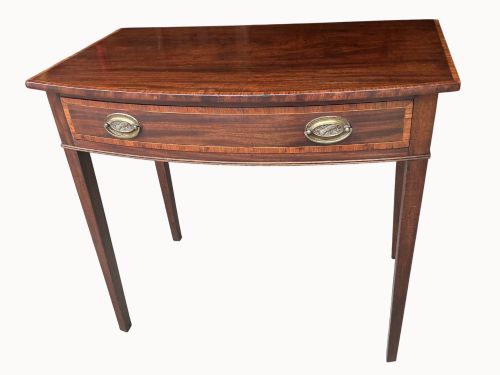
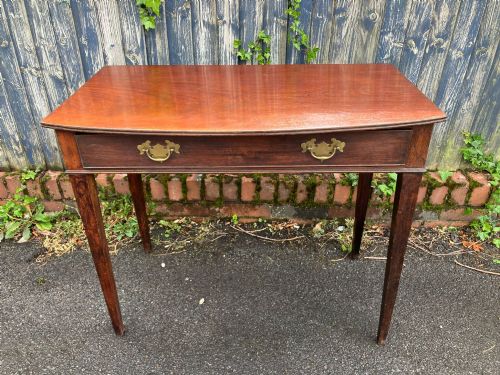
A bowfront dressing table combines the curved forward projection of the cabinetwork with a surface used for grooming and writing. You will encounter forms originating from the Georgian, Regency, and Victorian periods, often constructed with multiple drawers.
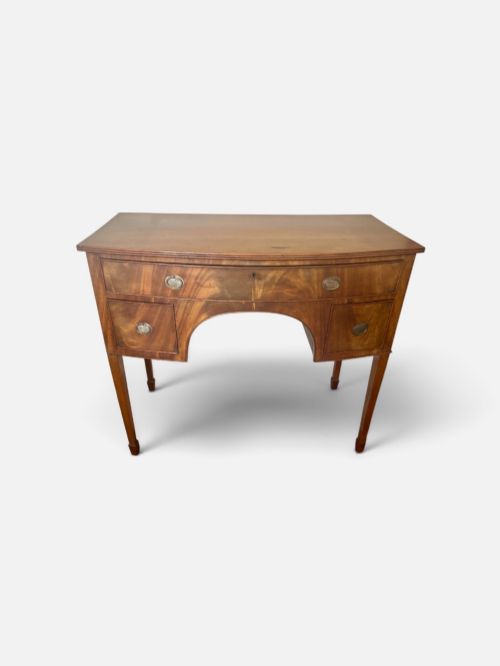
The evidence shows that these pieces frequently overlap with side tables, writing desks, and kneehole configurations. Makers built them to sit comfortably against a wall while providing practical storage beneath a polished top.
Many surviving examples date from the eighteenth and nineteenth centuries, reflecting the enduring popularity of the bowed shape. Simpler versions sit alongside inlaid pieces carrying Sheraton or George III design influences.
Materials and construction methods
Cabinetmakers relied heavily on mahogany as the primary timber, frequently selecting flame veneers or incorporating boxwood and bone inlay to define the curved edges. Oak often served as the structural lining for drawer interiors.
Glass and mirror glass appeared in associated dressing mirrors, while brass hardware furnished the drawer pulls and handles. Wood inlay and ebonised details added contrast to the rich brown tones of the primary timber.
One small pine survivor from the eighteen-thirties proves that even modest woods received the fashionable curved treatment.
Assessing quality and execution
Quality rests in the precision of the curved front and how cleanly the drawers follow the radius of the bow. Superior examples display careful timber selection, such as matching flame mahogany grains across the drawer fronts.
Fine secondary woods and neat dovetail joinery inside the drawers indicate competent workshop practice. The crispness of inlaid stringing and the integration of original brass fittings further distinguish finer work from standard production.
Maples
The Bowfront Dressing Table Glossary
- Bowfront
- A convex, outward-curving cabinet front that swells outward at the centre. This shape defines the main visual characteristic of the furniture listed.
- Crossbanding
- A strip of veneer applied across the grain of the primary surface to form a decorative border. It often frames the edges of the top surface or drawer fronts.
- Kneehole
- A recessed central space beneath a desk or dressing table designed to accommodate the sitter's legs. It is typically flanked by vertical stacks of small drawers.
- Inlay
- Pieces of contrasting material such as boxwood, bone, or ebony fitted into the wood surface to create decorative patterns. This technique highlights structural lines and borders.
- Dovetail
- A traditional interlocking joint used to secure drawer corners together. Skilled execution of this joint ensures long-term structural durability.
Bowfront Dressing Table: Frequently Asked Questions
What is a bowfront dressing table?
A bowfront dressing table is a low table featuring a convex curved front and fitted drawers, designed for personal grooming.
Such furniture frequently dates from the Georgian and Regency eras, combining surface utility with decorative curved cabinetry.
How were they used historically?
These pieces served as dedicated stations for morning dressing, ablutions, and correspondence in period bedchambers.
The drawers held cosmetics, brushes, and documents, keeping personal items close at hand beneath the main surface.
How do I date a bowfront dressing table?
Dating relies on examining timber species, construction techniques like drawer dovetailing, and stylistic markers such as inlay or leg shape.
Georgian and Regency pieces typically show hand-cut joinery and native hardwoods like mahogany, whereas later Victorian or Edwardian interpretations introduce different secondary woods.
Where should I place one at home?
They suit bedrooms as functional dressing surfaces or hallways and living rooms as decorative side tables.
The curved profile allows them to soften corners and sit neatly against flat walls while offering useful surface space.