

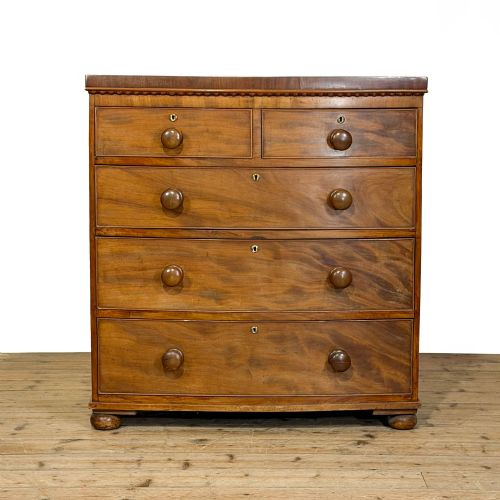
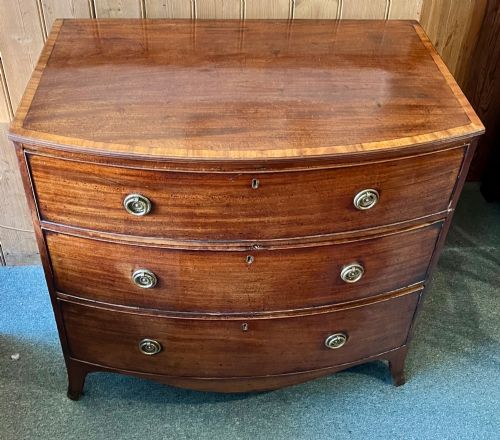
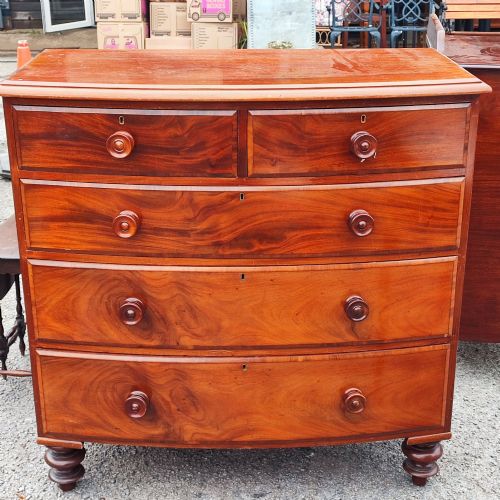
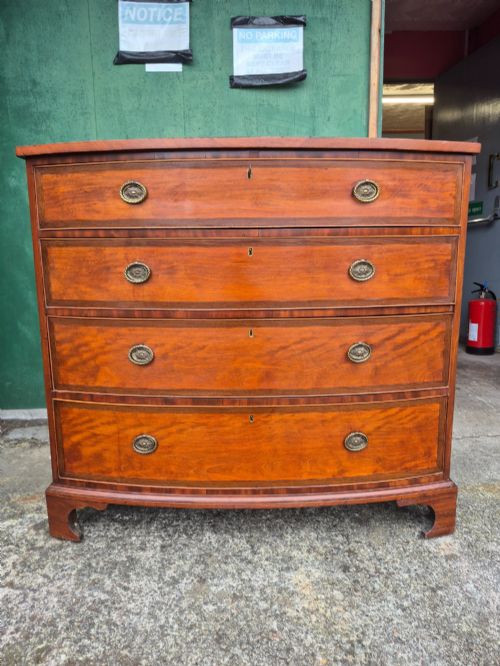
Bowed Front Wooden Chest
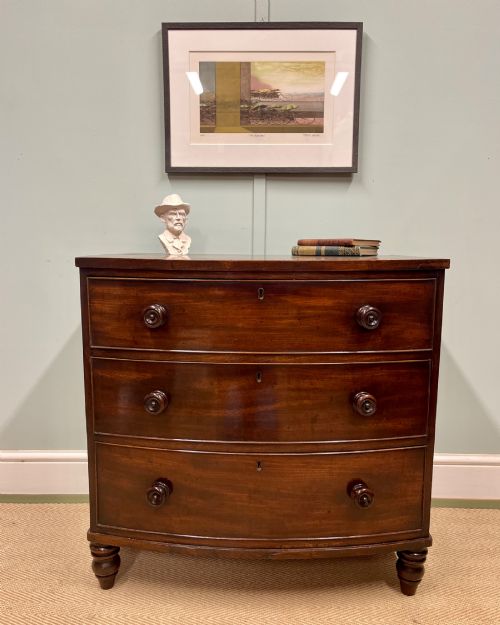
A bowed front wooden chest brings gentle curvature and rich timber grain to a room while offering deep, practical storage.
Bowed Front Wooden Chest
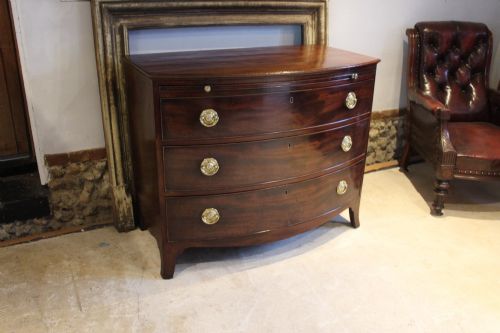
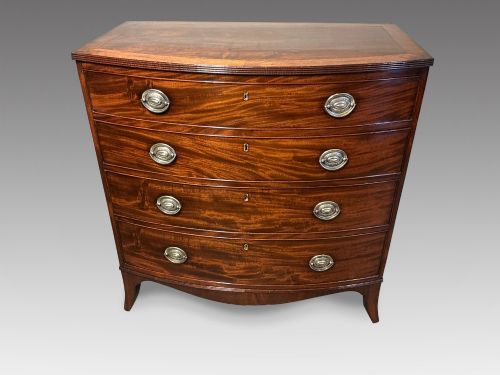
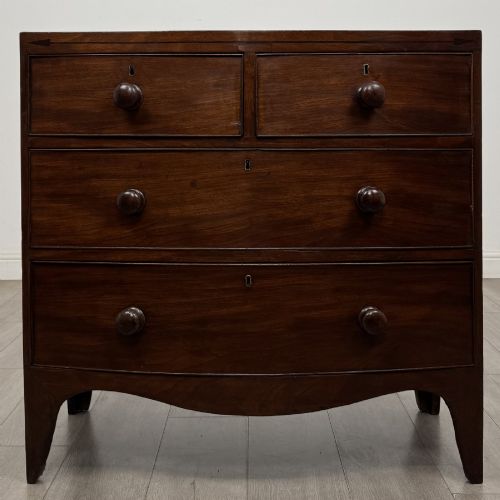
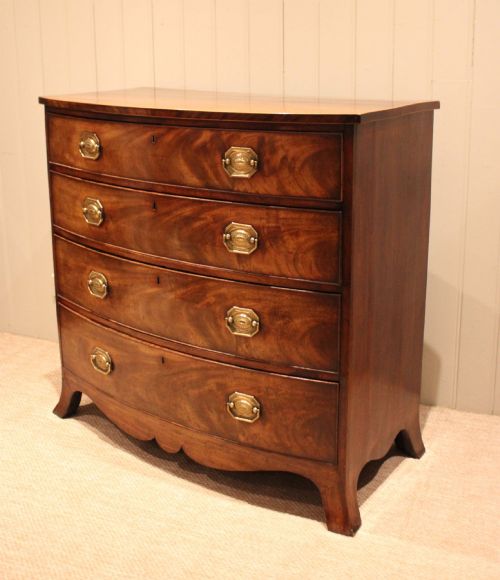
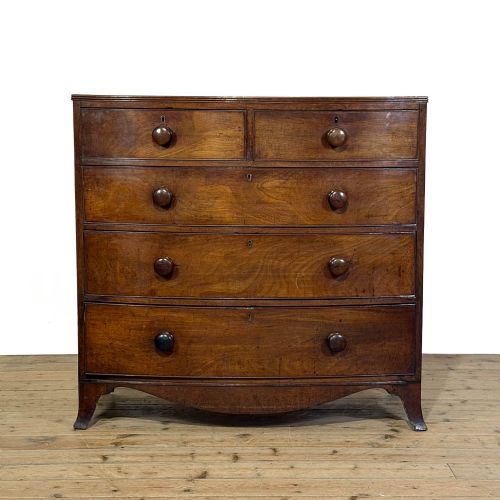
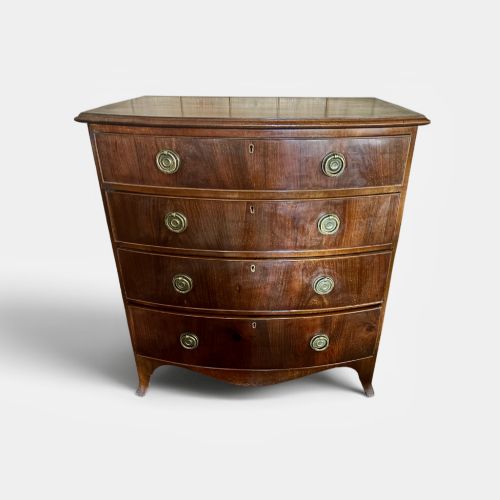
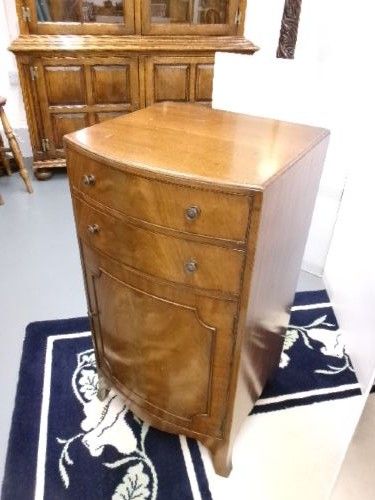
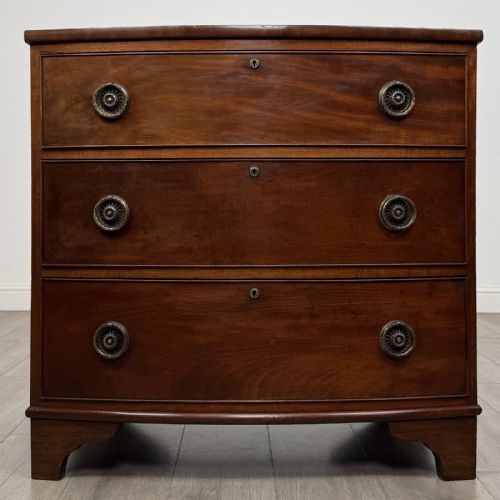
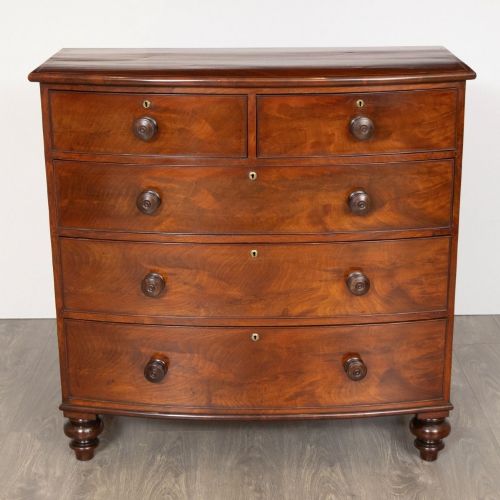
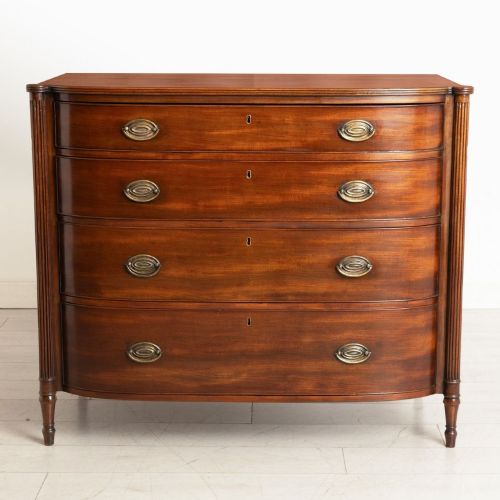
A bowed front wooden chest is a storage piece defined by its convex curved facade, most frequently encountered here as a mahogany chest of drawers spanning the Georgian, Regency, and Victorian periods. These pieces range from substantial tallboys and linen presses down to small bedside chests and miniature furniture.
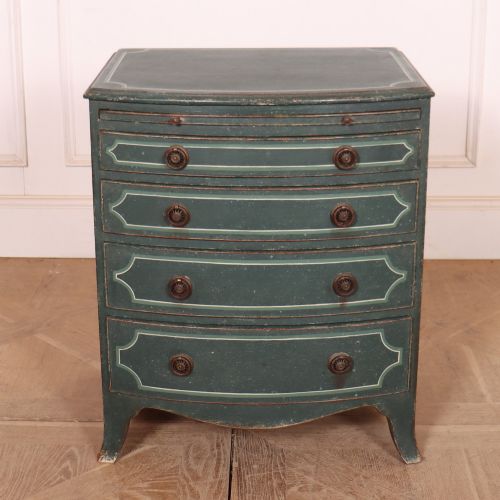
The selections on this page draw heavily from George III workshops and the Regency era, alongside examples stretching into the Edwardian years and occasional painted or pine variations. Buyers will find both full-sized drawer configurations with graduated depths and specialised variants like cupboards and cabinets.
Timbers and construction techniques
Cabinetmakers constructed these carcases primarily from solid mahogany and pine, often selecting flame mahogany or figured timber for the main drawer fronts to create striking visual movement. Satinwood crossbanding frequently borders the top surfaces and drawer edges to provide crisp linear contrast.
Makers shaped the convex curves by carefully bending timber or building up solid blocks before applying fine veneers, securing the drawers with brass handles and operational locks. Secondary woods like oak and pine appear within the internal drawer linings and backboards.
Bowed Front Wooden Chest Retail Price Guide 2026
Typical asking prices for bowed front wooden chest among the pieces listed under this phrase on Sellingantiques today, from the lower quarter to the upper quarter. They describe what is for sale here now, not the wider market.
Object forms vary from full-scale chests of drawers and tallboys down to miniature marquetry furniture and bedside cupboards.
Distinctions in construction and design
Superior examples display exceptional figure within the mahogany veneers, matched grain patterns across successive drawer fronts, and precise satinwood crossbanding that enhances the sweeping curve. The quality of the brass hardware and the neatness of the dovetail joints reveal the skill invested by the original cabinetmaker.
Proportion and scale heavily influence the standing of a piece, with smaller bedside chests and diminutive drawer counts often commanding particular attention from collectors. The crispness of the moulded edges and the smoothness of the graduated drawers separate standard workshop production from finer cabinet work.
The Bowed Front Wooden Chest Glossary
- Bow front
- A convex curved cabinet front that swells outward from the corners, softening the rectilinear profile of standard furniture. This shape requires advanced woodworking skill to veneer and fit accurately.
- Graduated drawers
- A series of drawers arranged vertically where each successive drawer deepens from top to bottom. This traditional arrangement provides stability of proportion and accommodates items of varying bulk.
- Crossbanding
- A decorative border of veneer laid around the perimeter of a drawer front or tabletop so that the grain runs perpendicular to the main panel. It creates a framed visual effect using contrasting timbers such as satinwood.
- Flame mahogany
- A highly figured cut of mahogany grain resembling flickering flames, achieved by harvesting wood from the fork of the tree where branches meet the trunk. Cabinetmakers reserved this striking material for principal display surfaces.
- Brushing slide
- A pull-out shelf integrated above the top drawer of a chest, historically used for folding garments or inspecting items before dressing. It operates on discreet runners hidden beneath the upper moulding.
Bowed Front Wooden Chest: Frequently Asked Questions
Where should I place a bowed front wooden chest?
These pieces suit bedrooms, hallways, and living spaces where their curved profiles soften harsh corners and add architectural interest.
Ensure the room has sufficient clearance for the protruding convex front and that drawers can extend fully without obstruction.
How do I distinguish a Georgian chest from a Victorian one?
Georgian and Regency pieces typically display lighter proportions, finer mahogany veneers, and delicate crossbanding with subtle bracket feet or swept apron details.
Victorian iterations often feature denser timbers, heavier turned feet, and deeper drawer configurations associated with later industrial production methods.
Can I store heavy clothing in these drawers?
Solid mahogany and oak-lined drawers are structurally robust and easily handle heavy garments, linens, and everyday wardrobe items.
Graduated drawer depths allow you to organise lighter items near the top and bulkier woollens in the deeper lower compartments.
How do I care for polished mahogany surfaces?
Maintain the finish by dusting regularly with a soft, dry cloth and applying natural beeswax periodically to nourish the historic timber.
Avoid placing these chests in direct sunlight or near heat sources to prevent the veneers from drying out and lifting.