
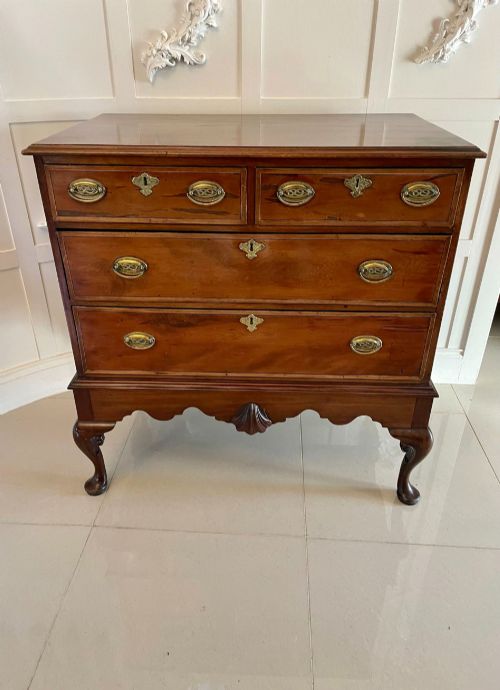
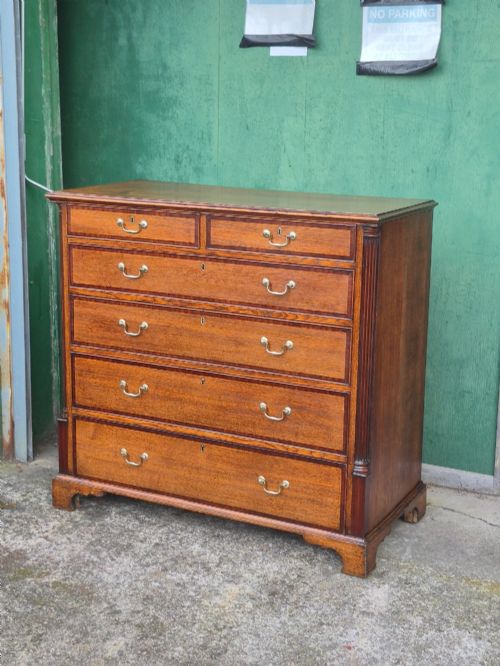
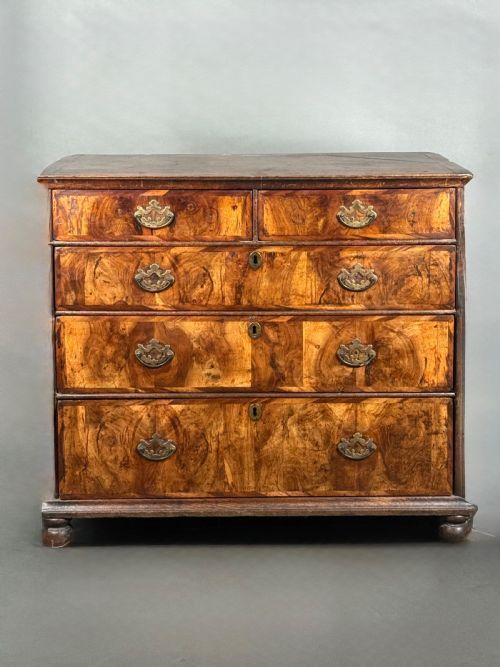
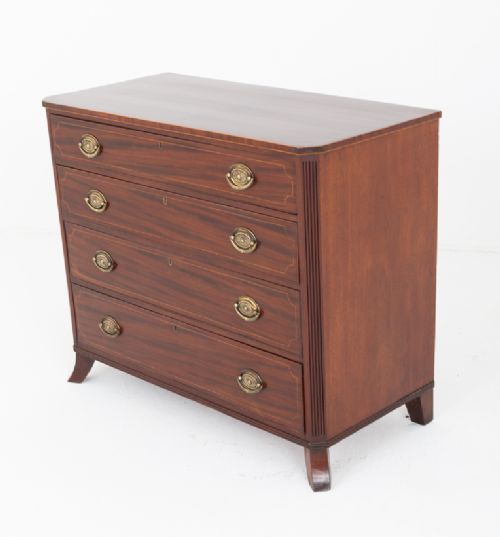
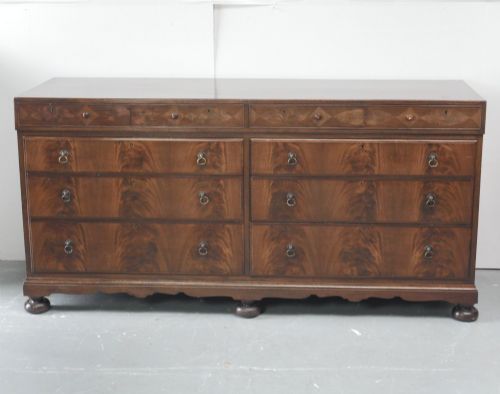
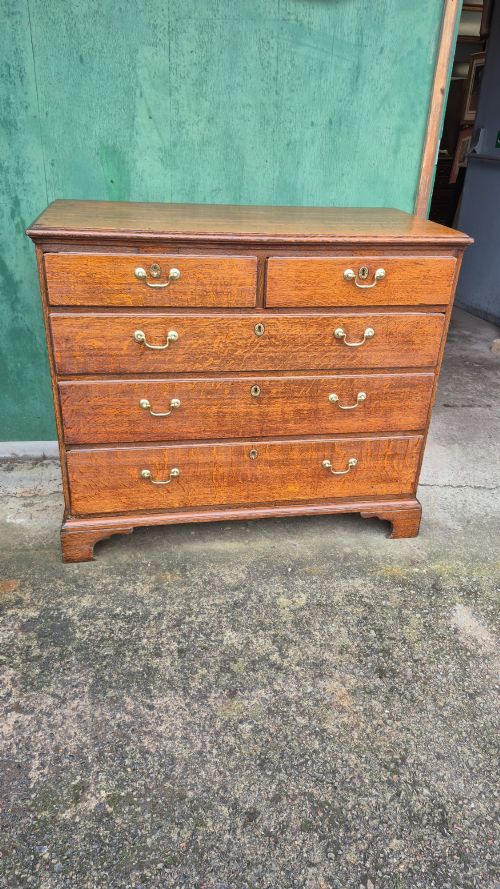
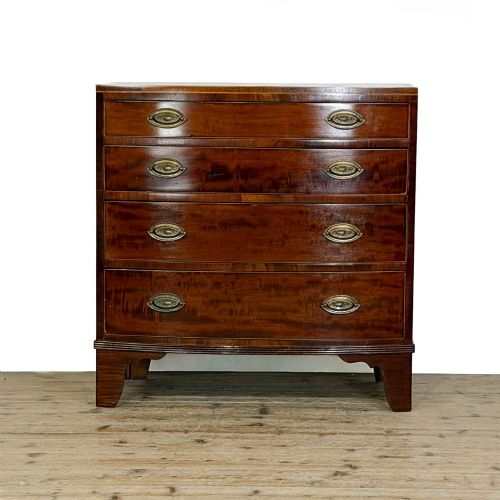
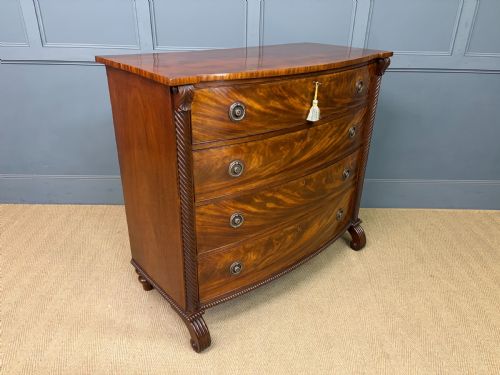
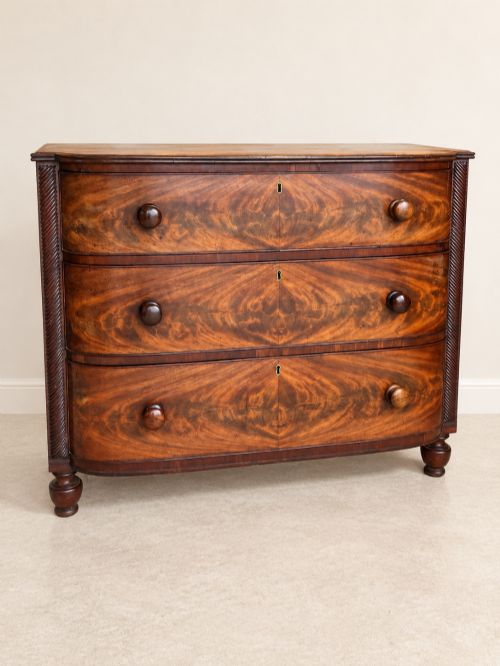
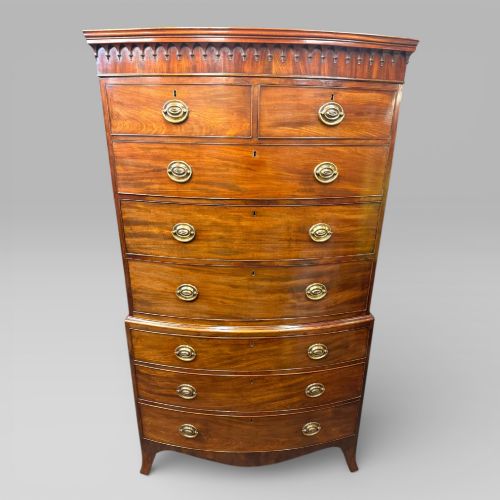
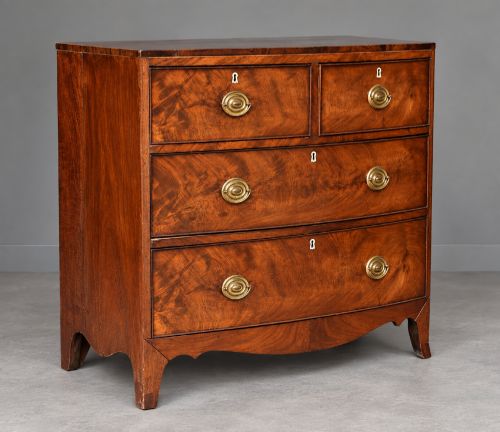


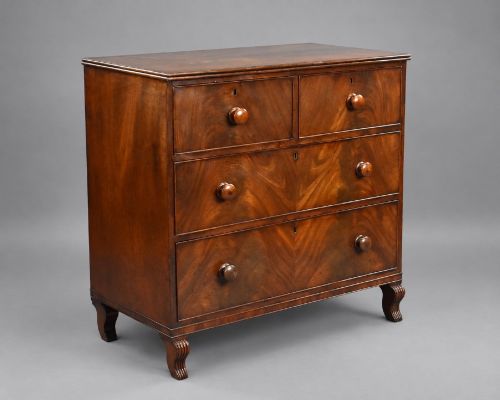
Georgian Wooden Tallboy
A georgian wooden tallboy is a commanding piece of period storage, stacking capacity high without claiming excess floor space in a room.
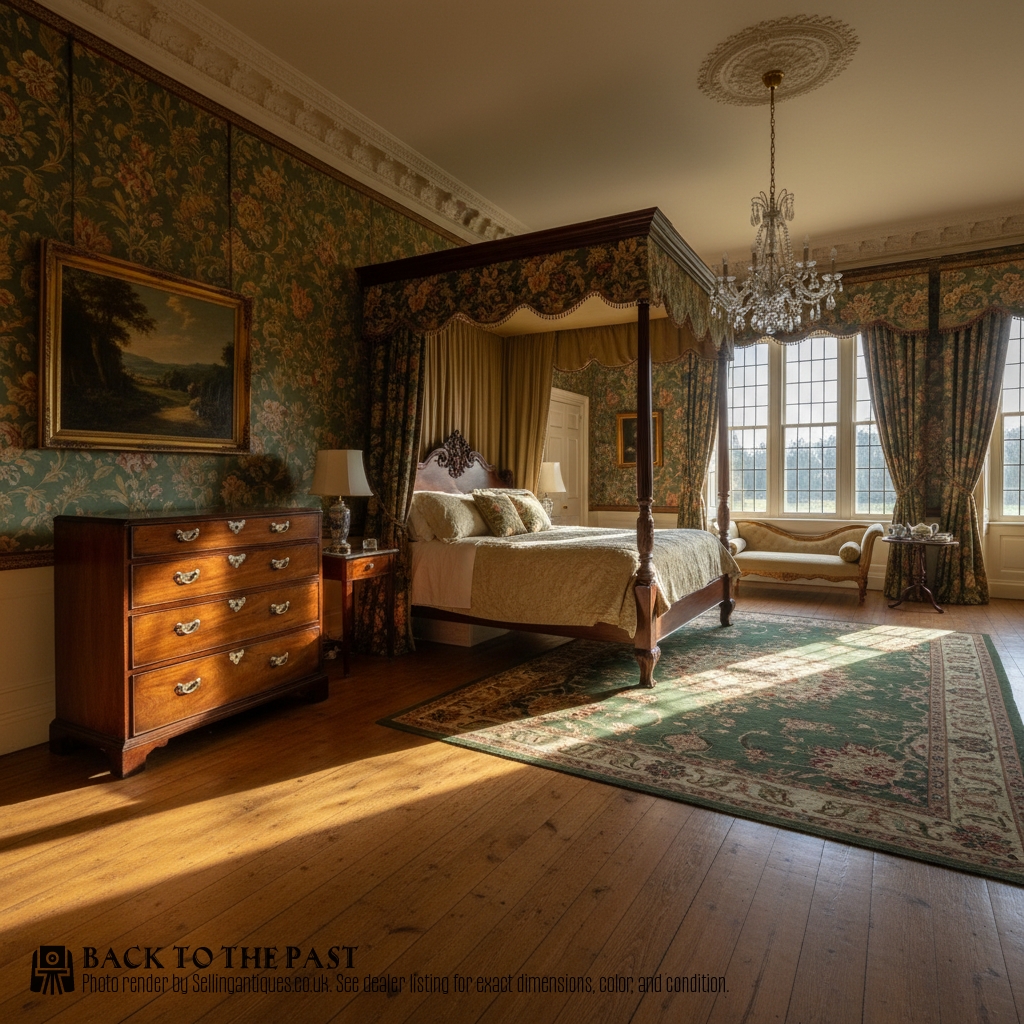
Georgian Wooden Tallboy
A georgian wooden tallboy represents the pinnacle of domestic cabinetry, designed to hold linen, garments, and valuables within vertically stacked compartments. While strict tallboys or chests on chests appear alongside chest of drawers variants on this page, the core function remains the storage of household goods.
Buyers will encounter multiple regional interpretations and timber selections across the listings here. These tall forms draw heavily on Georgian, Regency, and Queen Anne design idioms, often incorporating bow fronts or straight profiles depending on the exact decade of manufacture.
Materials and construction
Cabinetmakers relied on dense hardwoods such as mahogany, oak, and walnut, frequently applying flame mahogany veneer or burr walnut to the primary display surfaces. These timbers provided both structural stability and rich grain patterns that responded well to hand polishing.
Joinery techniques relied on dovetailed drawer boxes and solid timber framing, finished with brass handles and escutcheons. Crossbanding in contrasting timbers such as satinwood added subtle borders to drawer fronts and tabletops.
Secret compartments tucked behind moulding strips sometimes reward those who inspect the internal framing.
Assessing quality in tall storage
Quality rests in the selection of figured timber and the crispness of the secondary wood used inside the drawer linings. Superior examples exhibit book-matched veneers and precise dovetailing that has remained tight through centuries of movement.
Proportion and surface preservation dictate the standing of a piece within its period. Refined execution shows in the delicate integration of brass hardware and the untouched warmth of the original polish.
Whytock & Reid·J Moorcroft
The Georgian Wooden Tallboy Glossary
- Tallboy
- A tall chest of drawers, often constructed as one chest stacked upon another chest of similar proportions. This form maximises storage capacity while maintaining a modest footprint on the floor.
- Bow front
- A cabinet front that curves outward in a convex shape across the width of the drawers. This styling became particularly popular during the Regency and late Georgian periods.
- Crossbanding
- A decorative border of veneer laid around the edges of a drawer front or top with the grain running perpendicular to the main panel. It creates a neat visual frame for the figured wood inside.
- Brushing slide
- A pull-out shelf integrated into the chest framework, historically used for folding clothes or inspecting garments. It sits discreetly above the main drawers when not in use.
- Dovetail
- An interlocking joint used at the corners of drawer construction, prized for mechanical strength. Hand-cut variations indicate older periods of craftsmanship.
Georgian Wooden Tallboy: Frequently Asked Questions
What is a tallboy?
A tallboy is a vertically stacked chest of drawers designed to provide substantial storage capacity within a compact floor area. The form typically places one case piece directly on top of another.
Historically used in bedrooms and dressing rooms, these pieces held linens and garments securely while saving valuable floor space in period homes.
How do I style a tallboy?
Placing a tallboy in a bedroom or hallway allows the vertical height to balance other low-profile furniture. Keep the top surface uncluttered to let the timber grain and proportions remain the visual focus.
Pair the piece with traditional or transitional furnishings to complement the warmth of the wood and the period brass hardware.
How do I date a tallboy?
Dating relies on examining the construction methods, timber choices, and hardware styles. Hand-cut dovetails and solid secondary woods often point toward earlier Georgian or 18th-century origins.
Later revival pieces or 20th-century interpretations frequently display machine-made elements and different internal construction standards beneath the surface veneer.
What timbers were used?
Cabinetmakers primarily worked with mahogany, oak, and walnut, often selecting figured veneers for the drawer fronts. Secondary timbers like pine or oak appear inside the drawer boxes.
Inlays and crossbanding utilised contrasting woods such as satinwood to accentuate the geometric lines of the casework.