


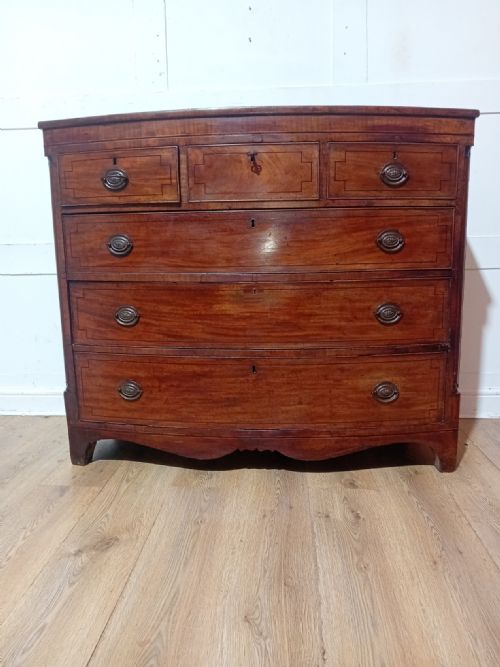

George III Bowfront Chest
A george iii bowfront chest brings curving Georgian elegance to a room, offering generous storage without heavy corners.
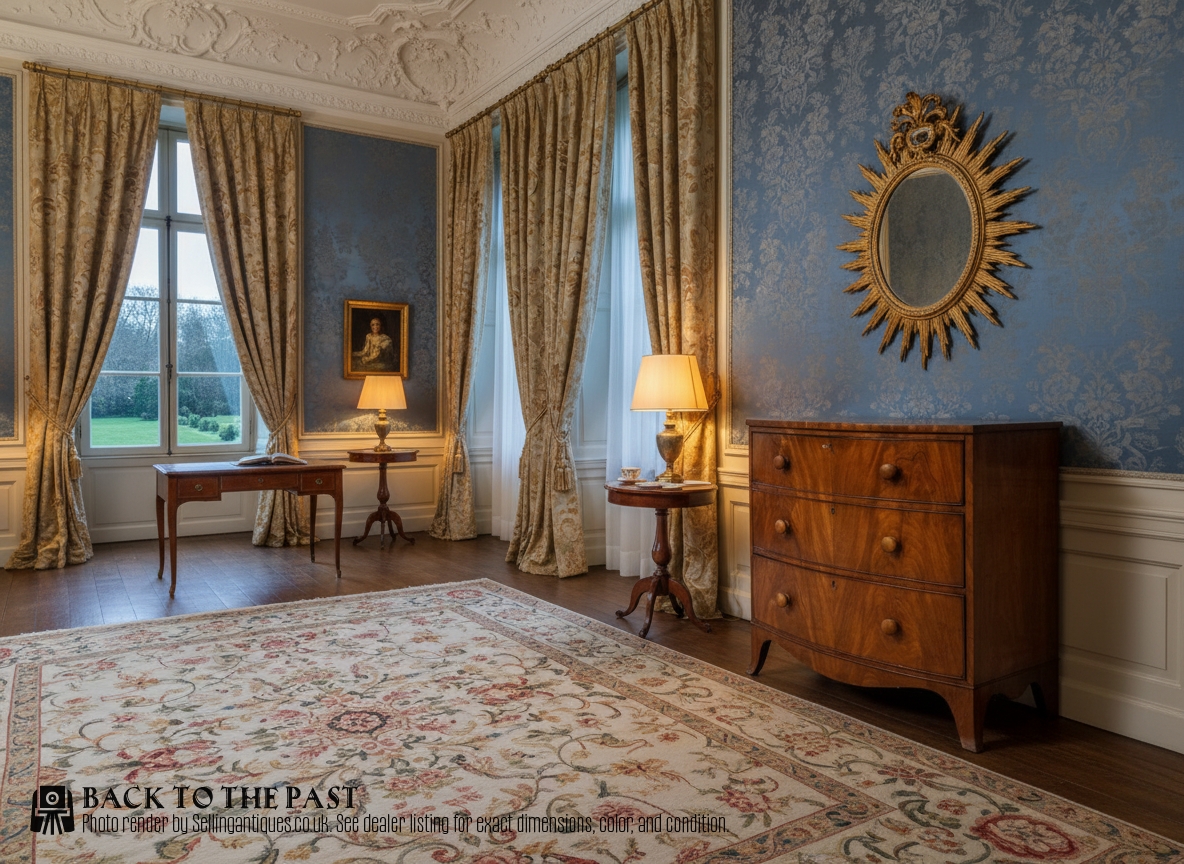
What They Are
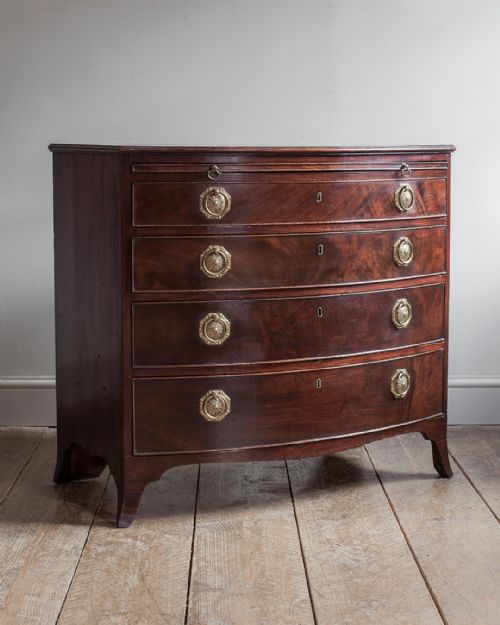
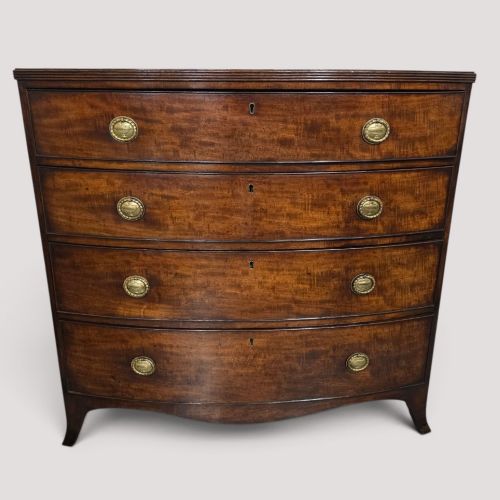
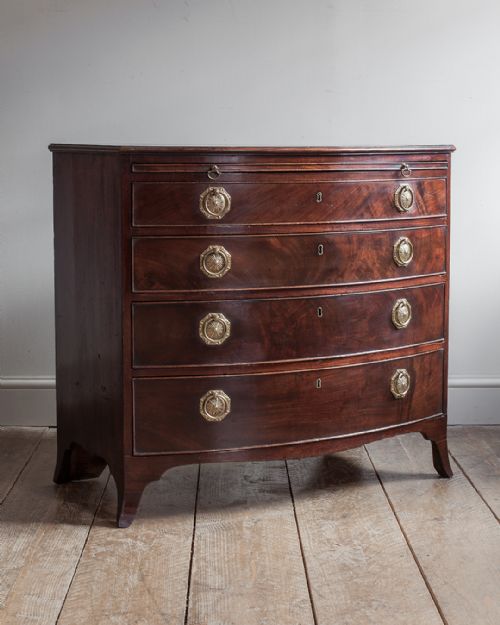
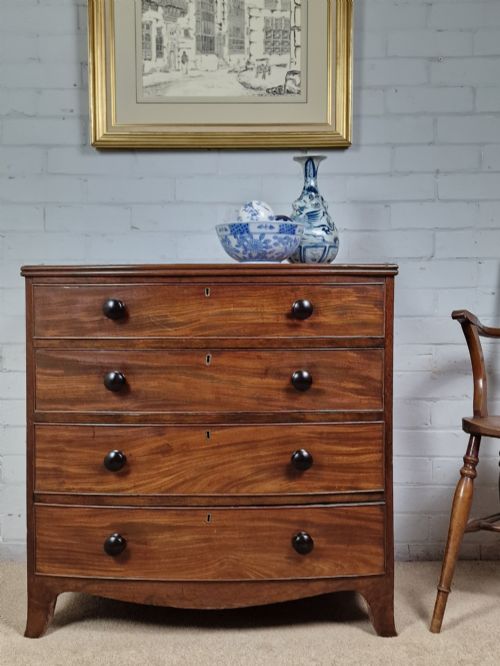
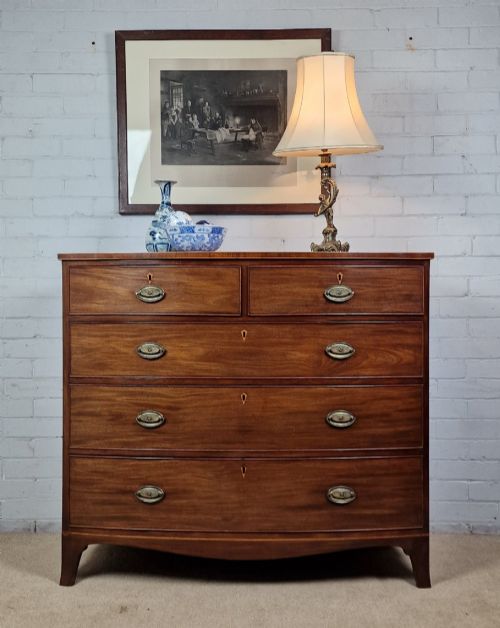
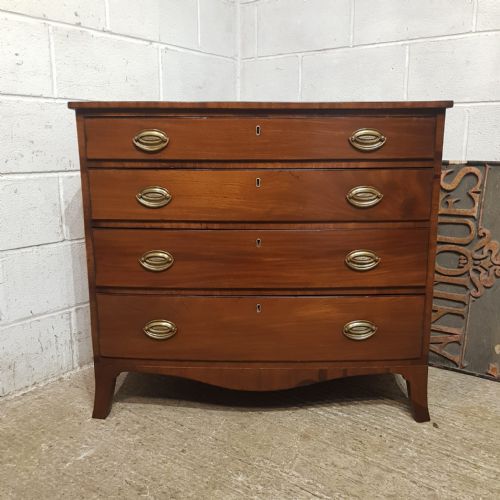
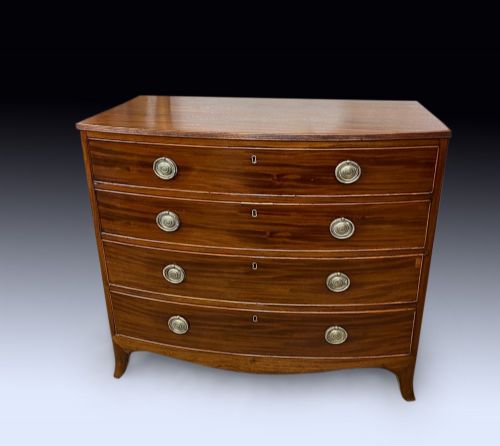
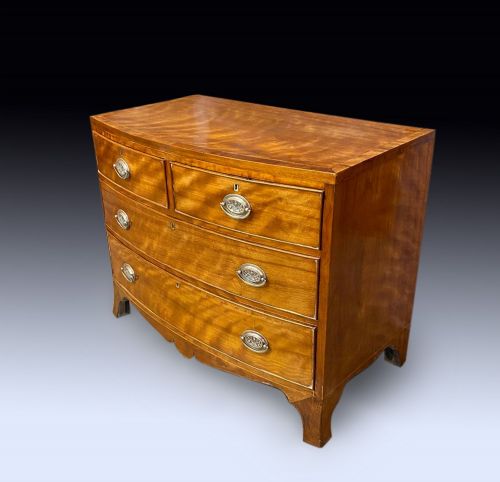
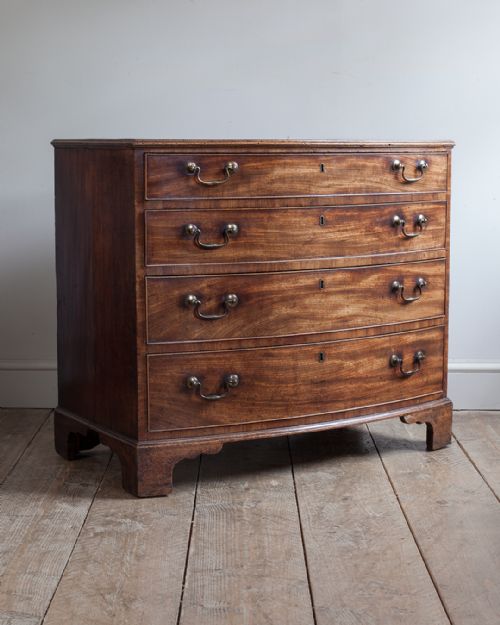
A george iii bowfront chest presents a convex curved front that softens the silhouette of traditional bedroom furniture. These pieces span the late eighteenth century into the early nineteenth century, emerging from the Georgian period with characteristic restraint and proportion.
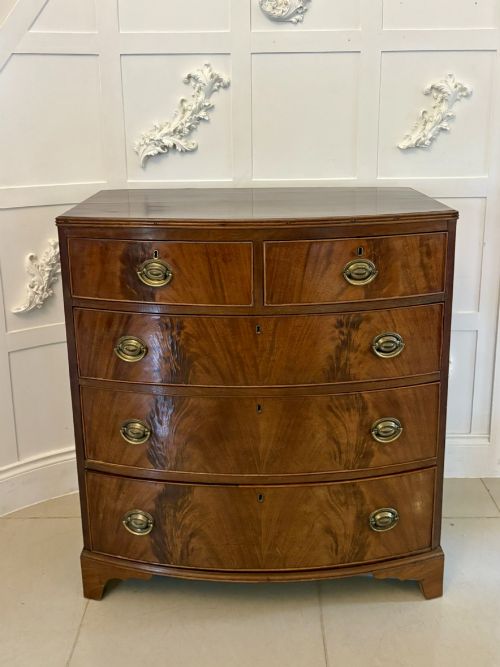
Most examples function as chests of drawers, often arranged with shorter top drawers above deeper ones. Variations include neat-sized and small proportions, alongside taller chest-on-chest forms and dressing chest variants.
Mahogany dominates the surviving record, frequently paired with secondary woods like oak. Cabinetmakers employed solid timber alongside veneers, occasionally incorporating satinwood or tulipwood banding to define the curved outlines.

How They Were Made
Cabinetmakers constructed these carcases using dense timbers such as mahogany and oak, building robust frames designed to house multiple drawers. Drawer linings typically utilise oak or other sturdy secondary woods, joined with traditional hand-cut dovetails.
The curved front required careful bending or shaping of solid timber and applied veneers to achieve a smooth, consistent sweep. Brass hardware, including drop handles and escutcheons, completed the construction, fastened securely to the drawer fronts.
Retail Price Guide 2026
Typical UK retail prices for george iii bowfront chest, calculated from the Sellingantiques database of over a million retail prices indexed since 2003. This retail price guide relies exclusively on Sellingantiques data; no external sources or auction records are used, so the figures do not describe the wider market.
One exceptional chest appeared with a dressing slide tucked behind the drawers, ready for a powdered wig.
What Varies in Quality
The selection of timber dictates much of the visual weight, with figured mahogany and flame mahogany displaying rich, rippling grain patterns across the curved drawer fronts. Finer pieces incorporate contrasting wood veneers, such as satinwood or tulipwood banding, requiring precise inlay work.
Proportion and scale distinguish the everyday from the exceptional, particularly in smaller widths or neat-sized chests that maintain balanced drawer depths. The crispness of the dovetailing and the retention of original brass fittings further elevate the standing of an individual piece.
Gillows
The George III Bowfront Chest Glossary
- Bowfront
- A convex curved front that projects outward in the centre, replacing the flat facade of standard chests. This shape became especially popular during the Georgian period.
- Flame mahogany
- Timber cut from the fork of the mahogany tree where branches meet the trunk, producing a dramatic, flickering flame-like grain pattern. Cabinetmakers reserved this for prominent drawer fronts.
- Chest-on-chest
- A tall storage unit comprising two distinct sections, with a smaller chest stacked directly upon a wider base. This form maximises vertical capacity.
- Dovetail
- A traditional interlocking woodworking joint formed by interlocking wedge-shaped pins and tails. It provides exceptional tensile strength for drawer construction.
- Satinwood
- A pale, hard timber with a natural golden sheen and smooth texture, used primarily for contrasting banding and inlay on dark cabinet furniture.
Frequently Asked Questions
How do I date a bowfront chest?
Dating relies upon timber choice, construction methods, and hardware styles typical of the late eighteenth and early nineteenth centuries. Hand-cut dovetails and secondary woods like oak point firmly to the Georgian era.
Changes in foot styles and the presence of flame mahogany or satinwood banding help narrow the timeframe further within the period.
Are small bowfront chests rare?
Neat-sized and smaller proportioned examples appear less frequently than standard full-scale pieces. Cabinetmakers built these compact variants to suit smaller dressing rooms and chambers.
Their reduced footprint makes them particularly sought after for modern interiors where floor space is limited.
What wood was used for these chests?
Mahogany serves as the primary timber across almost all recorded examples. Cabinetmakers selected it for its stability, rich colour, and ability to take a fine polish.
Secondary timbers like oak appear inside the drawers and carcase frames, while satinwood and tulipwood provide decorative banding.
How should I care for mahogany veneer?
Protect the surface by keeping the chest away from direct heat sources and strong sunlight, which can dry out and fade the wood. Dust gently with a dry or slightly damp cloth.
Avoid modern chemical polishes and instead rely on traditional wax to nourish the grain and maintain the natural finish.