
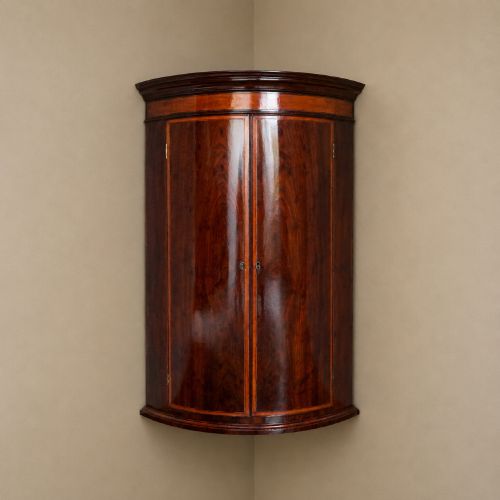
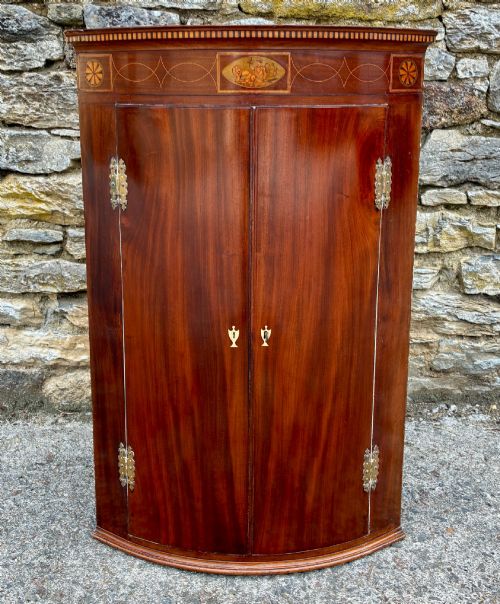
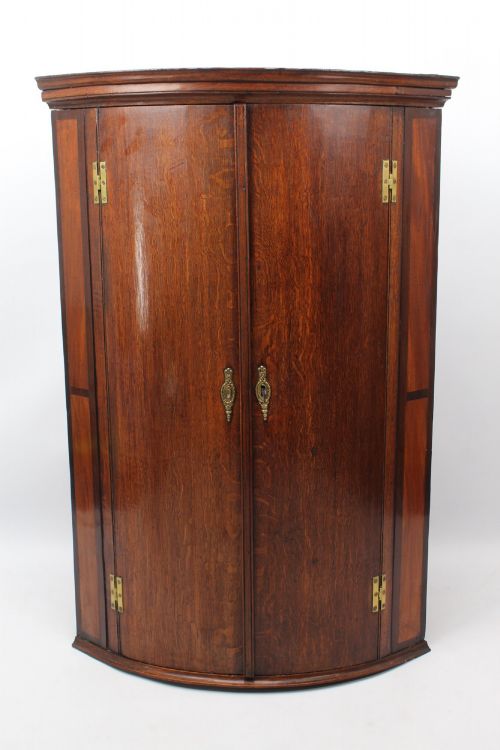
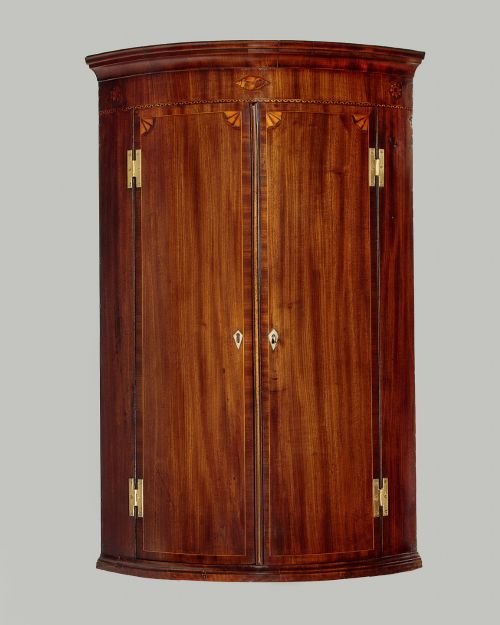
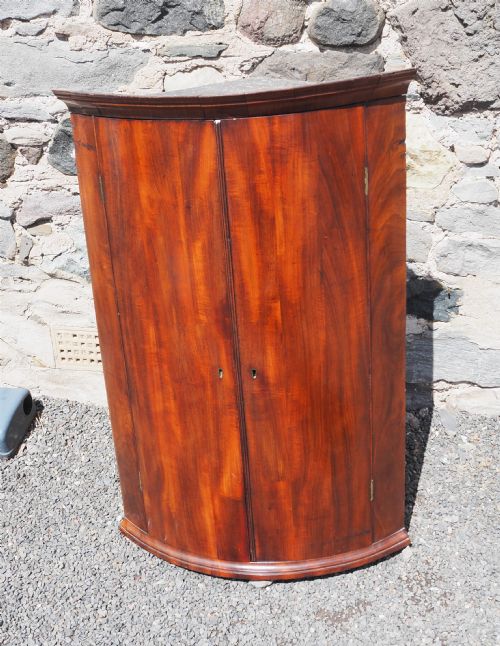


Bow Front Wall Cabinet
A bow front wall cabinet solves the eternal puzzle of awkward corners by turning dead space into handsome storage.
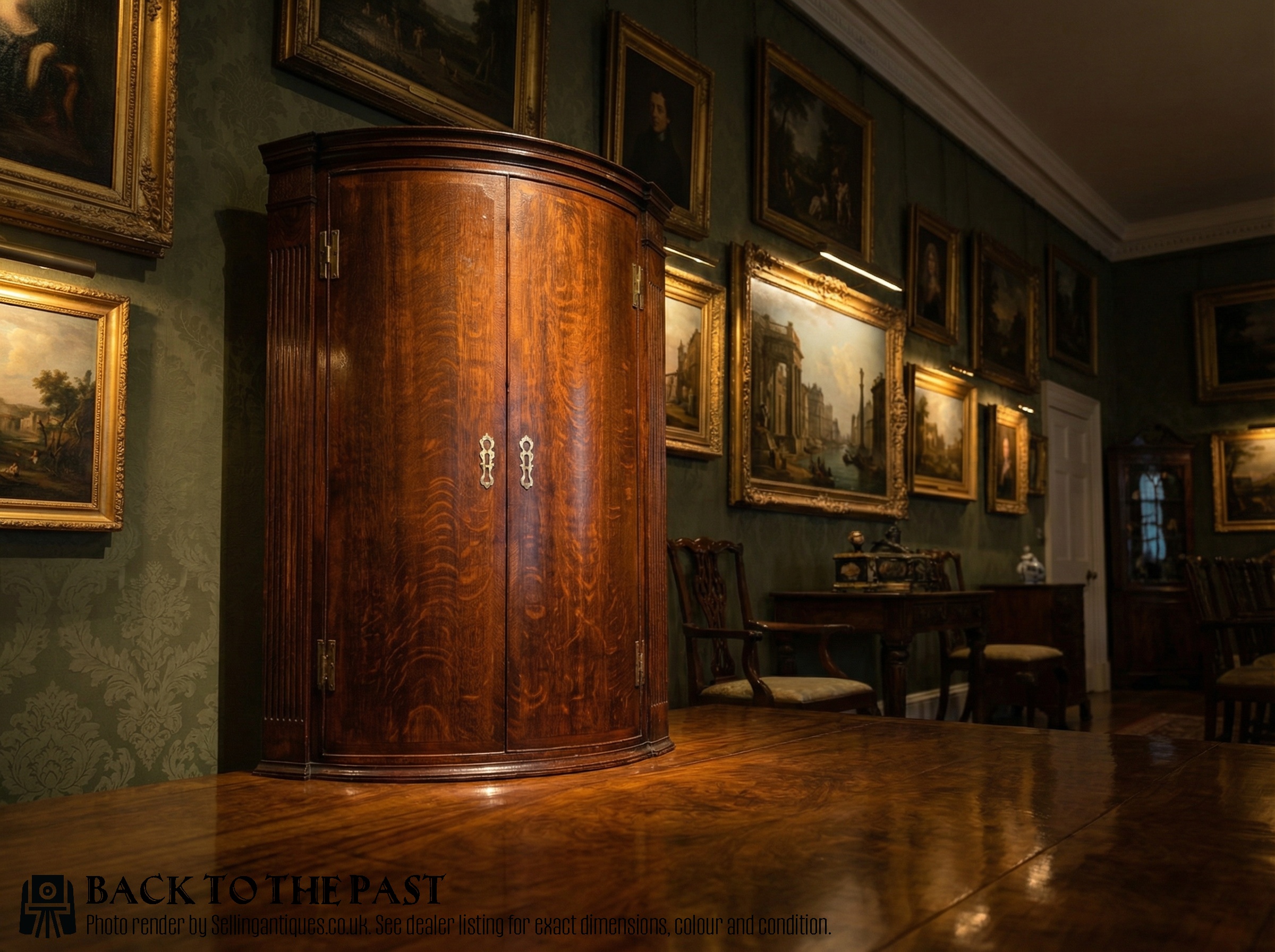
Bow Front Wall Cabinet
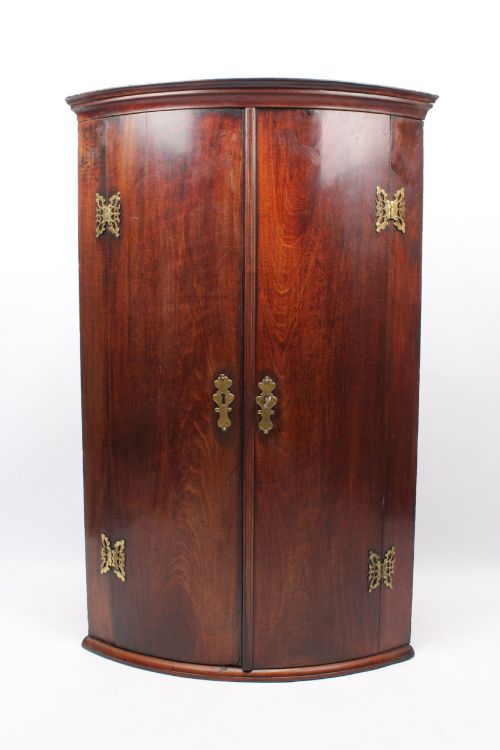
A bow front wall cabinet, often referred to as a corner cupboard or hanging cabinet, utilises curved convex doors to soften the sharp angles of a room. These pieces are predominantly found in Georgian and Victorian incarnations, designed to mount directly to the wall and maximise floor space.
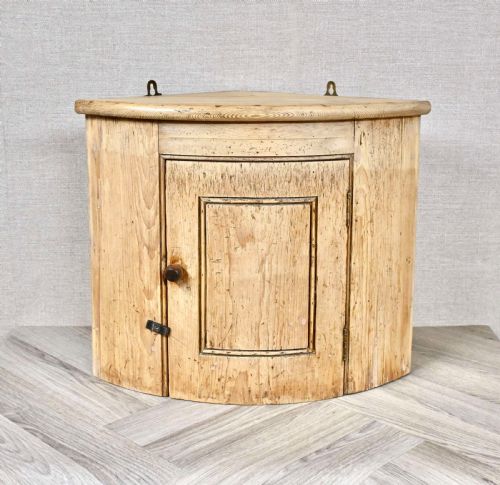
The prevailing form on this page is the hanging corner cupboard, constructed to fit snugly into the junction of two walls. They provide enclosed shelving behind timber or occasionally glazed doors, serving both practical storage and display functions.
How they were made
Cabinetmakers relied heavily on timber selection, frequently employing figured mahogany, oak, and walnut to construct the curved facade. Grain patterns such as plum pudding mahogany and flame veneers were chosen to catch the light across the rounded doors.
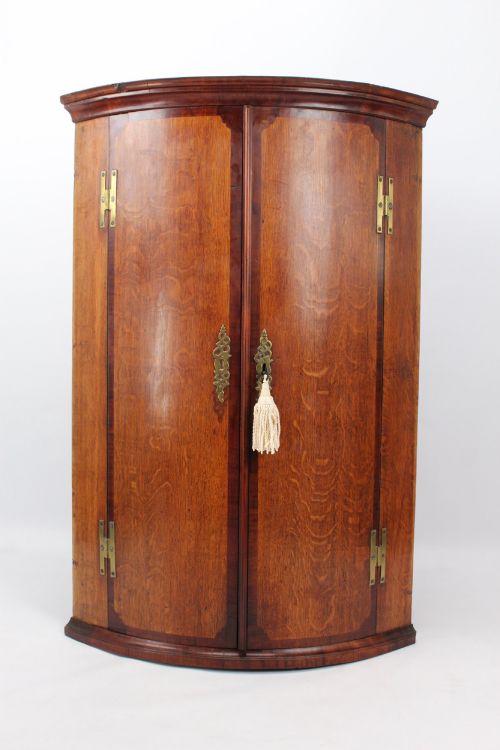
Construction techniques involved bending or carving timber to achieve the distinct bow front profile, often complemented by intricate wood inlay, boxwood stringing, or brass H-hinges and escutcheons.
Listings demonstrate that mahogany and oak remain the most recurrent timbers across Georgian and Victorian bow front wall cabinets.
What varies in quality
Quality rests significantly on the choice of timber and the dexterity shown in the veneer work. Cabinets featuring highly figured grain, such as premium mahogany or burr walnut, sit distinctly above plain pine or utilitarian oak examples.
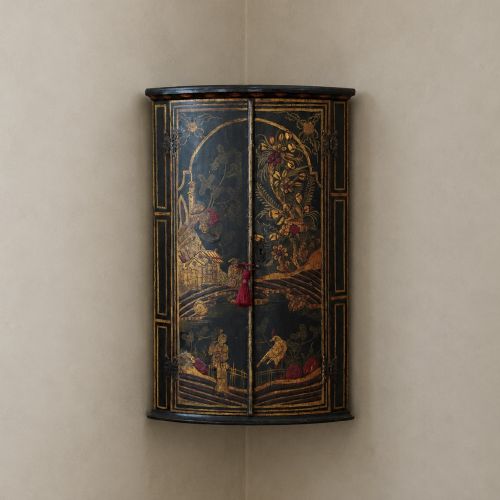
The refinement of the joinery and the execution of decorative elements like stringing or japanned chinoiserie finish dictate the standing of a piece. Finer examples display meticulous attention to the curved door fit and interior shelf arrangement.
The Bow Front Wall Cabinet Glossary
- Bow front
- A convex curved front that projects outward, offering a softer visual profile than a flat or angular cabinet.
- Hanging cabinet
- A wall-mounted storage unit designed to be secured above floor level rather than standing independently.
- Plum pudding mahogany
- A highly prized wood grain showing mottled, circular markings resembling the traditional dessert.
- Japanned
- A European imitation of East Asian lacquerwork, featuring raised metallic designs on a dark varnished ground.
- Escutcheon
- A protective brass plate surrounding a keyhole, often shaped with decorative borders.
Bow Front Wall Cabinet: Frequently Asked Questions
Where should I hang a bow front wall cabinet?
These cabinets are specifically engineered for room corners where two walls meet at a right angle. Hanging them at eye level transforms unused architectural junctions into focal points.
Ensure the wall construction can support the weight of solid timber and contents before mounting.
How do I identify a Georgian bow front cabinet?
Georgian pieces typically exhibit hand-cut dovetail joints, older secondary woods like oak or pine at the interior, and period brass hardware. The timber patination often shows a deep, warm hue developed over centuries.
Look for pegged joints and traditional finishing methods that predate modern machine production.
Were these cabinets used for display or storage?
Most surviving examples feature solid timber doors designed to conceal private household goods, food, or tableware securely. Later variations incorporate glass panes to permit the exhibition of porcelain and glassware.
Both functions allowed households to utilise neglected corner spaces efficiently.
What is the difference between walnut and mahogany versions?
Walnut cabinets generally date from earlier periods or exhibit distinctive rich, dark brown figuring with varied grain patterns. Mahogany variants became dominant during the Georgian era, offering a denser surface suited to high polish and inlay.
Each wood imparts a distinct visual weight and colour tone to the room.