

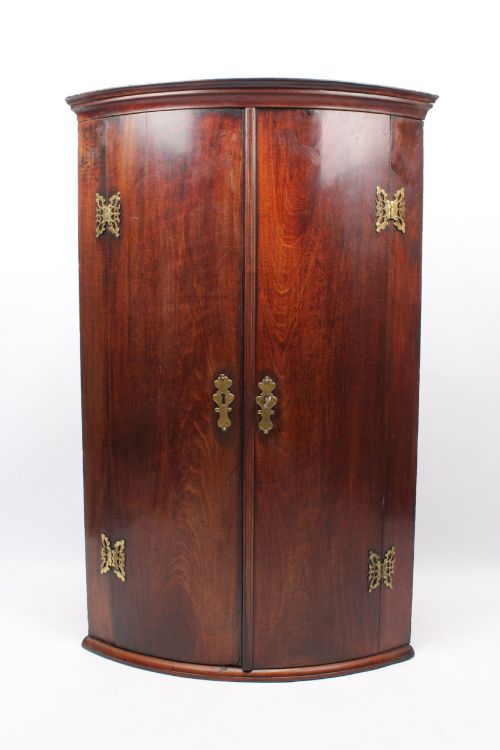
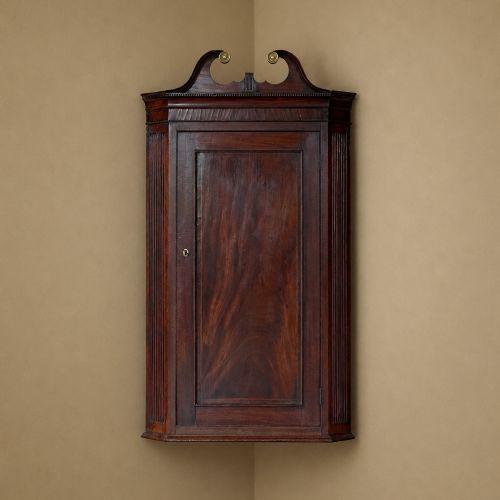
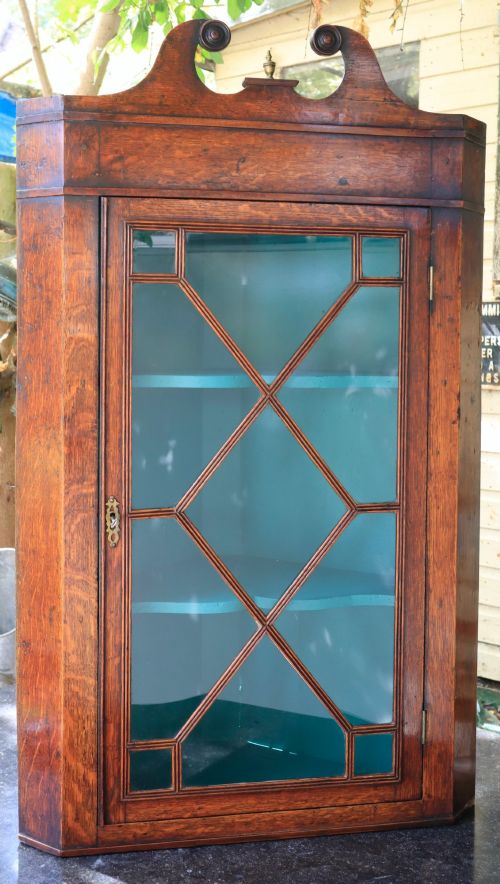
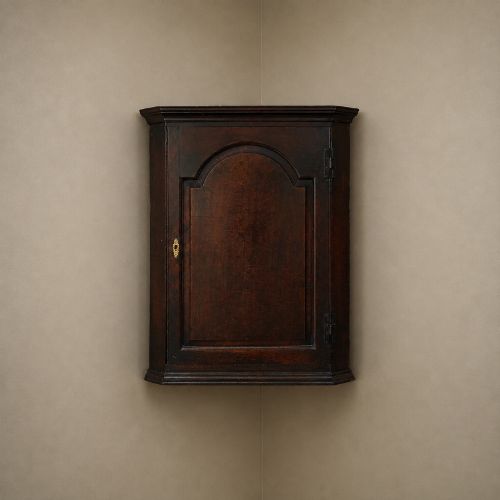
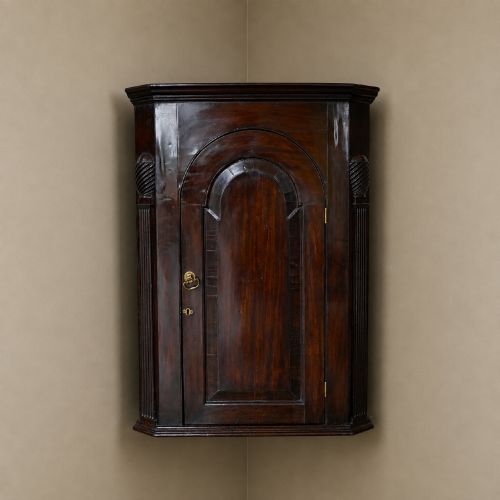
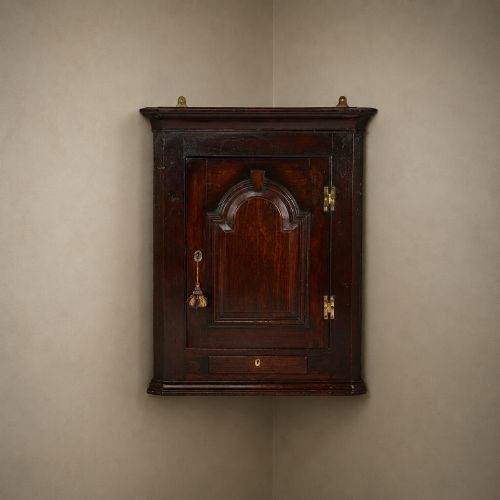

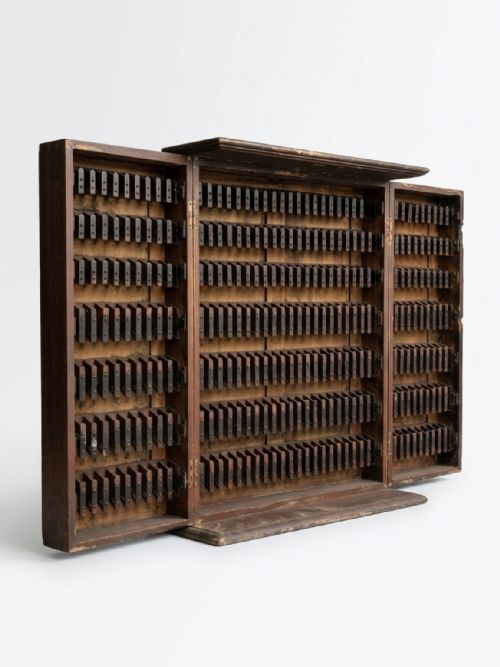
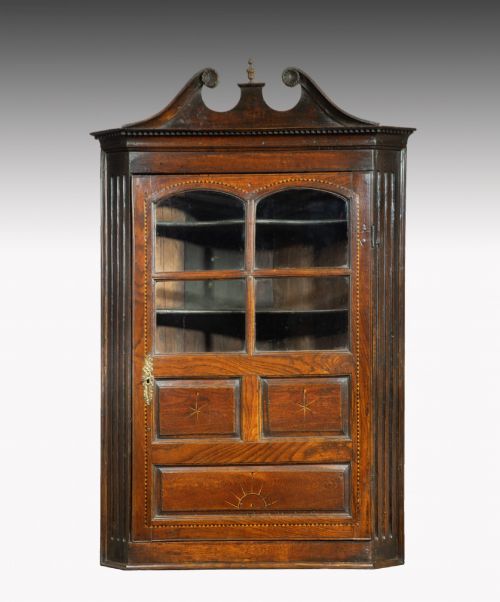


Dark Wood Wall Cupboard
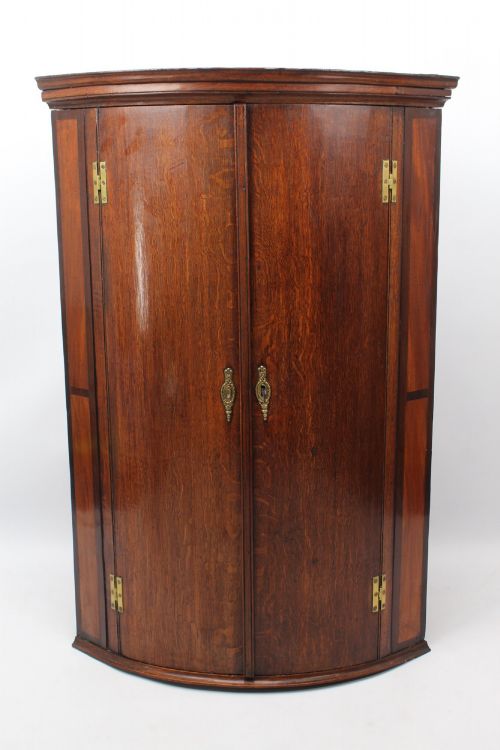
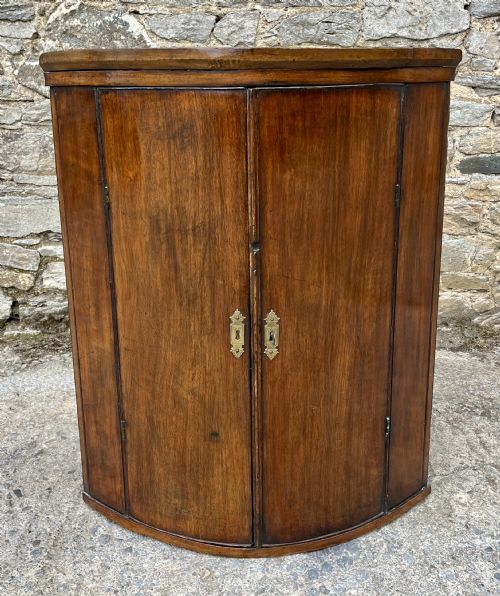
A dark wood wall cupboard solves the perennial problem of floor space while bringing rich timber grain directly to eye level.
Dark Wood Wall Cupboard
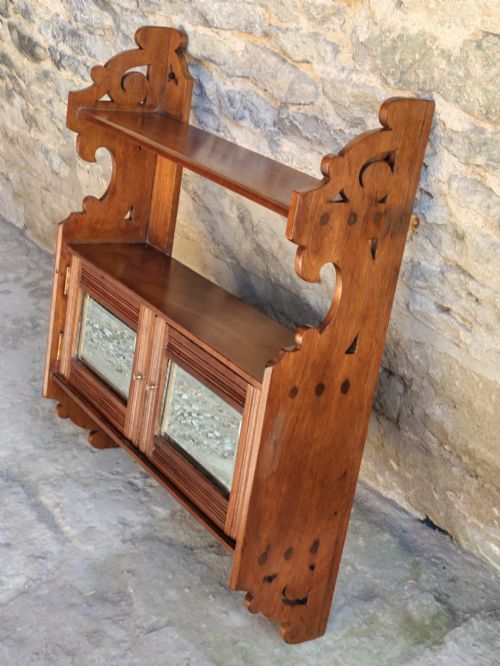
A dark wood wall cupboard provides compact storage that mounts directly to room surfaces, freeing up valuable floor area below. These practical pieces suit tight corners and open walls alike, serving different rooms from kitchens to reception halls.
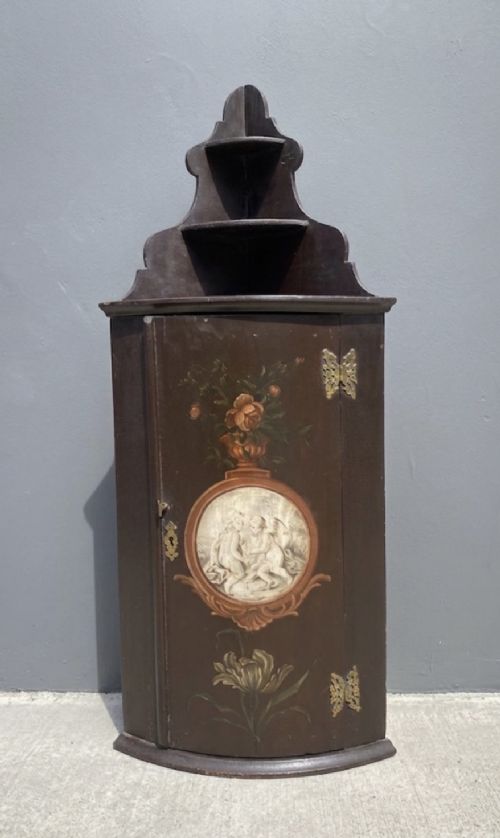
The selection here draws primarily from Georgian and Victorian eras, alongside Edwardian and French Provincial examples. Forms range from bow front corner cabinets and hanging food cupboards to glazed display units and specialised ticket enclosures.
Timbers span rich mahogany, sturdy oak, dark walnut and painted pine. Many items integrate functional shelving, brass hardware and locking doors with keys.
How they were made
Cabinet makers relied on solid hardwoods like oak, mahogany and walnut to construct sturdy carcasses that could support their own weight when wall-mounted. These timbers offered natural durability and deep grains that responded well to planing, carving and polishing.
Construction techniques included dovetailed joints, pegged frames and panelled doors designed to accommodate seasonal wood movement. Metal elements such as iron brackets, brass hinges and key escutcheons provided structural reinforcement and secure closure.
Surface treatments varied from waxed and polished natural wood finishes to decorative inlays, painted schemes and glazed door panels. Specialised additions like pewter cisterns or velvet linings reflect the specific domestic and commercial duties these cabinets performed.
Dark Wood Wall Cupboard Retail Price Guide 2026
Typical asking prices for dark wood wall cupboard among the pieces listed under this phrase on Sellingantiques today, from the lower quarter to the upper quarter. They describe what is for sale here now, not the wider market.
Listings feature woods spanning mahogany, oak, walnut, pine and beech, alongside brass, glass and iron hardware.
What varies in quality
The grade of timber and the precision of its selection dictate much of the initial visual impact. Finer cabinets feature well-figured mahogany or quarter-sawn oak with matched grains across door panels and cornices.
Joinery standards separate utilitarian pieces from high-status commissions. Crisp hand-cut dovetails, tightly fitted internal shelving and original brass hardware indicate superior workshop execution.
Architectural details such as broken arch pediments, delicate stringing inlays, carved friezes and intact original glass elevate certain specimens above standard utilitarian storage.
The Dark Wood Wall Cupboard Glossary
- Bow front
- A convex, curved cabinet front that projects outward from the corners. This shape softens room angles and adds visual depth.
- Corner cupboard
- A triangular storage unit designed to fit snugly into a room angle. This form maximises dead space in traditional interiors.
- Escutcheon
- A protective metal plate surrounding a keyhole. It prevents the surrounding wood from wearing down through repeated use.
- Glazed display cabinet
- A wall-mounted storage piece featuring glass door panels. These panes permit the safe exhibition of ceramics, books or glassware.
Dark Wood Wall Cupboard: Frequently Asked Questions
How do I mount a heavy antique wall cupboard safely?
Wall-mounted antique cabinets require secure anchoring into structural wall studs or solid masonry rather than relying on standard plasterboard fixings alone. Because many period pieces utilise dense hardwoods like oak and mahogany, their substantial weight demands robust steel brackets or internal mounting battens.
Professional installation ensures the load distributes evenly across the back frame without stressing historic joints or hinges. Consulting a specialist builder guarantees the fixings match the specific wall construction of your home.
Where were corner cupboards typically placed in period homes?
Period corner cupboards were traditionally positioned in dining rooms, parlours and kitchens to utilise awkward angles and save limited floor space. They kept everyday tableware, food supplies or bottled provisions within easy reach while leaving the centre of the room open.
Hanging versions sat high enough to clear chair backs and sideboards, anchoring the visual lines of the room corners at eye level.
How do I tell an 18th-century cupboard from a Victorian revival piece?
Eighteenth-century pieces often display hand-sawn timbers, irregular secondary woods at the back, and simple pegged or dovetailed construction methods unique to manual workshop production. Their surfaces show patination accumulated through centuries of waxing and daily handling.
Victorian revival examples frequently incorporate machine-sawn components, standardised screws, and styles that borrow heavily from earlier Georgian or Gothic aesthetics with cleaner, more uniform finishes.
Can these cabinets hold heavy books or modern dinnerware?
Most antique wall cupboards were designed for lighter items such as spices, glassware, small books or linens rather than heavy modern stoneware. The internal fixed shelving relies on traditional housing joints or thin support cleats that have aged over generations.
Assessing the thickness of the shelves and the condition of their internal supports helps determine whether a cabinet suits decorative display or heavier storage.